The Liwonde National Park was established in 1973 but its origins are entwined with a story of exploration, exploitation and finally conservation. A story that starts with Doctor Livingstone and ends with the revitalisation of one of Africa’s finest parks.
© Steve Middlehurst
Introduction
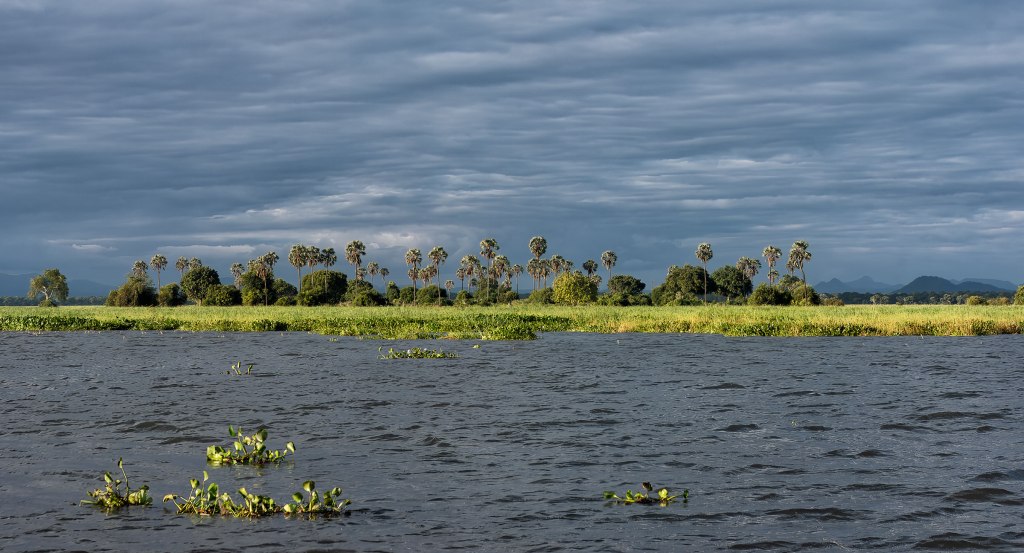
Liwonde National Park and the adjoining Mangochi Forest Reserve lie just south of Lake Malawi, the most southerly of the Great Rift Lakes, to the east of Lake Malombe and encompassing 30 kms of the Shire River.
Like many African wildlife reserves the origins of the park, despite only having been formally established in 1973, lie in big game hunting and colonial times when wildlife was being protected for the ruling minority to shoot. To understand this story, we need look at how the colonists and hunters came to be in, what is now, Malawi in the first place.
Before Livingstone
The Shire valley was known to the Portuguese as early as the 15th century and was the home of the peaceful, Nyanja or Mang’anja people who were remnants of the Maravi Empire which had once dominated the region from the Luangwa Valley in modern day Zambia across Malawi and through what is now Mozambique to the Indian Ocean (2).
In the 1830s the Yao, who originated in Mozambique, migrated to south Malawi and quickly became the dominate power in the Upper Shire, allying with Swahili-Arab slave traders based further up the lake and establishing new slave trading routes through what is now Mangochi, then east of Lake Malombe and the Shire Highlands and east into Mozambique and a second route which followed the Shire Valley more directly south to the Zambezi (4). Throughout the first half of the 19th century, they captured and sold the Nyanja into slavery depopulating the region.
© Steve Middlehurst
The Good Doctor’s Siren call
David Livingstone first passed through the Shire valley in 1859 and returned to the area around Lake Nyasa at least two more times. For all his faults Livingstone was an accomplished observer and a highly effective communicator. What he saw in the Shire Valley and beyond can be summarised into three messages that each stimulated a response from his European audience and that would have a profound impact on Malawi.
- The slave trade : Livingstone witnessed first-hand the suffering of the Nyanja and the destruction of their way of life in the Upper Shire by Yao slavers. In 1861 he visited Nkhotakota which was the Swahili-Arab’s main slaving base on the western shore of Lake Malawi and was horrified by what he saw there.
- Agricultural potential: The Nyanja were proficient agriculturists growing a wide variety of crops including cotton, tobacco and maize. Livingstone was quick to realise the potential for colonists to farm cotton and sugar undermining the slave-based industries in the Americas.
- Wildlife: He wrote of the abundant wildlife in the Shire Valley having seen many hippos, “prodigious numbers of many kinds of waterfowl” , “vast herds” of elephants, saying: “we believe that we counted eight hundred elephants in sight at once” when he passed through Elephant Marsh in the Lower Shire (3).
© Steve Middlehurst
Livingstone was an accomplished self-publicist and everything he saw along the Shire was well communicated back in Britain (3). If we add into this mix a large helping of missionary zeal, we have the perfect recipe to attract the Victorians. Here was a region where they could:
- Convert the heathen:
- Suppress the slave trade;
- “Harvest” huge quantities of ivory;
- Introduce modern agriculture to grow cotton and undermine the American dominated cotton industry:
- Exploit the other natural resources such as hardwood:
- Whilst they “civilised” the local population.
They could also deny all of this to the other European powers given that the “scramble for Africa” was just about to start.
Unwittingly Livingstone had one last part to play in attracting Europeans to Malawi. He disappeared whilst engaged in his next, and last, expedition which set out from Zanzibar in 1866 to find the source of the Nile. There were reports of him having been at Lake Nyasa, modern day Lake Malawi, on his way north but also stories that he had been murdered (5). Given his celebrity status in Britain his disappearance became one of the great conversations of the day.
Advertising Big Game
Henry Stanley’s famous and ultimately successful expedition to find Livingstone left Zanzibar in 1871 but well before that in 1867 the Royal Geographical Society of London appointed Edward Young, a Royal Navy warrant officer who had served under Livingstone on the Zambezi and the Shire, to lead an expedition to find him. Young’s diary (6) provides an interesting and surprisingly poetic description of the Shire valley at a time when only a handful of Europeans had ever left the coast and ventured into the interior of central Africa. He reports:
“Elephants, rhinoceros and buffalo are plentiful, whilst waterbuck, zebra, hartebeest and numerous other animals stray about in mixed herds.”
He goes on to describe the African dawn:
“Rarely is silence broken, and then only by sounds which utter allegiance to the scene. It is the lions roar before the dawn, the hippopotamus’ trumpet vibrating over the glassy expanse of water as day breaks, and the shriek, as from another world, of the fish-hawk.”
© Steve Middlehurst
Travelling with Young was a self-proclaimed “sportsman”, Henry Faulkner, who appears to have been more interested in hunting than finding the good doctor.
Faulkner cut a bloody swathe through the Shire Valley’s wildlife as they travelled from the Zambezi to Lake Nyasa, slaughtering large animals, birds and reptiles in what appears to be an indiscriminate manner. He regularly shoots hippos in the river, some are killed immediately, some escape wounded but he never mentions retrieving the carcases to butcher and eat. Elephants are hunted at every opportunity, their tusks taken, and on occasion the meat is distributed to nearby villages. The disturbing idea of elephant trunk for breakfast is mentioned.
When Faulkner returned to Britain he published, what was in effect, a hunter’s guide to the Shire Valley (5)advertising the abundance of game, describing the ideal guns, ammunition and methodology for killing elephants and other large game.
If we step back from his detailed descriptions of hunting elephant and buffalo and consider the sub-text: he talks of multiple herds of elephants in close proximity with at least one of the herds numbering more than a hundred animals. In 1870 ivory was worth £68 per cwt at the dockside in Zanzibar; a pair of tusks weighed on average around 50 pounds, so £34 an elephant. According to the CPI Inflation calculator £34 in 1870 would be the equivalent of over £5,000 today. It’s not hard to understand the motivation to hunt in the Shire Valley.
Missionaries and the African Lakes Company
Livingstone’s well publicised exploits sparked a remarkable response from various sects of the Christian Church and especially the Scottish churches that began a scramble for the African soul. One observer noted that they “came in droves”. Their impact on Malawi was significant but not necessarily directly relevant to the story of the national parks other than where missionaries tread others soon follow.
Edward Young, now a lieutenant, returned to the Shire in 1875 as the leader of a Free Church of Scotland sponsored expedition to set up an industrial mission on the banks of Lake Nyasa as a memorial to Livingstone; so, dawned the missionary age.
The Livingstonia Central African Mission Company renamed quickly as the African Lakes Company was founded in Glasgow in 1878 with the objective of supplying the newly established missions whilst creating commercially viable and legal trade routes to the shores of Lake Nyasa as part of a strategy to suppress the slave trade which continued to thrive in the area. A year later the brothers Moir were firmly established in the Shire Highlands and were keen to exploit the ivory trade. Known by its local name “Mandala” the company quickly became the leading commercial force in the Shire Highlands and the southern half of the lake setting up stores and establishing transport routes to move goods to and from the coast and around the lake.
© Steve Middlehurst
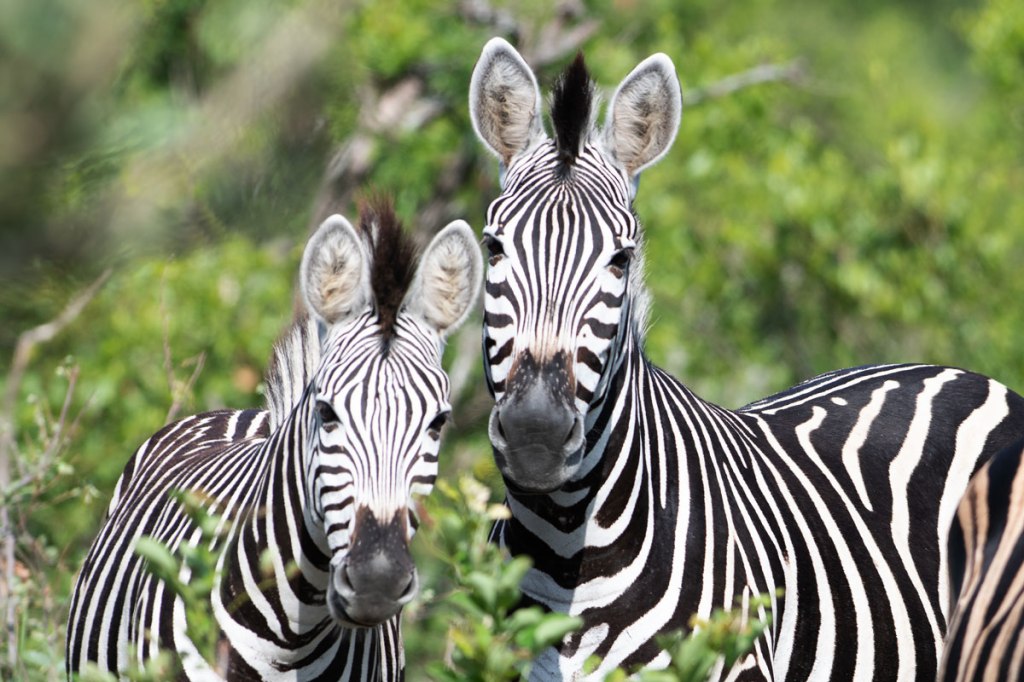
In 1883 Henry Drummond was sent to Malawi by the African Lakes Company to carry a “scientific examination” of the country. He described the area around Lake Chilwa saying:
“No-where else in Africa did I see such splendid herds of the larger animals as here. The zebra was especially abundant.” and it was “the finest hunting country in the world”.(7)
He also talks of the Shire Valley being “almost uninhabited” which may be a clue to the seemingly unusual abundance of wildlife mentioned by successive European visitors, Livingstone, Young, Faulkner and now Drummond. The slave trade, the aggressive incursion and slaving of the Yao plus successive failures of the rains in 1862 and 1863 had ravaged the Shire Valley and severely damaged the agricultural economy that had thrived there in the early part of the 19th century.
Less people and therefore less agriculture, deforesting and subsistence hunting had probably resulted in more wildlife despite tons of ivory now being harvested every year.
Drummond recognised that ivory was overwhelmingly the primary export of the region. When he sailed on the lake steamer Ilala she was carrying a ton of ivory, probably around 100 tusks, the equivalent of £250,000 today, and one wonders how often that amount of ivory was being taken down the Shire on its way to Europe. He predicted that there was about 15 to 20 years’ supply left and that until it was gone there was no incentive to exploit other opportunities. (7)
The Protectorate and the First Game Laws
Growing commercial activity, the presence of many well-established missions and the desire to stop Portugal connecting Mozambique in the east with Angola in the west motivated the British in 1889 to form the Nyasaland Districts Protectorate which encompassed the Shire Highlands and the south-western lake shore. It became the Central African Protectorate in 1893 and Nyasaland in 1907 by which time the country included all modern-day Malawi.
By the end of the century British settlers had taken possession of 15% of the land to plant cash crops, often coffee, dispossessing native Africans. These settlers hunted game for the pot, for “sport” and for trophies and they continued to exploit ivory. To protect their interests the colonial government established the first game laws and game reserves in 1897.
We should not be misled into thinking that this was an early act of 21st century style conservation; the intent was to protect large animals (game) from the non-European population and restrict hunting via the issue of licences that only Europeans could afford.
© Steve Middlehurst
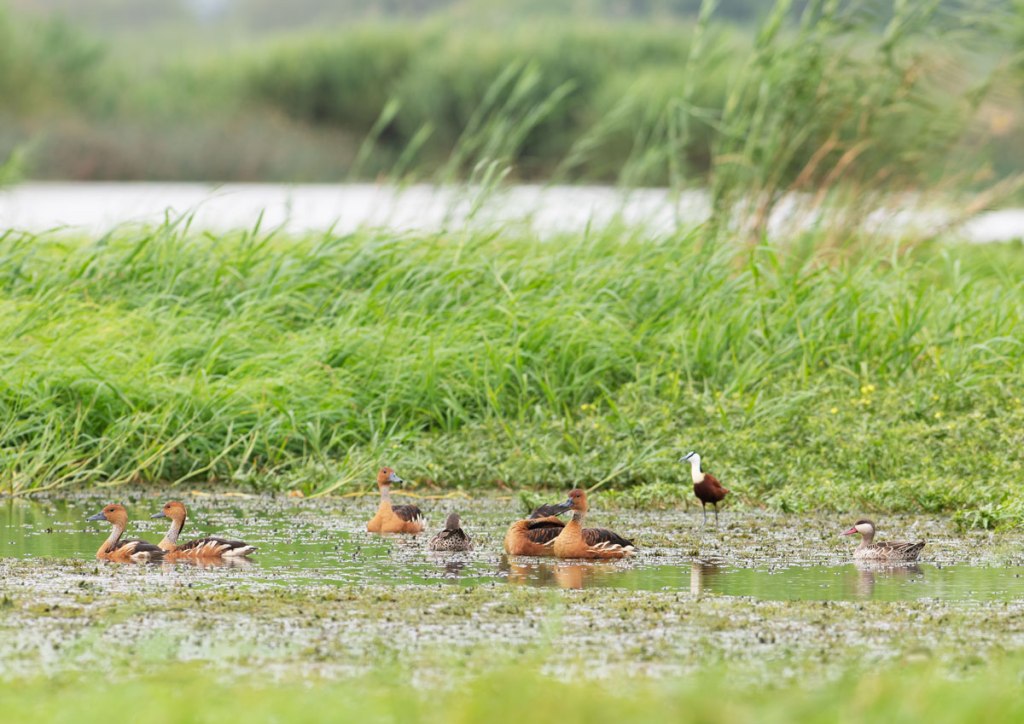
Although the elephants were long gone the first reserves were Elephant Marsh and Lake Chilwa and licences could be purchased to hunt as duck shooting was a popular sport amongst the settlers, missionaries and colonial administrators. The regulations were updated in 1902 and this time excluded Lake Chilwa. Elephant Marsh hung on until 1911 when it was too un-proclaimed and a single reserve, the Central Angoniland Reserve was established to protect an area around Lilongwe and Dedza. (10)
By 1946 when the Game and Forest Reserves Commission was established the Central Angoniland Reserve had gone and eight new reserves had been proclaimed. Some of these survive to this day, notably Lengwe, Kasungu and Nkhotakota but they were reserves in name only with few rangers and open borders allowing hunters in and animals out. When the Game Ordinance of 1953 was published Mwabvi Reserve was added to protect the last surviving black rhino, an endeavour that clearly failed as even the Malawi Tourist Board now describe Mwabvi in terms of its rugged and remote landscape with the only hope for wildlife being animals that “roam” in from Mozambique. By 1953 all the other small reserves had been de-proclaimed.
The Late Colonial Period
In the 1950s European settlers had come to realise that game was quickly disappearing. The “finest hunting country” in Africa was fast becoming devoid of any large animals. In 1947 a small number of enlightened but influential people formed the Nyasaland Fauna Preservation Society (now the Wildlife and Environmental Society of Malawi) and began lobbying the Colonial Administration; the impressive result of their efforts were the gazetting of the Majete Game Reserve in 1955 and the closure of Nyika Plateau to hunting in 1952 which eventually became the Malawi National Park in 1966 which was renamed as the Nyika National Park in 1970. (11)
However, late colonial rule from the 1930s until the 1960s is a period when wildlife preservation is a low priority, and the administration was generally more concerned with controlling wild animals outside of the reserves than protecting the dwindling numbers inside. The combination of creating hunting free, but generally poorly protected, reserves and continuing to restrict hunting outside of the reserves to those wealthy enough to purchase a licence turned subsistence hunting into poaching, criminalising but not stopping people supplementing their diet with bush meat.
Independence
In July 1964 Nyasaland became independent of Britain and renamed as Malawi. In 1973 the Department of National Parks and Wildlife was formed and in 1983 the Government formally recognised wildlife as a national asset.
“It is the policy of the Malawi government to afford all the protection in its power to game animals and wildlife in general ……… the government has in mind the value of this national resource as a tourist attraction, as a possible source of food and a scientific and educational asset of national importance.” (11)
Government policy towards wildlife is rarely perfect in the eyes of conservationists, as it will always be a compromise and with African wildlife the elephant in the room continues to be corruption. However, In the years following independence 11.6% of Malawi was set aside for the conservation of wildlife but multiple issues remained: parks management and security was underfunded and ineffective, communities close to the parks received no advantage and many disadvantages by living near to the parks, poaching of bush meat and ivory was prevalent, human wildlife conflict was common and there was little or no tourist infrastructure.
Liwonde Becomes a National Park
Progress was not only made by national government, in 1962 Chief Liwonde, the Traditional Authority of the Machinga district designated the area to the east of the River Shire and South of Lake Malombe as a controlled hunting area. In 1970 the government set aside the same as a potential National Park and all hunting was banned. In 1973 it was proclaimed a National Park and named the Liwonde National Park after the Chief who had called for the area to be recognised and protected as being of national importance.
When a National Park comes into existence in nearly any location it is almost certain to have displaced people who were living there and cut off other people living nearby from their source of firewood or their ability to fish and collect water. Also, would be naïve to think declaring an area a park would stop subsistence hunting for bush meat.
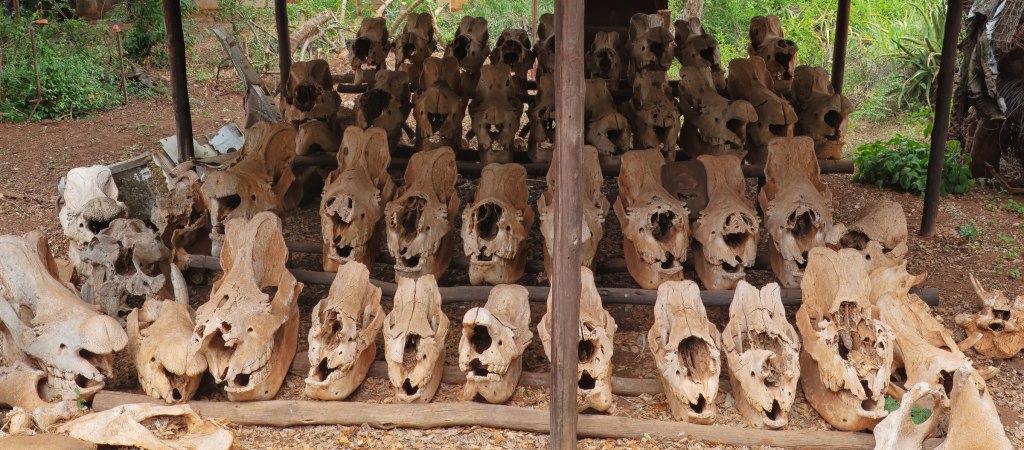
Throughout the 90s and the early part of this century Liwonde NP and all the other parks in Malawi suffered terribly from poaching. Wildlife was dramatically depleted, Elephants relentlessly hunted down and slaughtered, tens of thousands of wire snares laid in the bush. Lion, cheetah, vultures, wild dogs, hyenas, leopard, and many other species became extinct in the park. In parallel the park, along with the rest of Malawi was being rapidly deforested to enable the illegal production of charcoal.
The problems went far beyond the extinction of rare animals; the animals were killing subsistence hunters and poachers and people living around the park; Crocodiles and hippos were killing fishermen as well as women and children gathering water. Elephants were crop raiding and people were dying trying to protect their crops.
Instagramers love to portray elephants as gentle giants, but they are irascible and mortally dangerous when angered, threatened, in musth, with or near babies or just in a bad mood. Elephants in areas where poaching is (or was) prevalent, such as Liwonde, are especially touchy.
By 2015 the park was in terminal decline.
© Steve Middlehurst
A Fresh Approach to Conservation
The Malawi Government had recognised immediately after independence that protecting wildlife had significant long-term benefits in both social and economic terms but the implementation of policies to achieve tangible results in this area are both difficult and costly.
However, the Government and its Department of National Parks and Wildlife (DNPW) recognised that a new approach to conservation was evolving as governments and NGOs began to recognise that people living near wildlife reserves must receive tangible benefits from the reserve if it was to succeed.
Chief Malama, (A Zambian community leader) in September 1983 expressed a view held by many village and regional leaders across Africa:
“We are honest people who are keepers of the wildlife. We do not like poaching, and we have been keeping the animals here a long time for the government, but we receive no benefit for this service. If I beg help for building a clinic or grading our road, the government refuses.
Yet, this is the area where both the government and private individuals benefit from wildlife. Tourists come here to enjoy the lodges and to view wildlife. Safari companies come here to kill animals and make money. We are forgotten.” (12)
By 2003 the Malawi Government and the DNPW had homed in on a new strategy.
African Parks Network (19 to 22)
In April of that year the DNPW formed a partnership with the African Parks Network (AP) to implement their newly developed African Parks Model (https://www.africanparks.org/about-us/our-story/the-african-parks-model) to manage Majete National Park where nothing except a handful of antelopes survived.
AP’s success story at Majete as told at https://www.africanparks.org/brief-history-majete-wildlife-reserve was ground-breaking and in 2015 led to the Malawi Government forming a second partnership between DNPW and AP, this time to manage Liwonde National Park and the Nkhotakota Wildlife Reserve.
In the long term the inter-relationship between these three parks was to be fundamental to conservation in Malawi.
The situation AP faced regarding poaching and human-wildlife conflict was calamitous; in September 2014 Senior Chief Liwonde, the local traditional leader, told The Nation newspaper:
“We are failing to sleep because of the fear of elephants. These animals are proving a nuisance and last year over 300 gardens were destroyed. This year 150 gardens have already been destroyed by the marauding elephants as such, many people will be affected by hunger.” (16)
AP took over the park on 1st August 2003 and in the next two months seven people lost their lives to wildlife:
- Crop raiding elephants killed two people outside the park;
- An elephant killed a poacher inside the park;
- Crocodiles killed two people outside the park and two poachers inside the park;
- a third poacher lost an arm to a crocodile attack.
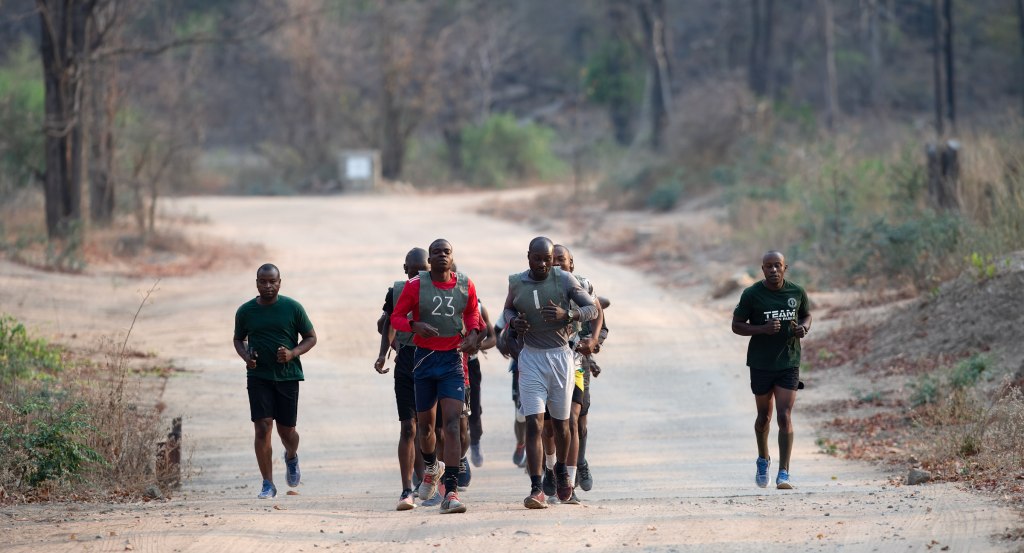
The foundation of any park’s success is to keep animals in and people out and it was in context that AP’s first major project was to embark on a programme to address the two worst aspects of the park’s decline, namely poaching and human-wildlife conflict. They fenced the entire 142 km perimeter whilst using various techniques to chase elephants back into the park. They began recruiting and training rangers, began daily boat patrols to deter illegal fishing and employed seventy local people full time to work on the fencing project. (23)
© Steve Middlehurst
Approximately 800,000 people live around the park so engaging the community and making the park a local as well as a national asset was always going to be a fundamental park of AP’s strategy. The park has upgraded two health centres and supports two schools whilst providing several other scholarships as well as funding a local literacy programme.
Employment inside and outside the park has been created, local people are now apiarists (see note 1) producing 3.1 tonnes (24) of the most fantastic pure honey some of which is sold under the AP Honey with Heart brand at the main gate and seventy-seven tons of chillies are harvested annually with some of those being used to create chilli barriers which deter elephants from entering farmer’s fields.
Bringing local people into the park is essential, from the time Henry Faulkner hunted elephant on the banks of the Shire in 1867 until independence nearly a hundred-years later wildlife roaming free and then wildlife in reserves was predominantly, if not exclusively, for the enjoyment of white settlers, missionaries, and colonial administrators. In the early years after independence, it was white expats and a few tourists who visited the parks for pleasure.
The landscapes, animals and birds that are the focus of conservation efforts in Africa are the heritage of the countries in which they exist and the local people who live alongside them. For parks and reserves to survive for the next one hundred years it is vital to go beyond making them an economic benefit to local communities and ensure that local people come into the parks to experience the magic of seeing the wonderful creatures in their natural habitat. Nearly 5,000 Malawi school children visited Liwonde NP in 2022 and there is no doubt that among those children are the next generation of park managers, wildlife veterinarians, and conservatisms. (24)
To create a balanced, biodiverse park AP undertook a series of milestone translocations of animals into the park:
- 2017 – 4 cheetahs after a twenty-year absence;
- 2018 – 10 lions from South Africa and Majete Wildlife Reserve;
- 2018 – 7 different species of vulture re-introduce themselves to the park now that there were large predators providing the carcasses they needed to survive;
- 2012 – 8 wild dogs from South Africa although tragically the entire Liwonde pack of wild dogs was (probably unintentionally) poisoned by poachers in 2022;
- 2019 – 17 black rhinos from South Africa.
In 2018 The Malawi Government included the Mangochi Forest Reserve in AP’s mandate increasing the managed area by 60%. This reserve is adjacent to Liwonde NP and AP soon continued the perimeter fence to include it, a fence that now runs for 244km. The forest reserve is a vital asset for the biodiversity of Liwonde acting as a dispersal area for animals, especially elephants. As well as establishing nurseries nurturing 30,000 seedlings a year, it is also the site of programmes to encourage the sustainable use of natural resources enabling local communities to monitor and regulate the harvesting of dead and fallen trees for firewood. (24)
Last and not least because it is money spent in Malawi there has been a significant increase in tourism with over 12,000 domestic tourists and around 11,000 people from outside of Malawi.
It is safe to say that the Malawi Department of National Parks and Wildlife and the African Parks Network have done a remarkable job in a comparatively short time.
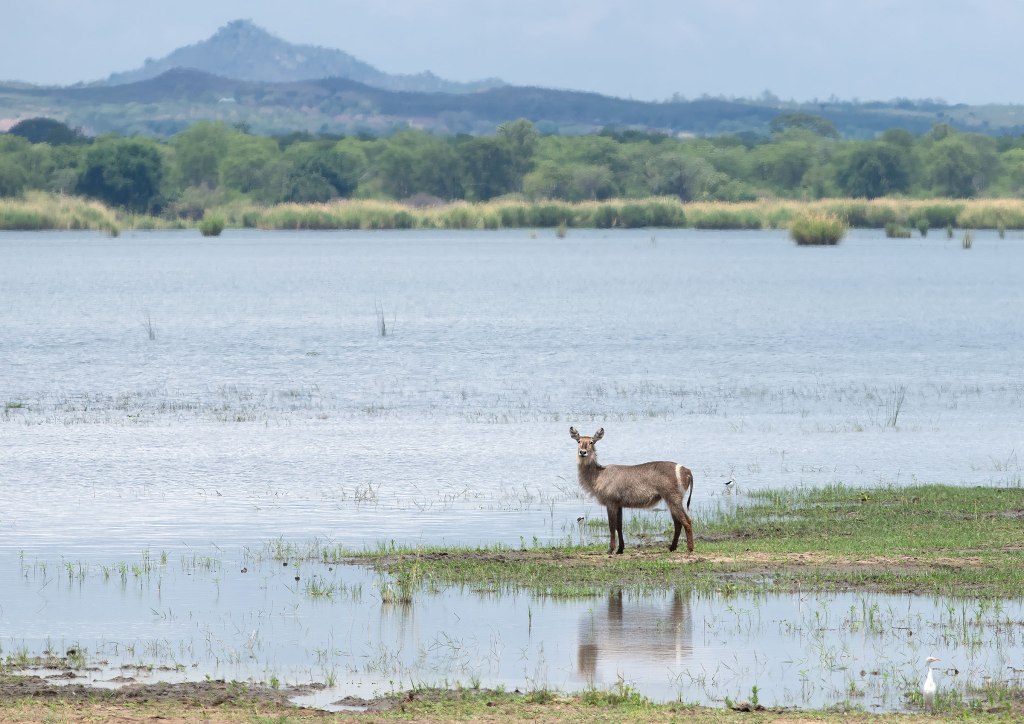
© Steve Middlehurst
Closing Thoughts
The long and winding trail that, in my mind at least, started when David Livingstone passed through the Shire Valley in 1859 camping under a baobab tree inside what is now the Liwonde NP.
He was followed by a succession of so-called sportsmen promoting elephant hunting, missionaries and employees of colonial trading companies seeing the “finest hunting country” in Africa, settlers and colonial administrations protecting their right to slaughter animals for fun, national independence, ivory and rhino horn poachers, subsistence hunting, deforestation, and underfunded wildlife guards. Every step along that trail leads us to the wonderful park we can visit today.
A vibrant, bio-diverse and well managed park, densely populated with birds, elephants, buffalo and antelope, well stocked with the big cats, lions and cheetahs with leopards on the way, some well protected black rhino hidden away in the bush all set in a beautiful landscape containing six vegetation zones, a glorious and navigable river, a little bit of a lake, a few lovely hills and a range of tourist accommodation from simple to luxurious.
*****
Note 1: Malawi Honey
An excellent example of community involvement is The Beekeeping Development Project funded by the German Embassy and WWF in 1989 with people living near to the Vwaza Wildlife Reserve and the Nyika National Park in northern Malawi. The project trained Wildlife Department staff and villagers in beehive construction and environmentally friendly extraction techniques as well as assisting villages with marketing the honey. Previously villagers had entered the parks illegally to gather wood to make charcoal which was a cash crop and using dangerous and destructive techniques to gather wild honey. Now they were allowed controlled access to place their own hives and to practice enhanced and safe harvesting techniques. As such it was an opportunity to replace the income from charcoal with a legal income from honey.
This initiative has been replicated across many areas of Malawi, there were inevitably bumps in the road but by 2007 5,000 small-scale producers were selling 75 to 80 tons of honey each year. Data on current output is hard to find but in 2023 Elias Banda of the Kabunduli Honey Cooperative said they were selling 150 tons per harvest with sales of “at least” $1,000 a month. Other cooperatives report similar benefits.
The shelves of supermarkets in Lilongwe and Blantyre are well stocked with Malawian Honey and African Parks sell their own brand of wild honey collected by local villages in Majete and Liwonde National Parks. I can confirm from personal experience and daily consumption that this is superb natural honey that I only wish was more obtainable outside of Malawi.
Note 2: Direct Flights
The recent move to drop visas has stimulated some press coverage in the UK and there are reports that the Government are in discussion with European Airlines to resume direct flights; British Airways had a weekly London to Liliongwe via Nairobi flight until 2004 and Air Malawi had a weekly non-stop flight to Gatwick in 1998 which obviously also stopped at some point.
There is a comment box at the bottom of this post after Footnotes and Other Sources. Please let me know if you have any thoughts on this subject and whether you found this post useful.
References and Further Reading
- David Stuart-Mogg 1994 A Guide to Malawi.Blantyre: Central Africana Limited
- Oliver Ransford 1966 Livingstone’s Lake, The Drama of Nyasa. London: John Murray
- David Livingstone 1865 A Popular Account of Dr. Livingstone’s Expedition to the Zambesi and its Tributies: and the Discovery of Lakes Shirva and Nyassa 1858 – 1864. Accessed at Project Guttenberg’s 2001 edition.
- Unknown 2011Malawi Slave Routes and Dr. David Livingstone Trail. Lilongwe: Malawi National Commission for UNESCO
- Henry Faulkner 1868 Elephant Haunts: Being a Sportsman’s Narrative of The Search for Doctor Lingstone with scenes of Elephant, Buffalo and Hippopotamus Hunting. London: Hurst and Blackett.
- E.D Young 1868 The Search After Livingstone, (A diary kept during the investigation of his reported murder). London: Letts Son, and co. the-search-after-livingstone
- C.A. Baker 1970 Henry Drummond’s Visit to Central Africa, 1883-4. The Society of Malawi Journal Vol 23 No.1
- R.W Beachey 1967 The East African Ivory Trade in the Nineteenth Century. Great Britain: The Journal of African History, VIII pp.269-290
- Brian Morris 2001 Wildlife Conservation in Malawi. Winwick: The White Horse Press, Environment and History Vol. 7, No. 3
- B.L Mitchell 1953 Game Preservation in Nyasaland. Malawi: The Nyasaland Journal Vol. 6, No. 2
- G.D Hayes 1972 Wild Life Conservation in Malawi. Malawi: The Society of Malawi Journal Vol. 25, No. 2
- Unknown Authors 1994 Whose Eden? An overview of community approaches to Wildlife Management. A report to the Overseas Development Administration of the British Government. London: International Institute for Environment and Development.
- Food and Agrucultural Organisation of the United Nations 2021 From Charcoal to Honey in Malawi.
- Shelix C Munthali 2007 The Honey Industry in Malawi. Lilongwe: Bees for Development Journal Edition 84.
- Leonard Masouli 2023 Will Beekeeping Save Malawi’s Forests? Published by Fair Planet
- Christopher Jimu 2014 Malawi to spend K300M to replenish wildlife in game reserves, parks. Lilongwe: The Nation
- C.O. Dudley 1979 The History of the Decline of the Larger Animals of the Lake Chilwa Basin. The Society of Malawi Journal.
- Elizabeth Garland 2008 The Elephant in the Room: Confronting the Colonial Character of Wildlife Conservation in Africa. African Studies Review.
- African Parks Network Website: https://www.africanparks.org
- African Parks Network – Liwonde NP Page: https://www.africanparks.org/the-parks/liwonde
- Lilongwe Wildlife Trust – Liwonde NP Page: https://www.lilongwewildlife.org/liwonde-national-park/
- Liwonde National Park Website: https://liwondenationalpark.com
- African Parks 2015 https://www.africanparks.org/newsroom/press-releases/solution-human-wildlife-conflict-under-way-liwonde-national-park-malawi
- African Parks 2024 https://www.africanparks.org/the-parks/liwonde/community-development

 Travelogues and Other Memories
I would appreciate hearing your thoughts on this subject.