Malawi, the “Warm Heart of Africa” has set aside 11% of the country for the conservation of wildlife having established four national parks and four game reserves. Liwonde National Park is the smallest but arguably the most exciting.

Lake Malawi is the third largest lake in Africa, with golden, tropical beaches and crystal-clear, turquoise waters that support more species of fish than anywhere else in the world. It is the life blood and cultural heart of a country where most of the population are dependant on farming or fishing. It stretches for nearly 600 km from Tanzania in the north to Mponda in the south where it drains into the Shire River which flows through shallow Lake Malombe before starting its long journey south to the Zambesi.

The first part of that journey is a slow drift through the Liwonde National Park which straddles the river for 30 km; mostly lying on the eastern bank of the Shire the long, narrow park stretches away from the river for just 13 kilometres at its widest point.
The river is a perfect all-year-round water source supporting this sliver of land that forms a park which at less that 550 km2 would fit a hundred times into the Selous Game Reserve in Tanzania or thirty-five times into Kruger. In fact, even in Malawi only the Lake Malawi National Park and the Mwabvi Wildlife Reserve are smaller.

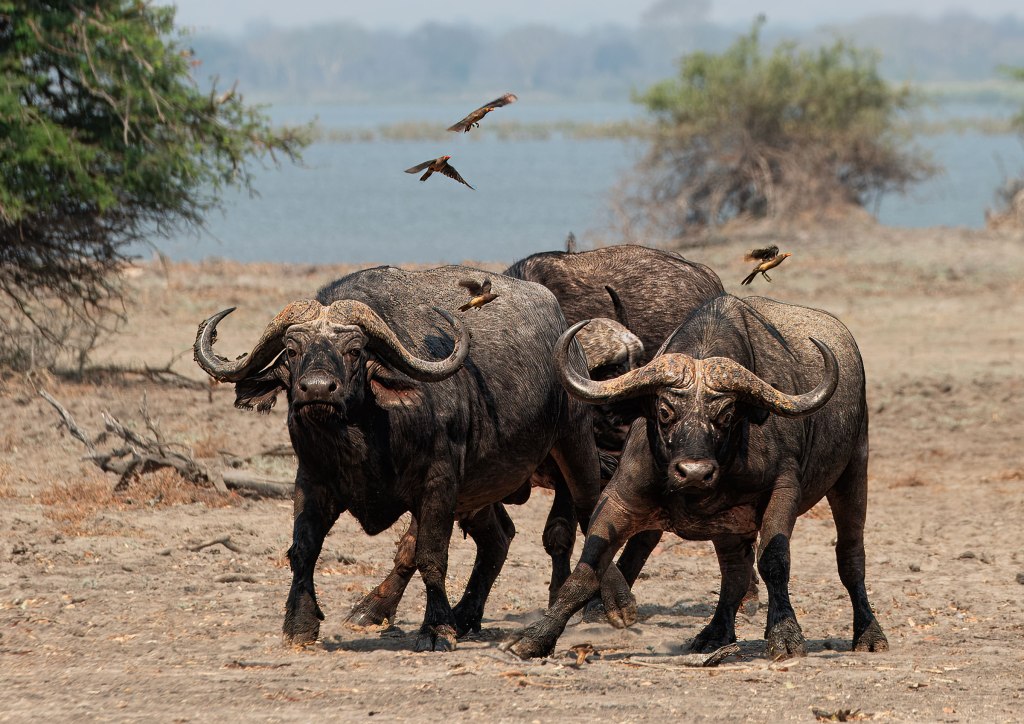
Yet, size isn’t everything, it is a jewel of a park with large populations of hippo, crocodile, elephant, buffalo, sable antelope and waterbuck supported by a good number of cheetahs, at least two prides of lions, a growing population of hyenas, some recent sightings of leopards, plenty of various antelopes and a few elusive black rhinos. For a park that was in terminal decline just nine years ago (see: The Origins of Liwonde ) it is remarkable how quickly bio-diversity is returning and how nature is restoring itself.

The park has six or seven distinct vegetation zones.(1) Flood-plain grassland with patches of riverine thicket and palm savanna stretch back from the eastern bank of the river; busy with waterbuck, warthog and impala and where we have seen both the prides of lions resting in the shade of the larger trees, conveniently close to their hunting grounds.
For more about Liwonde’s lions visit liwonde-lions

The river is fringed with extensive reed-beds and in the wet season they offer islands of vegetation far out in the river supporting squadrons of pied kingfishers (see left).
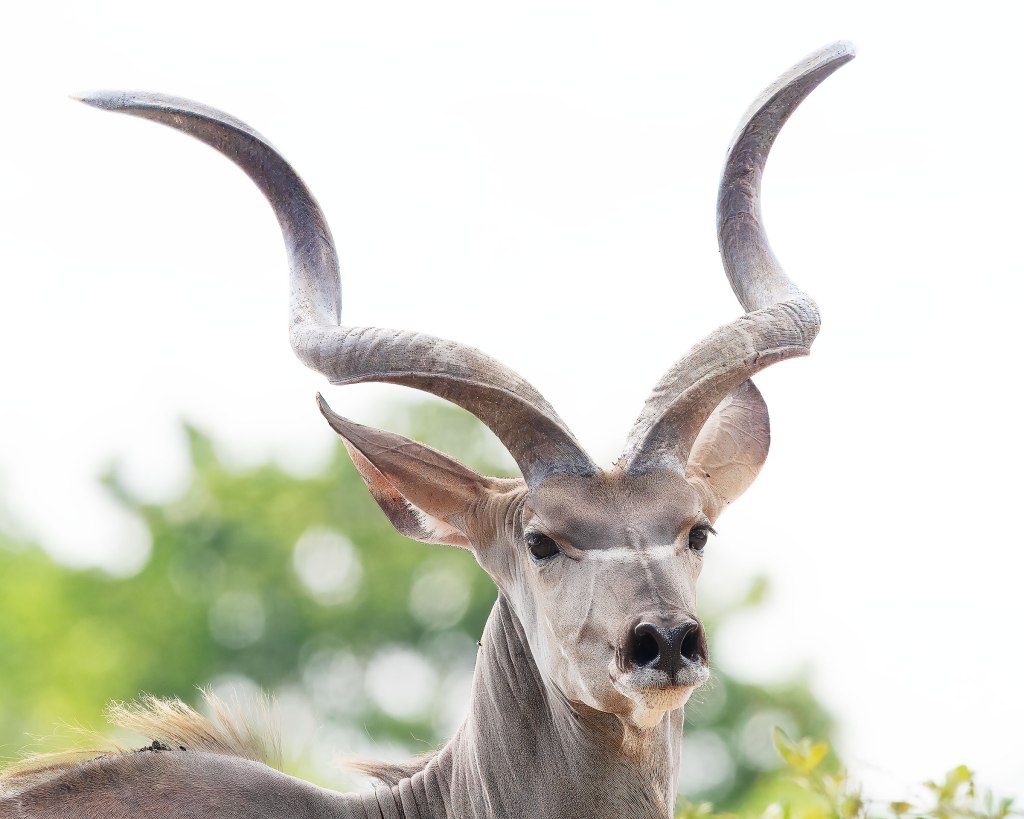
Adjacent to the floodplain there is savanna woodland of baobab, acacia and mopane interspersed with termitaria which further from the river becomes tall mopane woodland often alive with bush squirrels and hornbills and the haunt of greater kudu, sable antelope, nyala and eland.

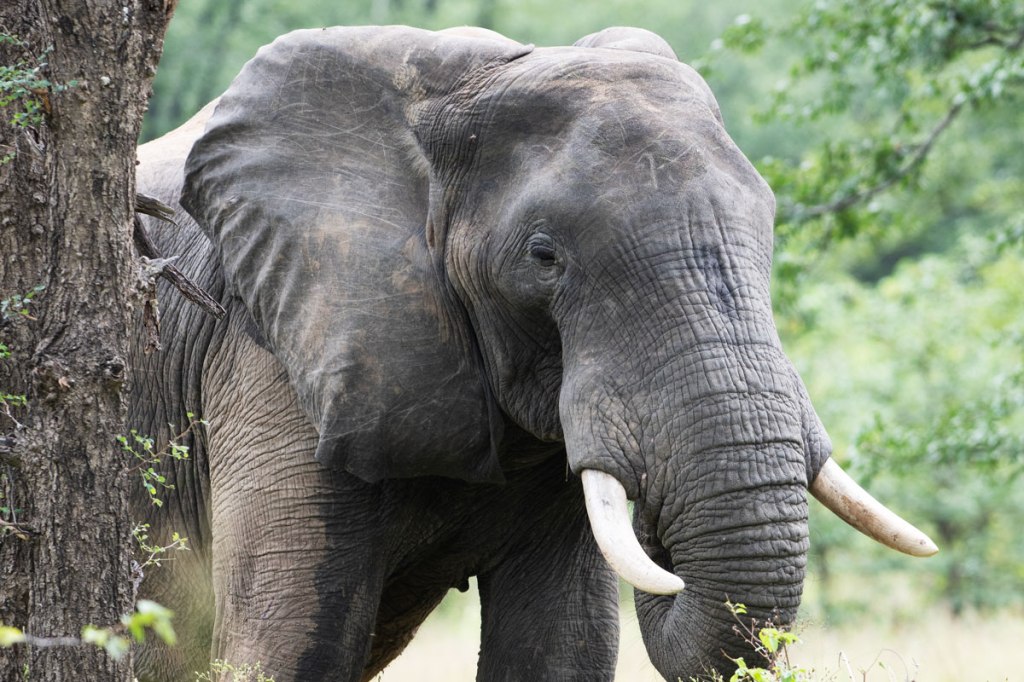
The hills are cloaked with miombo woodland and the many little tributaries of the Shire are fringed with evergreen woodland. Elephant are often found in these dry river beds.
For images of Liwonde’s varied landscapes visit liwonde-landscapes
This varied landscape in a comparatively small area provides the park with a diverse habitat for birds. Around 400 of Malawi’s 633 species have been found in the park. As much as I love photographing birds we are not birders so the fact we have recorded 80 species suggests to me that real birders would have a field day.

However, we have had some notable sightings including the quite rare Dickenson’s Kestrel (see left) that likes baobabs and tall palms so very much at home around the floodplain.
We have learnt to watch the dead trees on the fringes of the floodplain as they offer vantage points for many raptors. We have seen fish eagle, a bateleur, brown snake eagles and a martial eagle. In April last year a western osprey was in the high tree near the Chirawala bush camp every day, often feeding on his latest fishy catch.

Other notable residents of the park are the vultures; they were extinct here when African Parks assumed control in 2015 but the translocation of cheetahs to the park in 2017 and lions in 2018 triggered their natural reintroduction.
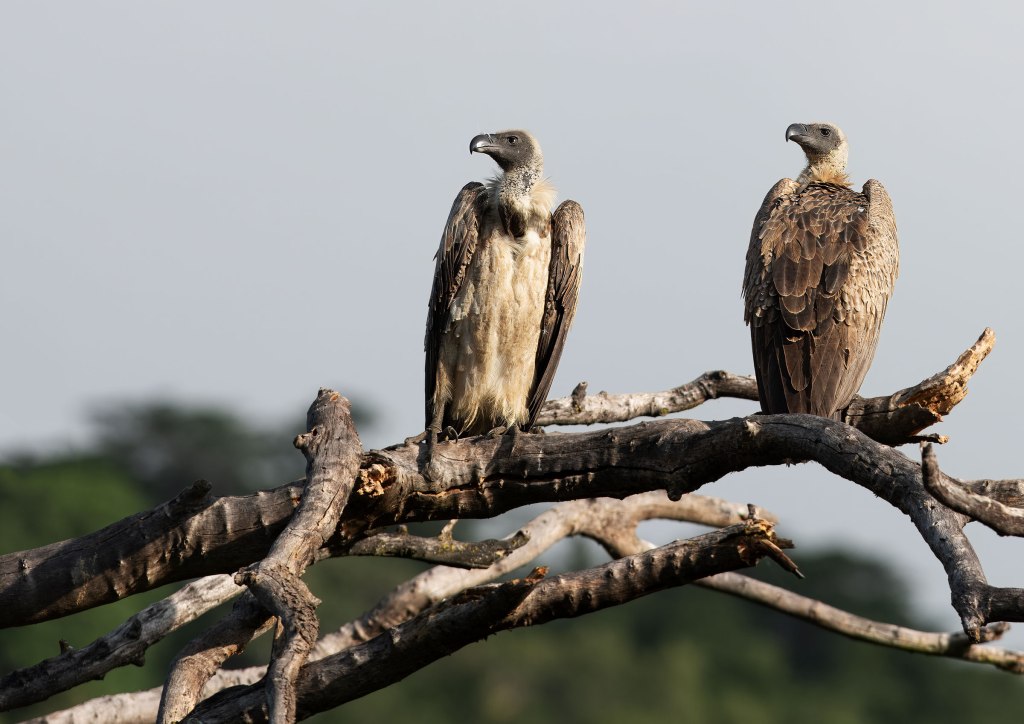
There are now seven species of vulture carrying out the essential role of cleaning up carcasses around the park, a role that makes them a keystone species; a conservation success story with significance well beyond the borders of Malawi as seven of Africa’s eleven species of vulture are in drastic decline and classified as Endangered or Critically Endangered. (2)
Liwonde is perfect for self-driving. The Spine Road runs 40 km south to north pretty well straight up the park and is an all-weather track in good condition. In our experience despite this being the main highway you are more likely to meet an elephant than another tourist.

We have had some brilliant sights from this road including a lion kill in the ditch alongside the road, several raptors as mentioned above and, where the road skirts the floodplain elephant, hippo, buffalo, warthog, waterbuck and a wide variety of lapwings.
We have always stayed in the camps on the southern edge of the park so our experiences are based on entering through the main gate and driving north investigating the loops and then making our way back down to the south. I assume that people staying at the posh camps further up the park will have different but equally good experiences.
To the right very soon after entering the park there is a 9km trail that circumnavigates the large forested hill that dominates the southern park.
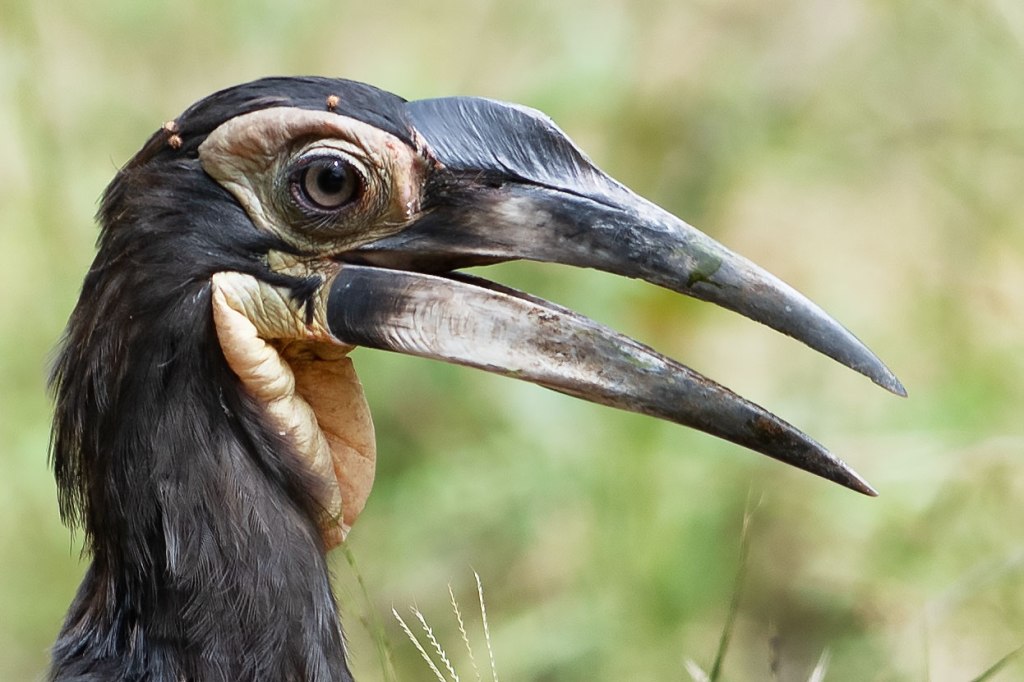
This route is a pleasant forest drive with southern ground hornbill (see left) to look out for.
As you drive up the Spine Road there are several loops towards the river which are well sign-posted. Depending on the season some can be affected by flooding but they are still worth exploring even if it means turning back on oneself when encountering lagoons. It is from these loops that we have seen the lions, many elephants and lots of waterbirds.
For more images of Liwonde’s mammals visit liwonde-national-park

After an absence of twenty years seven cheetahs were reintroduced to the park in 2017; since then they have bred successfully and the population has risen as high as twenty-one.(3) The cheetah is Africa’s most threatened big cat, extinct in 90% of its historic range and with less than 7,000 left in the wild. This makes the Liwonde programme of African-wide significance as shown by Liwonde providing cheetahs to seed new populations in the Majete Wildlife Reserve in Malawi and the Zambezi Delta in Mozambique.
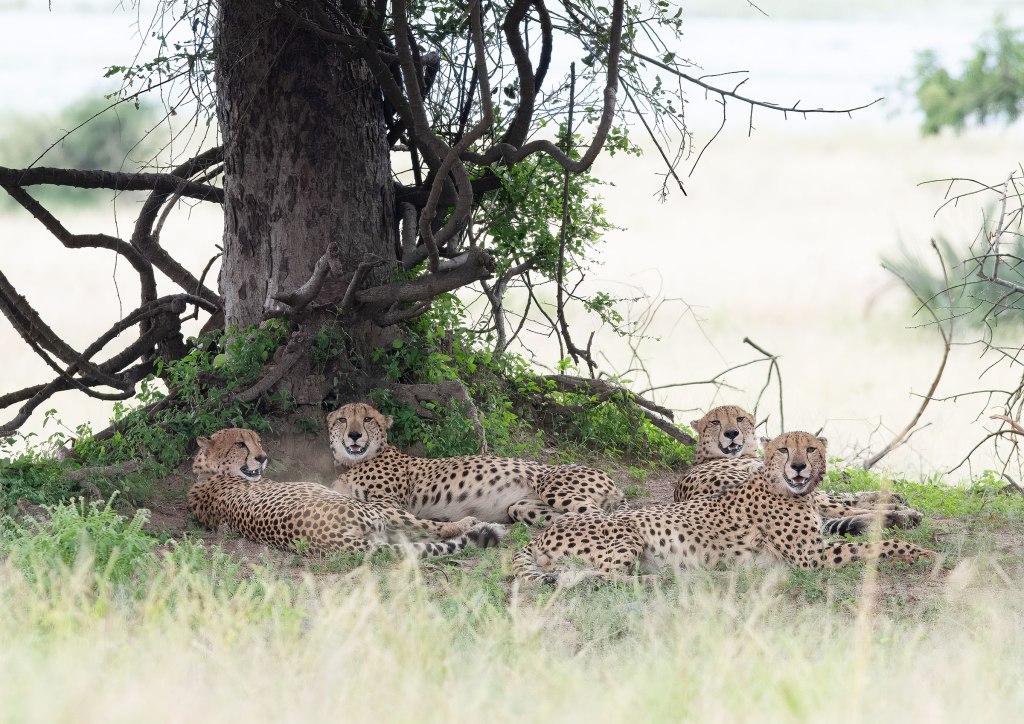
We have only been lucky once but it was an experience worth waiting for: five young cheetahs on a kill close to one of the short loops to the east of the spine road. The good news is that cheetahs are daylight hunters, primarily in the early morning and late afternoon; females with cubs will hunt daily but other adults might only hunt every third or fourth day so at Liwonde this means 60% to 75% of the time they are up in the hills away from view.

To find them look under every shady tree, listen for the yellow baboons screaming warnings to each other, scan the floodplain for movement or for unusual shapes on top of termite mounds.
To see more of Liwonde’s cheetahs visit liwonde-cheetahs
The cheetahs have to be the highlight of Liwonde NP, they are so rare and so threatened that to see them thriving in the wild is humbling; their very existence is a tribute to the work of African Parks, Malawi’s Department of National Parks and Wildlife, the Endangered Wildlife Trust and the Lilongwe Wildlife Trust and all the sponsors who help finance these remarkable organisations.
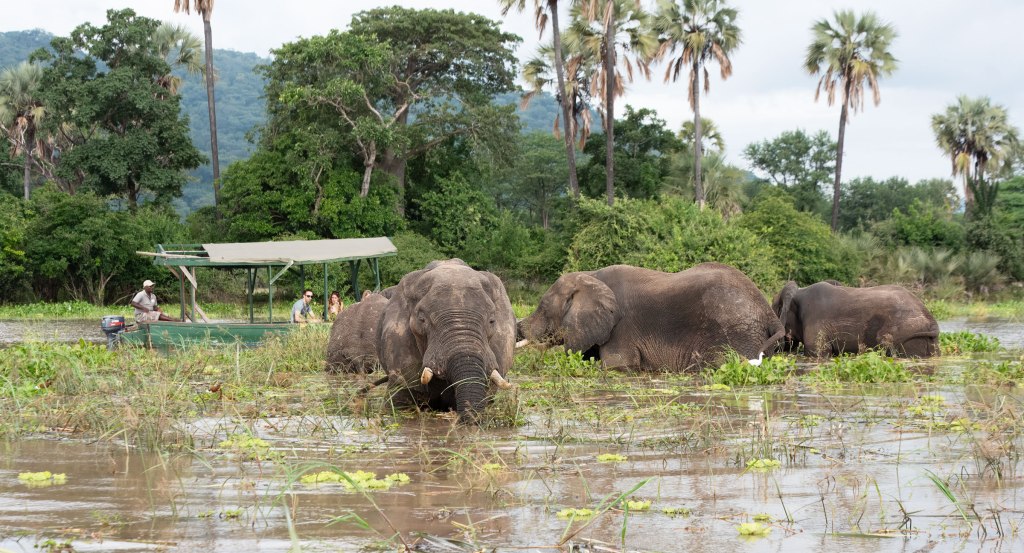
But, in many ways the highlight of a visit to Liwonde is not to be found driving round the dusty roads searching for elusive cheetahs and sleepy lions or scanning the trees for rare Lilian’s love birds or Böhm’s bee-eaters. It is a trip on the river. Other parks offer river trips but many like South Luangwa in Zambia or Majete in Malawi are limited to the “Emerald Season” when water levels are high. Liwonde can offer boat safaris all year round and these trips are very special indeed.

Elephants come down to the river to feed amongst the reeds and in the shallows. This fellow on the left was spotted in October 2022.
The elephants are remarkably habituated to the safari boats and this allows the guides to drift in surprisingly close and because the animals are often standing in reasonably deep water you have the unusual and quite remarkable experience of seeing eye-to-eye with a fully grown elephant.
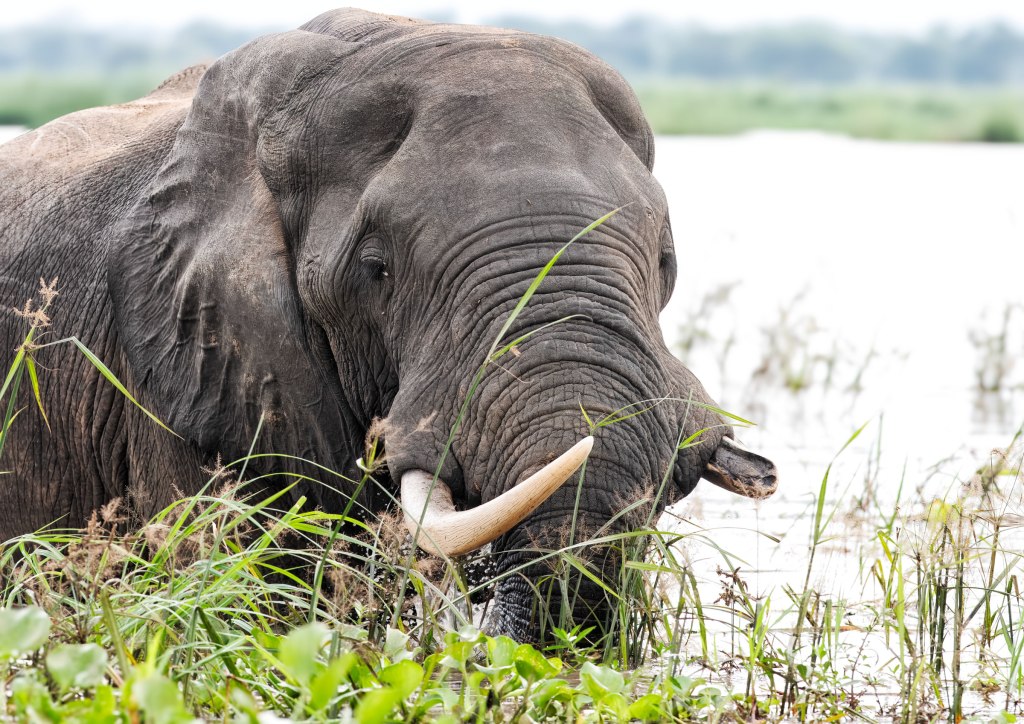
We have always taken the boat safari in mid to late afternoon and on each occasion have found at least one group of bull elephants feeding in or around the east bank of the river. We have only once seen a breeding herd and that was on the west bank.
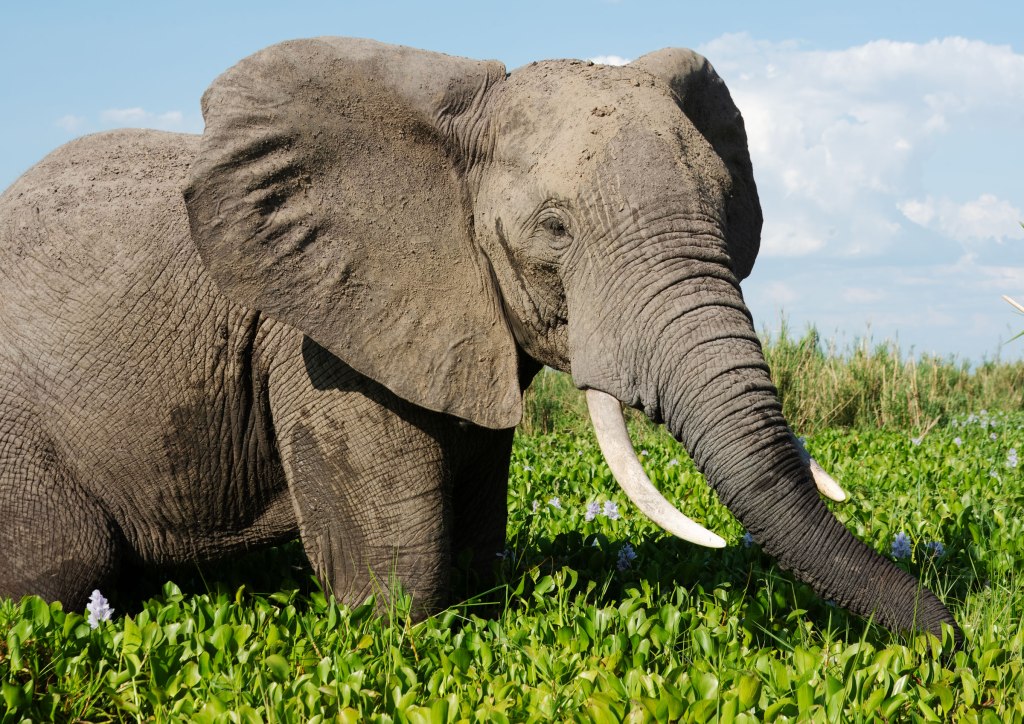
Whilst the elephants might be highlight there is plenty of other wildlife to be seen from the river.
There are around 2,000 hippos in the park and, of course, in daylight they are mostly in the river but at night they travel as much as 5 km into the park to feed.(4)

In the dry season sand banks appear and are shared by waterbirds and crocodiles and half submerged, dead trees become the favoured roosts of African darters and white-breasted cormorants.

In less than a decade Liwonde National Park has staged a remarkable recovery from poached out and dying, riddled with old snares and the lair of angry crop raiding elephants to become one of the finest parks in Africa. Unfortunately we cannot measure its success in terms of visitors because only around 11,000 foreign and 12,500 domestic visitors a year have discovered this gem (apart from school children and people from the local community.
What we can use as a metric is that, it has not only replenished and revitalised its own wildlife it has become a source reserve to help other depleted parks renew; in 2016 a total of 350 elephants were translocated from Liwonde to Nkhotakota, 263 Liwonde elephants left for Kasunga in 2022 and nearly 1,000 other animals were moved from Liwonde into the adjoining Mangochi Forest Reserve that same year.
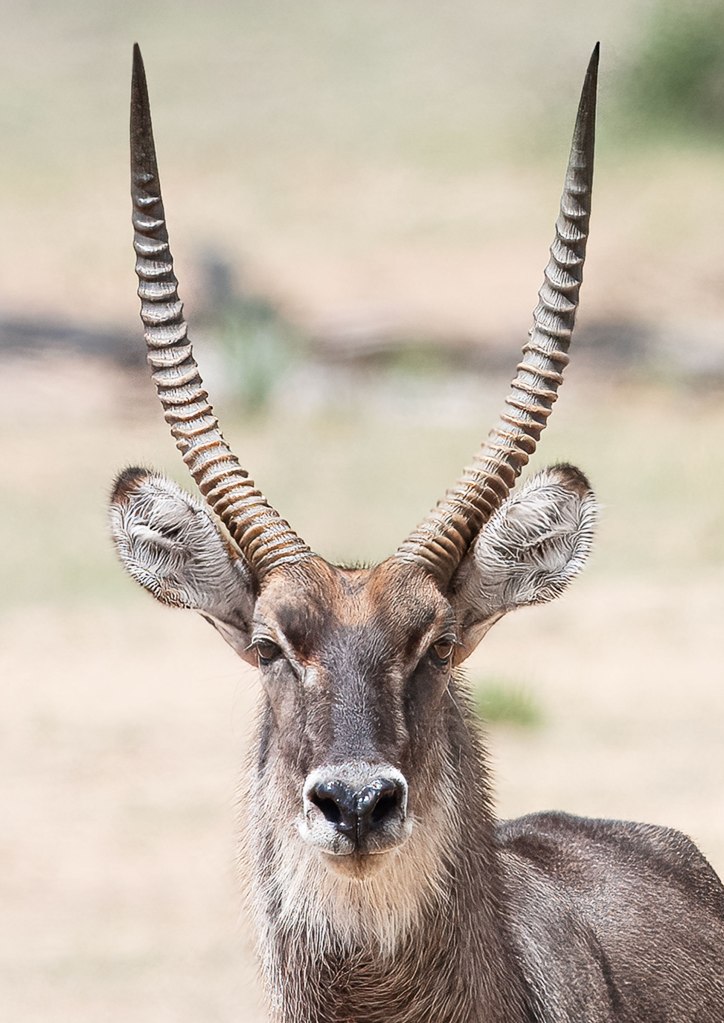
Liwonde is now a source population for elephant, many species of antelopes and cheetahs.
To the left is a male Waterbuck which are plentiful in Liwonde.
We have visited three times between April 2022 and December 2023 and stayed for four days each time which I think is just about the ideal amount of time to spend in the park and allows for two boat safaris and plenty of time on dry land.
It is easily accessed from the capital Lilongwe, around 4 hours by road or from Blantyre, around 2 hours by road; both cities have international airports. We have twice combined it with a stay on the lake which is probably the classic choice but last December we drove from Liwonde to South Luangwa in Zambia which was a brilliant pairing of two wonderful parks.
There is a comment box at the bottom of this post after Footnotes and Other Sources. Please let me know if you have any thoughts on this subject and whether you found this post useful.
References
- Wildlife and Environmental Society of Malawi 2022. Liwonde National Park Key biodiversity accessed 11/3/24 at Datazone-Birdlife-Liwonde
- Lilongwe Wildlife Trust. Conserving Malawi’s Vultures. Accessed 11/3/24 at LWT-Vultures
- Olivia Sievert 2022 Cheetahs Return to Malawi: A Record of Reintroduction Success. Accessed 14/3/24 at Oryx-Cheetahs
- Mark Harrison, Maya Kalindekafe, & Bryson Banda 2007 The ecology of the hippopotamus in Liwonde National Park, Malawi: Implications for management accessed 14/3/24 at Harrison-Hippos

 Travelogues and Other Memories
I would appreciate hearing your thoughts on this subject.