
This is the story of a day my daughter and I spent in Liwonde National Park in April 2023 hoping to find cheetahs, perhaps the mother and cubs we had been hearing about, or a lone cheetah hunting on the floodplain of the Shire River.
It was our second day in the park and after a quick coffee at Liwonde Safari Camp we were through the main gate soon after 06:00. A misty morning with low cloud hanging over the hills initially offered us a pleasing soft light for photography but as the morning progressed the cloud lifted and the mist burnt to give us a typically bright and warm day.
April is at the end of summer and the wet season so the River Shire had inundated much of its flood plain; lagoons had flooded over some of the loops on the western side of the spine road and diversions were in place where the spine road itself had been flooded or damaged.

There were a few highlights in the morning as we slowly worked our way up the park such as a side-striped jackal carrying a long bone and heading into the woodland beneath Chinguni Hill. They are generally nocturnal hunters so we were lucky to see one heading home in daylight.
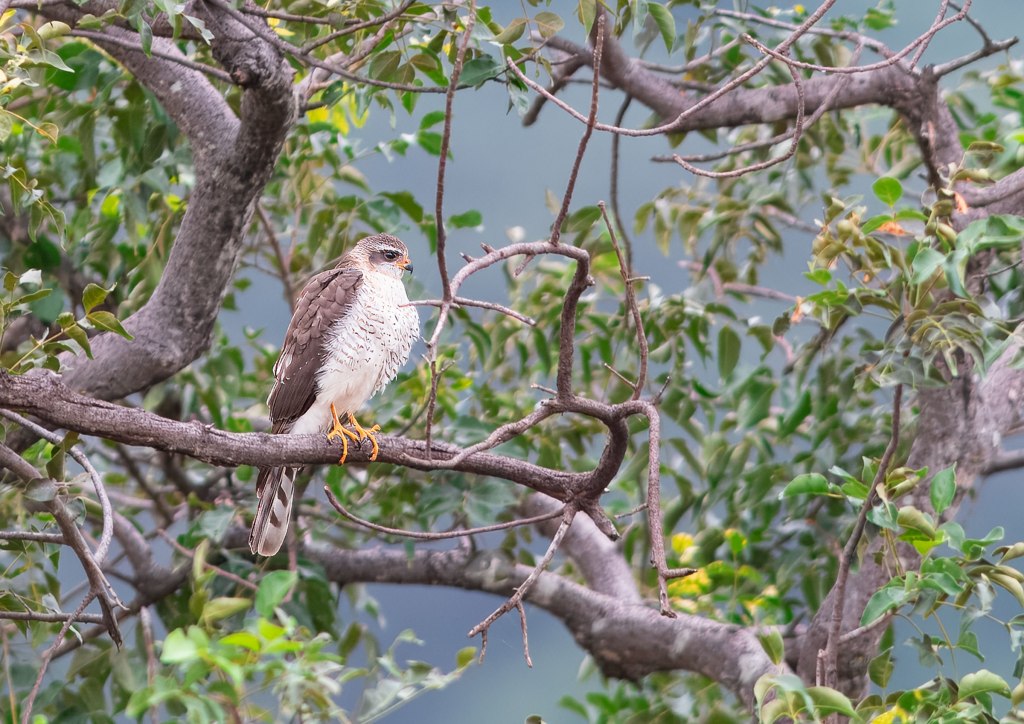
At this time of the morning the bush is simply alive with birds; southern red-billed hornbills hop around under the trees, a fish eagle perches on a high branch watching a lagoon fringed with Egyptian geese, African openbills and spur-winged geese. A western osprey devours a fish breakfast while an ovambo sparrow hawk watches for unwary birds.
In the open patches of grassland and on the floodplain there are waterbuck, impala, kudu, yellow baboons, warthogs and a few lone bull elephants wandering to and from the woodland and the river. We drive slowly north enjoying the peaceful morning, photographing birds whilst all the time keeping a watchful eye on isolated clumps of trees where we have previously seen lions and scanning the edge of the woodland to the east of the spine road where the undergrowth is at its thickest thinking this is a likely place to see the female cheetah and her cubs.
By mid-morning we have gone as far north as we’d planned for the day and as the temperature increases and the wildlife begins to retreat into the shade we head back down to the area to the west of Chingula Hill thinking we might find a breeding herd of elephants heading to the river to cool off. There is a place where gap between the flooded river and the spine road narrows and we stop here to watch African jacanas using the hippos as stepping stones.
My daughter who is driving, restarts the car and, on a whim swings up the side track that leads to the Chimwala Bush camp. As we pass a large clump of trees on the right of the track she brakes, stops the engine and without a word points out her open window.

In the long grass in the shade of a tree five adult, male, cheetahs are tearing at a waterbuck carcass. The kill looks fresh; there is a square kilometre of open grassland behind the cheetahs; so perhaps this is where this coalition of males brought down the waterbuck. This suggests they may have attacked from cover rather than engaging in the high speed chase we associate with cheetahs.
That this is a coalition of five cheetahs is interesting as, according to the Lilongwe Wildlife Trust,1 male cheetah are normally loners or partners in small groups of two or three males. Yet, Lilongwe Wildlife Trust posted a LinkedIn story last year reporting a group of seven males so I wonder if this is the remains of that “supergroup”.
There are obvious benefits to belonging to a coalition including being able to defend a larger territory, increase their success when hunting, general protection from larger predators and the ability to deter lions, hyenas and vultures bullying them off their kills, a practice know as kleptoparasitism.2

Cheetahs eat quickly, they are not a large animal and their kill can easily be stolen by lions or hyenas; this strategy was on display as they ripped into the carcass from all sides. There is a bush myth that predators don’t eat waterbuck because their fur has a waterproofing oil that taints the taste of their flesh. However, there are plenty of first hand accounts of lions eating waterbuck and these cheetahs weren’t holding back.
According to Siyabona Africa3 this myth probably originates from a hunter killing a waterbuck during the dry season when the shortage of food forces many species of ungulate to eat herbs which can alter the taste of their meat. Siyabona is clear that in normal conditions their meat is as good to eat as any other antelope.
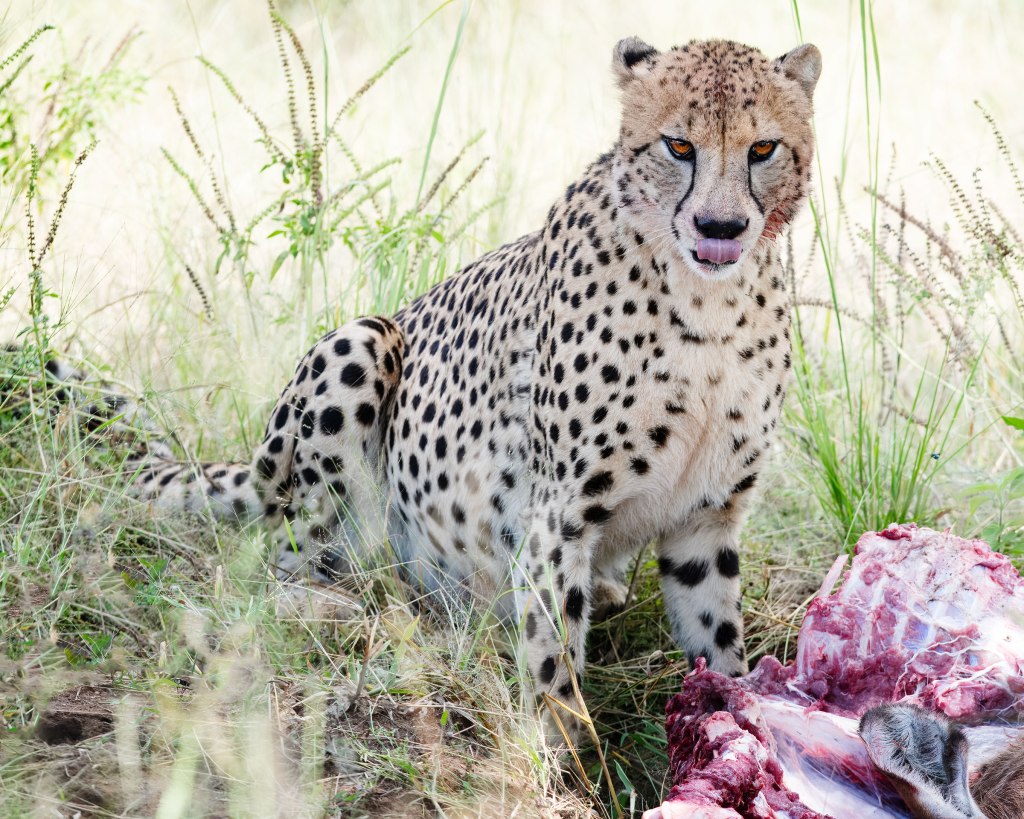
The cheetahs appeared to agree. We spent around two hours parked on the edge of the track watching the behaviour of these beautiful animals, rather selfishly enjoying the fact that no other tourists were there, although we did meet and chat to the Lilongwe Wildlife Trust carnivore monitoring person who arrived as we left.
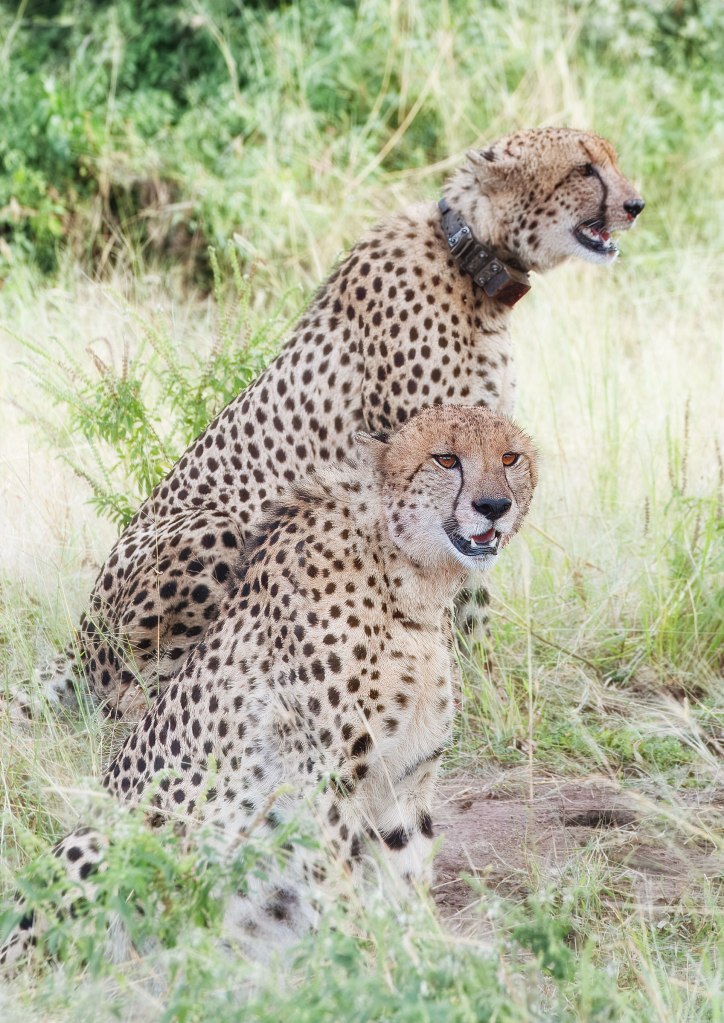
After the initial feeding frenzy they calmed down and took breaks from feeding. Occasionally wandering back for another bite or two. Throughout this less frenetic period at least one, often two cheetahs scanned their surroundings to check they were still safe.
I am always amazed how often, when watching wild animals from a vehicle inside a park or reserve, that they utterly ignore the watchers.
They are clearly aware the vehicle is there but are so habituated to vehicles stopping near them that in their mind it is a non-threatening, inanimate object. A big rock that appears and disappears. I know in the Mara they use safari jeeps as lookout points so maybe they do “see” a rock.
The cheetah is the sleek sprinter of the predator world, its slender body, long legs and non-retractable claws enable it to reach speeds of up to a hundred kilometres an hour over short distances and would out accelerate most high performance cars by getting to that speed in three seconds; but that’s not going to happen after long, lazy waterbuck lunch. Their full stomachs were amusingly full by the time they began to lose interest in the main course. Eventually they were all resting near the carcass.

After a short rest they began to groom each other. Cheetahs do this to establish and maintain the bonds within a coalition and it is a form of intra-group communication,4 they also get to lick some tasty blood off their brothers. The African Wildlife Foundation suggests that related males in a coalition will engage in mutual grooming but unrelated males in the same coalition will keep themselves to themselves.5 It would be exciting to have the opportunity to watch this group over an extended period of time to better understand their interactions. I am envious of the Lilongwe Wildlife Trust Carnivore Monitoring team who are continually tracking the big cats in the park.

The final act was interesting, one of the collared males (three had collars) stood and walked away towards the more dense woodland but after about twenty five metres he stopped and looked back at his four colleagues. He remained in this pose until the others started to move.

Two hours after we had first spotted them all the cheetahs moved off across the open grassland to a stand of trees a little less than a kilometre away. We left them dozing in that rather strange pose they adopt lying on their sides but keeping their heads in the air.

That might be the end of the cheetahs part of the story but we returned to the carcass later that afternoon and the next morning and were delighted to see white-backed vultures and a young palm-nut vulture benefiting from the kill.
This a one of the more remarkable aspects of reintroducing cheetahs into Liwonde. When seven cheetah were translocated to a boma in Liownde in 2017 by African Parks there had been no sightings of vultures in the parks for many years, they had not nested there for twenty years.
Olivia Sievert of the Lilongwe Wildlife Trust tells the story:
“Within days, and with the cheetahs still in their acclimatisation pen or boma, the vultures showed up ……. By the second week of the cheetahs being in the boma the vultures were in the trees around the boma, which was very exciting to see.”6


Although around 250,000 white-backed vultures survive in the wild they are considered critically endangered due to the raid decline in their numbers. Over 90% reduction in population since 1970.
There are now seven species of vulture carrying out the essential role of cleaning up carcasses around the park, a role that makes them a keystone species; a conservation success story with significance well beyond the borders of Malawi as seven of Africa’s eleven species of vulture are in drastic decline and classified as Endangered or Critically Endangered.7


Cheetahs once roamed from the Cape to the Mediterranean, through the Arabian Peninsula and east to India. There may be as few as 9,000 left in the wild.
For more images of the five cheetahs we saw in April 2023 please visit: my-portfilio-cheetahs
There is a comment box at the bottom of this post after Footnotes and Other Sources. Please let me know if you have any thoughts on this subject and whether you found this post useful.
References & Citations
- Lilongwe Wildlife Trust. Cheetah Supergroup! Accessed 18/3/24 at linked in-cheetah_supergroup ↩︎
- Conservation Club. Cheetah Coalition: Cat Group Dynamics. Accessed 18/3/24 at conservation-club-cheetah-coalition ↩︎
- Siyabona Africa. Fireside Stories: Commonly Heard Myths. Accessed 17/3/24 at Krugerpark-fireside-stories ↩︎
- Conservation Club. Cheetah Coalition: Cat Group Dynamics. Accessed 18/3/24 at conservation-club-cheetah-coalition ↩︎
- African Wildlife Foundation. Cheetah. Accessed 18/3/24 at AWF-cheetah ↩︎
- Ryan Truscott 2022 Cheetah reintroduction in Malawi brings vultures back to the skies. Accessed 18/3/24 at mongabay-vultures ↩︎
- Lilongwe Wildlife Trust. Conserving Malawi’s Vultures. Accessed 11/3/24 at LWT-Vultures ↩︎

 Travelogues and Other Memories
I would appreciate hearing your thoughts on this subject.