Grevy’s zebra (Equus grevyi) is the largest species of zebra and the most endangered. It was once found across the horn of Africa but is now restricted to northern Kenya with possibly only 100 individuals left in a small area of southern Ethiopia. In total there are about 2,800 individuals left in the wild. As such it is one of Africa’s most endangered large animals.
Grevy’s Zebra & Jules Grevy 1807 – 1891
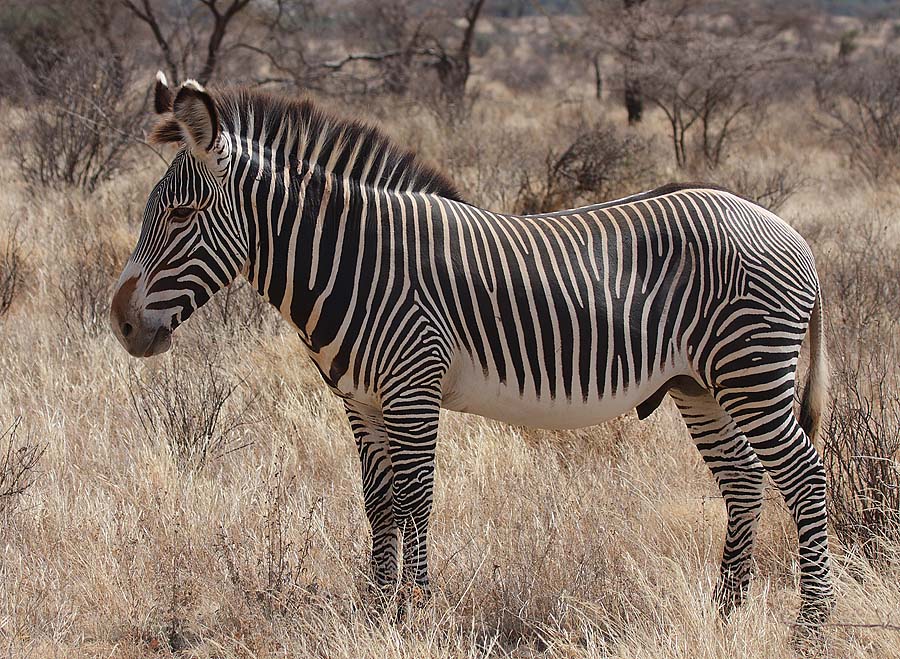
Also called the Imperial zebra this is the largest of all zebras weighting as much as 450kg. They have narrower stripes than other zebras, a white belly and a black dorsal stripe. Their large head is tipped with large fuzzy ears and a brown muzzle.
Tragically, because of habitat loss, extermination by farmers and mindless hunting for their skins it is easier to find them in captivity than in the wild.

In 1882 Menelik II, Emperor of Abyssinia (now Ethiopia) presented a zebra to the President of France, François Judith Paul Grévy, known as Jules Grévy (see left).
A French zoologist, Professor Jean-Frédéric Émile Oustalet, realised that this type of zebra was different from other zebras and named the species after the President.

Émile Oustalet (1844 – 1905) was an eminent zoologist and ornithologist. The extinct Oustelet’s duck, and Oustalet’s chameleon, a giant of that species from Madagascar are named after him.
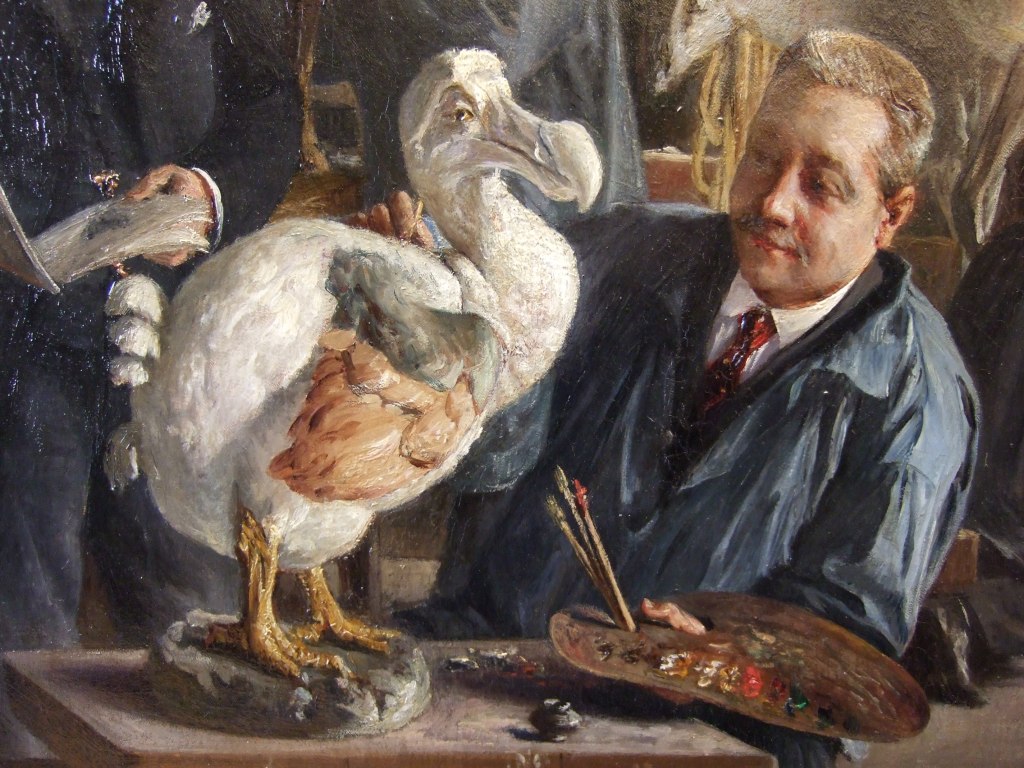
He is seen here reconstructing a dodo in 1903 in a painting by Henri Coeylas.

 Travelogues and Other Memories
I would appreciate hearing your thoughts on this subject.