Despite visiting parks and wildlife reserves across four African countries hyenas have remained somewhat elusive. We’ve seen the occasional loner in the distance but until South Luangwa National Park our only worthwhile encounter was two spotted hyenas lying in a puddle by the side of the road in Kruger National Park.
This lack of sightings has been frustrating as, in the context of African apex predators, the spotted hyena is not uncommon. No one really knows how many spotted hyenas are left in the wild, most sources give a very broad estimate of 27,000 to 47,000 and experts suggest that this is probably an underestimate. This compares to less than 25,000 lions and less that 7,000 cheetah or wild dogs.
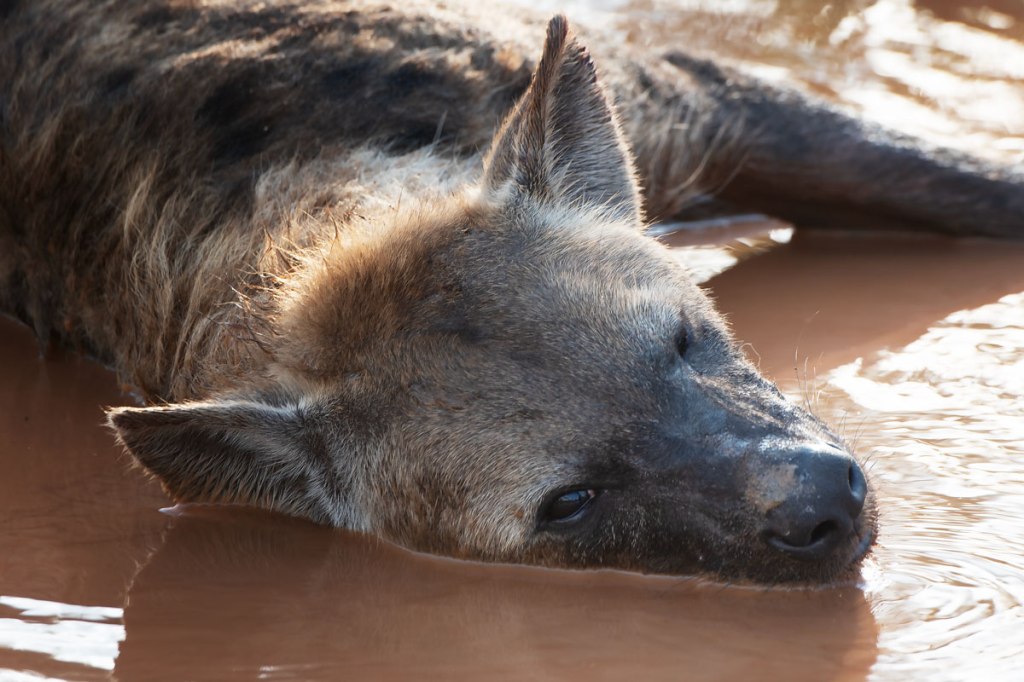
Hyenas are nocturnal, mostly active at night, with a peak just before dawn so the best hope of a sighting is early morning, perhaps with them lingering on a kill or making their way back to a shady place to rest. Our limited experience confirms that they like a puddle to lie in during the day.
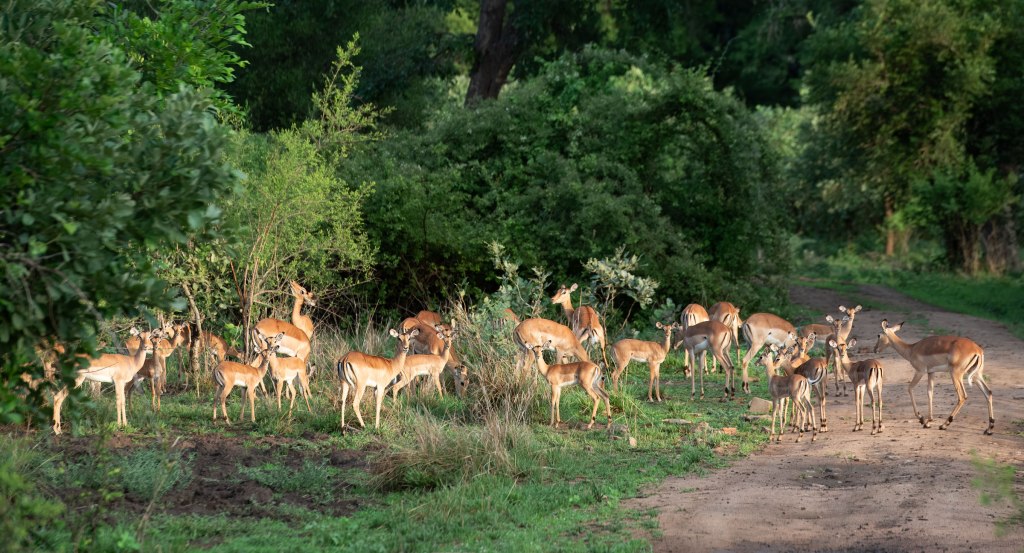
We rumbled into South Luangwa N.P. just after dawn as the sun began to break through in an emerald season that still had not quite got into full swing with just the occasional short and sharp rain shower. A herd of impala had spent the night near the house and they slowly drifted across the track as we set off. Our guide, the remarkable Jonna Banda, Country Manager for Robin Pope Safaris, has spent his adult life in parks across central Africa, not just guiding tourists but mentoring and training less experienced guides.
Amongst the many skills needed by a guide their ability to read the client is one of the most vital and after three or four days together he knows we will sit back and allow the day to unfold around us with no demands, just happy to be in the bush on a warm African Christmas morning.
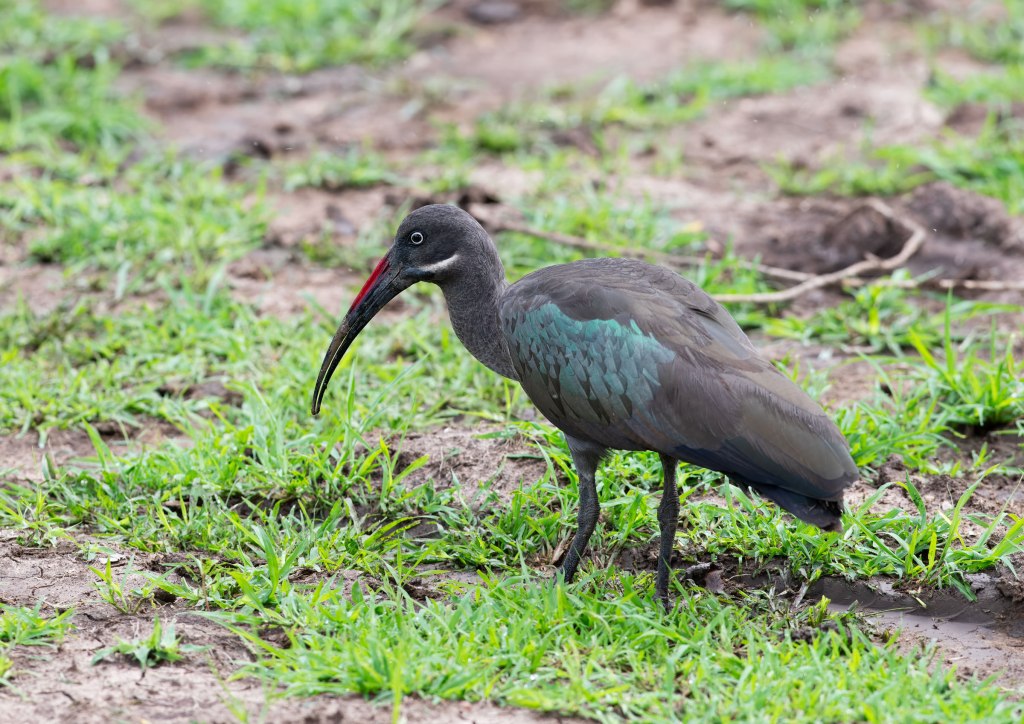
We paused by a dry lagoon to watch Hadeda Ibis poking around in the mud searching for worms, insects and molluscs. It is reputed to be the loudest bird in Africa but they were more intent on finding breakfast than calling.
A radio message from another Robin Pope guide sounds interesting; hyenas, well known kleptoparasites, have stolen a leopard’s kill not far from where we are so we head off to take a look. We arrive at a quite small, grass covered, open area lined on two sides by dense bush and with a muddy puddle at its centre. Unfortunately word has got out and there are five or six other safari vehicles already there.
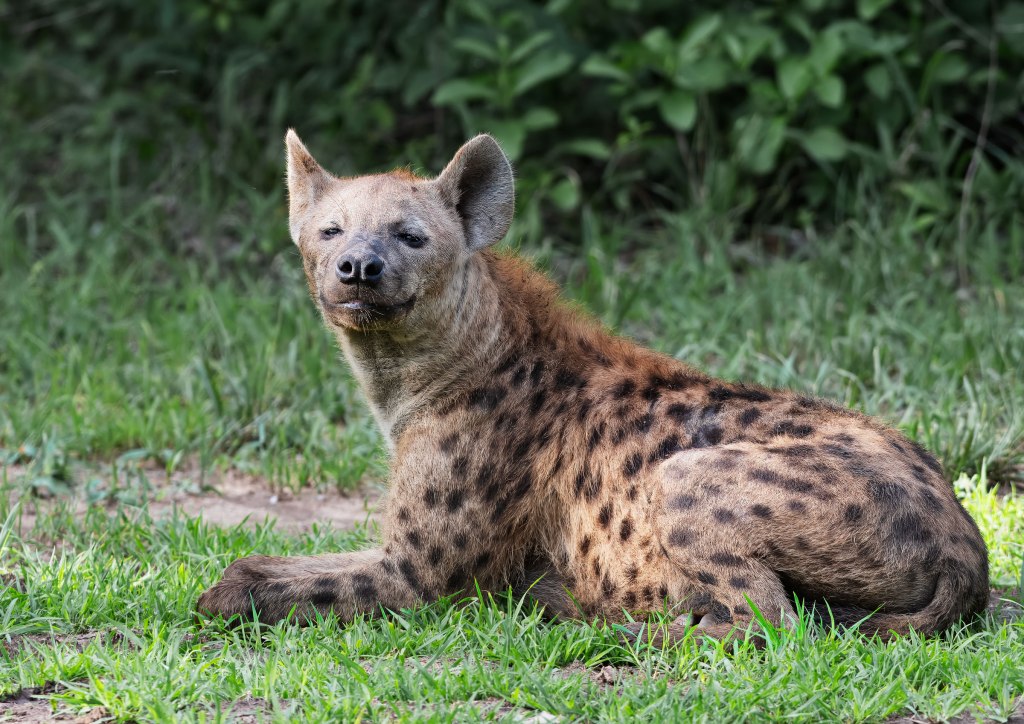
Seemingly unconcerned by the presence of thirty-odd people staring at him from large four by fours a solitary hyena sat on the edge of the clearing with its back to the dark undergrowth. It never ceases to intrigue me that many wild animals and particularly the apex predators ignore safari vehicles, and by that I don’t mean they just look the other way they seem to look straight through them as if they don’t exist. Obviously they are habituated to gawking humans in big hunks of metal but one feels that there is an element of distain in their attitude.
People ask, what should I take on safari? There are plenty of packing lists out there, especially on safari clothing sites but the real answer is patience; if you want great memories take as much patience as you can possibly find and choose your safari companions carefully. This particular morning was an example of patience paying off and, in my experience it nearly always does. This hyena was not playing to the gallery, he just sat casually and slowly scanning the perimeters of the clearing. Its fat tummy showing it had already feasted on whatever the pack had stolen; an adult female hyena can consume 18kg of meat at one meal, I say meat but Hyenas have the most powerful bite of the African mammal predators1 and this gives them the ability to crunch bones which they are also able to digest. This enables them to provide a very efficient carcass cleanup service.
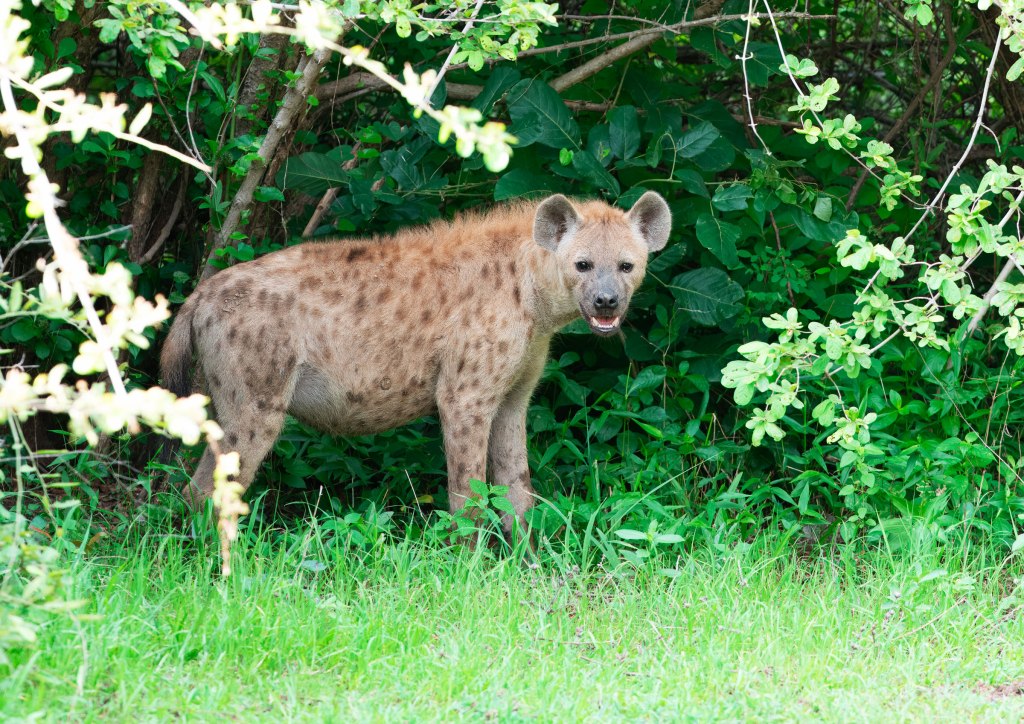
Safari trucks began to start their engines and leave, “nothing happening here” looks on their passengers’ faces. We nudged our way to a better vantage point and continued watching. After a while the lone hyena stood and walked into the dense undergrowth triggering the departure of the remaining trucks.

So now, we were all alone sitting in the middle of nowhere without so much as a bird or an animal to watch but Jonna knew that the rest of the clan had to be close. Then we started to hear rustling noises in the bush, and out came a huge female, probably the alpha female in what is a highly matriarchal society, dragging the remains of a male impala. Like the other pack member her tummy is very distended. She drags the carcass to the puddle and sits down in the water to cool off.

Others appear, some following her to the water, some just to sit or doze.
Soon we are sitting on the edge of a small clan of spotted hyenas, maybe eight or ten animals, although we can’t see if other clan members have exited the bush in other directions.
Now is the time to sit back and just watch.

She is very alert. As previously mentioned hyenas are famous kleptoparasites, stealing kills from other predators but lions are more likely to steal their food than the other way round so the leader of this gang of thieves is probably keeping a watchful eye out for the lions that we soon afterwards find are in the vicinity.
Having talked about their ability to steal kills it is the time to dispel the long-held myth that they are scavengers. Studies have shown that well over half their diet comes from hunting but they are also remarkably flexible and are known to adapt their diet to nearly any organic matter. In an environment like South Luangwa as much as 95% of their diet could come from fresh meat hunted and killed by individuals or by the pack.
As mentioned above the spotted hyena is relatively common in sub-Saharan Africa and as such according to Stephen Glickman in terms of tonnage of meat consumed is “the most significant terrestrial carnivore on the planet”. Unlike the first game protection officers and wardens in the fledgling wildlife parks we now understand that the predators are a vital part of the environment. The big predators are efficient killers, the energy expended versus the protein gained has to be balanced in the hunter’s favour; meaning that the healthiest, strongest and therefore most agile and fastest animal in its prime today is less likely to become a meal than a sick, aging or injured animal. Hence the view that just about everything eventually comes to a violent end in the African wilderness.
This means, in a balanced eco-system, that animals suffering from disease, old age or starvation are quickly taken by predators and recycled. The hyena has a special role among the big predators as its huge jaws and unusual digestive system allows it to consume and digest everything other than hair and horns. Along with vultures they keep the savannah clear of corpses. The fact that they kill the majority of their diet and then leave a clean plate makes them a most efficient and valuable predator.


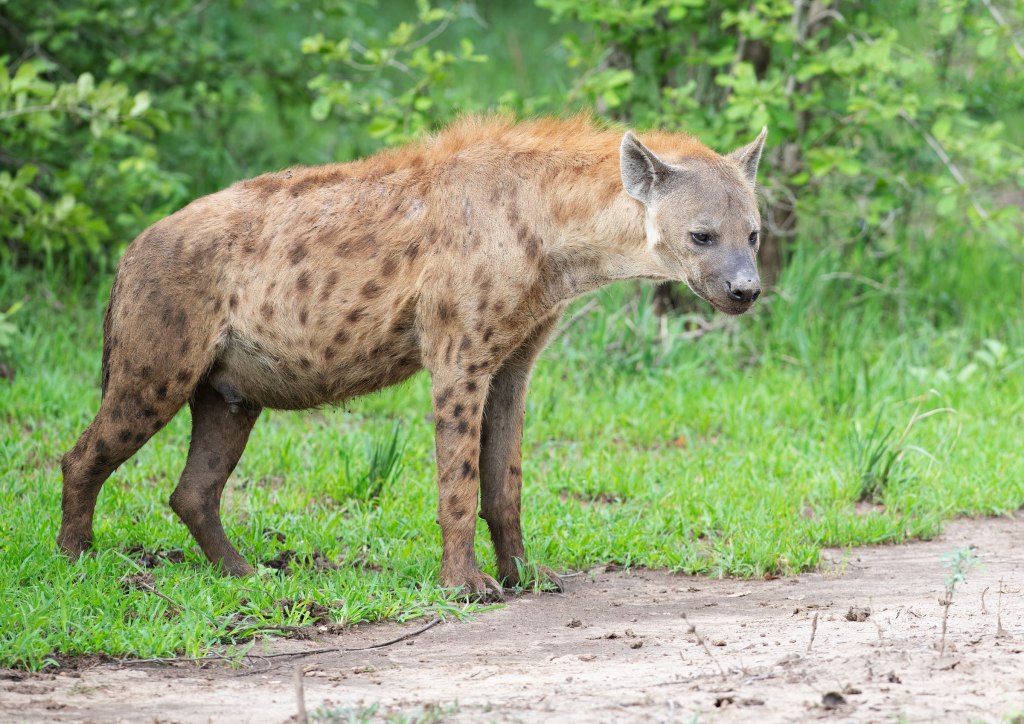
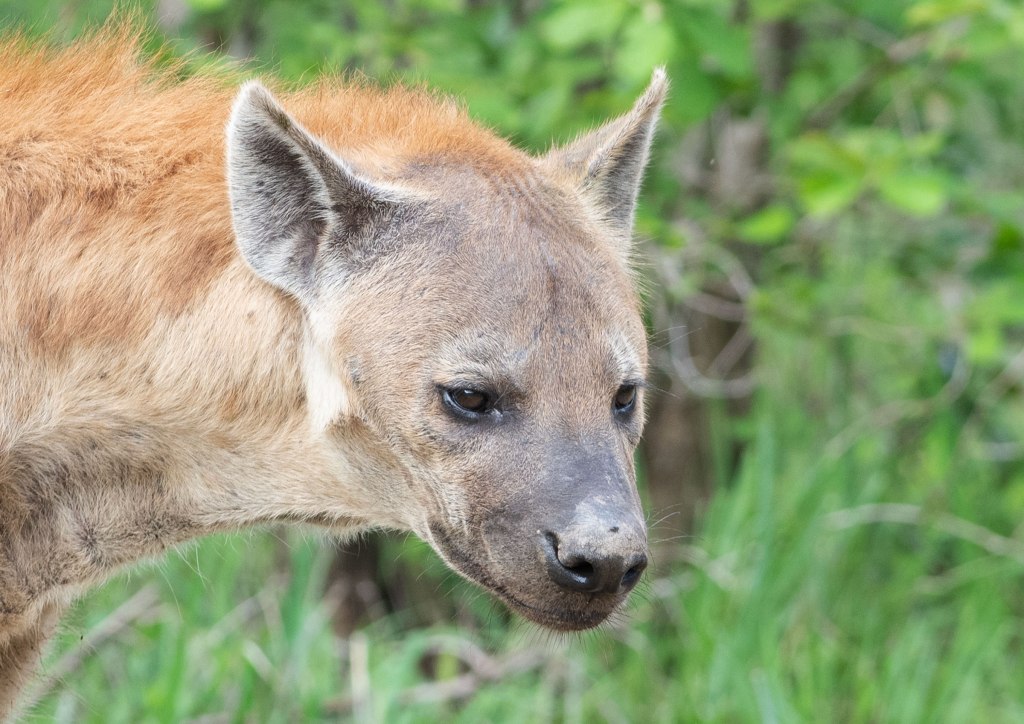
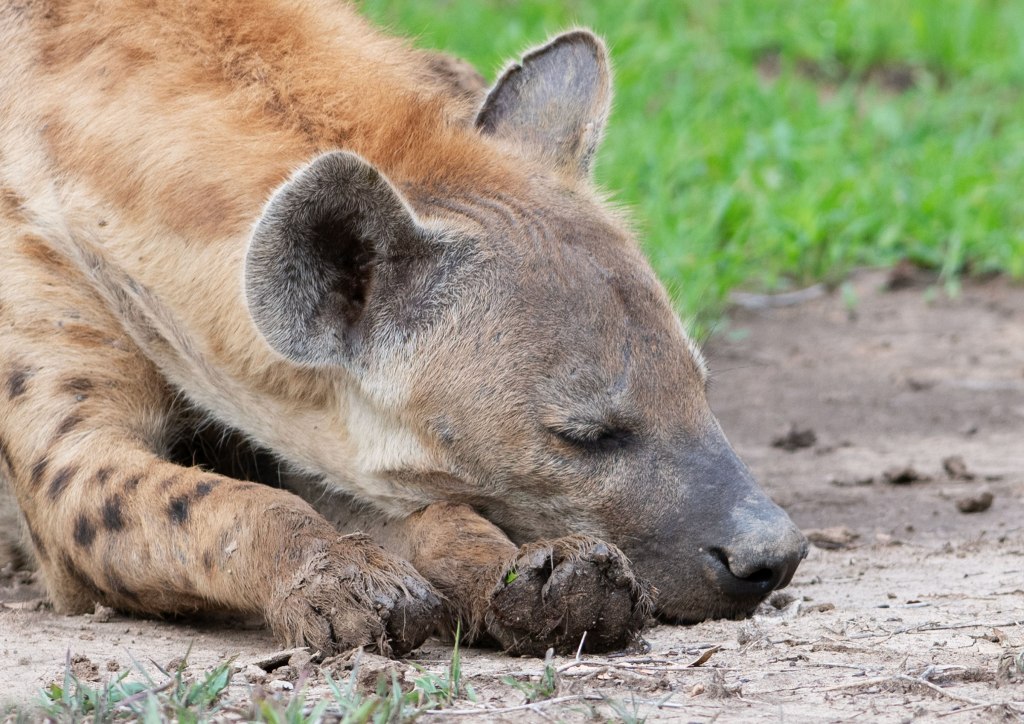
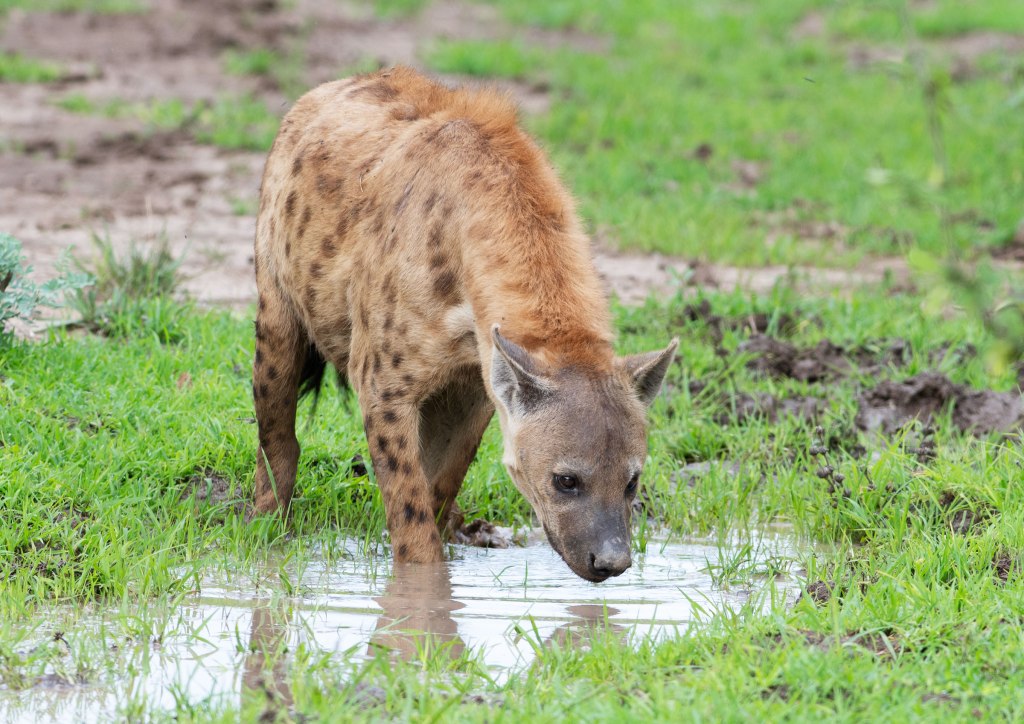

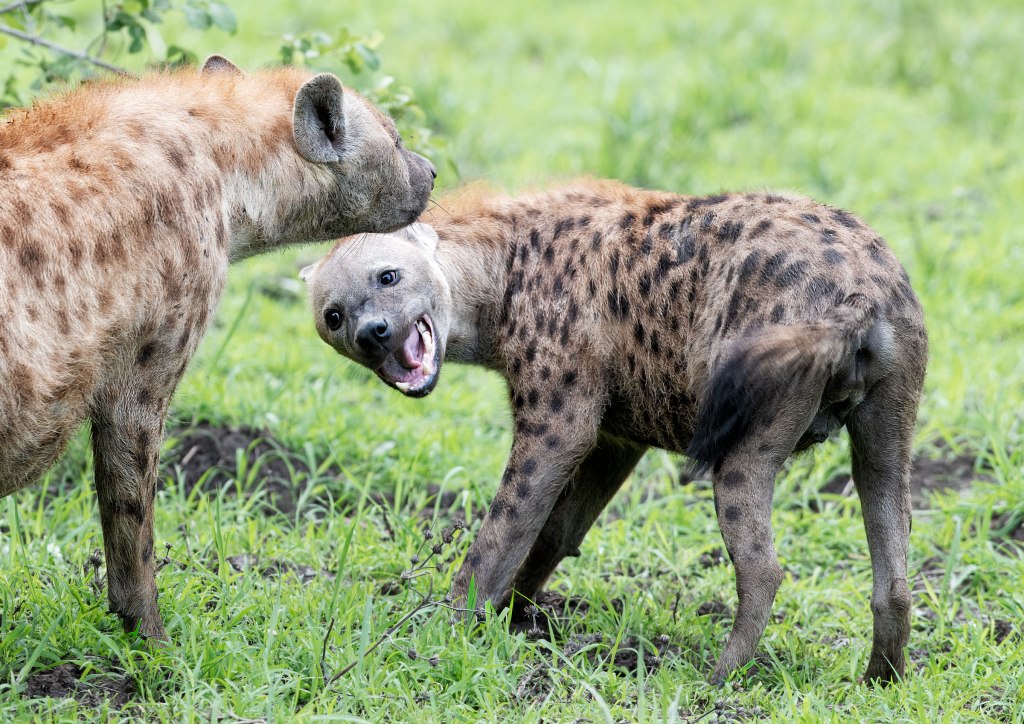
We were only with this clan for around an hour before they drifted off in ones and twos into deeper vegetation and further from the road to seek a cool place to rest for the day. We watched them eat, wallow in the muddy puddle, sleep and argue among themselves but this was far from a study of their behaviour.
As they left to carry on with their day we left to carry on with ours, excited to have spent a little time with one of Africa’s iconic animals.
Footnotes and References
- Gorillas, hippos and Nile crocodiles can all out-bite them.
- Hadedda Call recorded in Zambia by Marc Anderson, XC892525. Accessible at http://www.xeno-canto.org/892525.
- Gidey Yirga, Hans De Long, Herwig Leirs, Kindeya Gebrihiwot, Jozef Deckers, Hans Baur 2012 Adaptability of large carnivores to changing anthropogenic food sources: diet change of spotted hyena (Crocuta crocuta) during Christian fasting period in northern Ethiopia. Accessed 8/4/24 at https://besjournals.onlinelibrary.wiley.com/doi/full/10.1111/j.1365-2656.2012.01977.x#b26
- Stephen E. Glickman 1995 The Spotted Hyena from Aristotle to the Lion King: Reputation is Everything accessed. Social Research Vol. 62, No. 3, In the Company of Animals (FALL 1995) accessed 8/4/24 at https://www.jstor.org/stable/40971108?seq=1

 Travelogues and Other Memories
I would appreciate hearing your thoughts on this subject.