In the south of Malawi close to the Mozambique border there is a glorious wetland formed by the seasonal flooding of the River Shire that, depending on the river’s flow, can spread to over 1,000 square kilometres of waterways, lagoons, rooted swamp vegetation, floating flora, reed beds, marshland and muddy islands cloaked with shrubs and palm trees where the only sound is the call of every water loving bird in central Africa.

Access is from the M1 Road.
It is not on the regular tourist itinerary but there is excellent accommodation available (1) and, having visited, I believe it is an unmissable destination for ecotourists, birders and wildlife photographers.
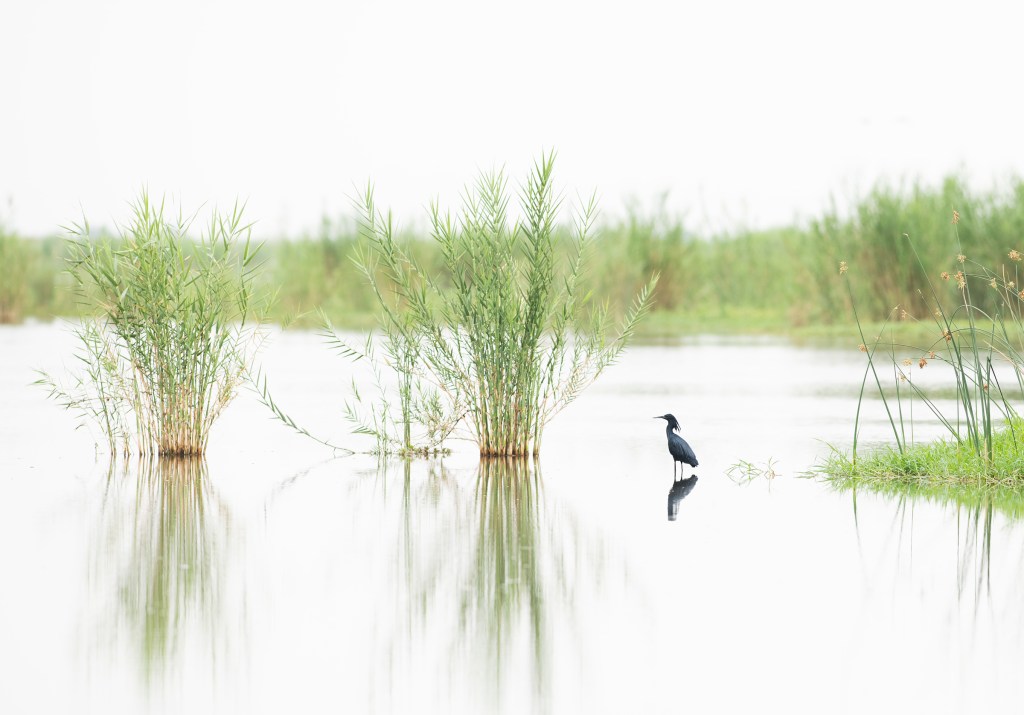
©Steve Middlehurst
It is the haunt of over 20,000 birds made up of 199 species of which 110 are waterbirds, 108 species of mammals with the possibility of 37 others that might live in the area, the occasional crocodile, about 100 hippos and a lot of fish.
A hundred and fifty years ago it was home to hundreds, probably thousands of elephants. Sadly, none remain here but a 100 kms up the road, on the way back to Blantyre, there are at least 400 elephants in the Majete Wildlife Reserve and at Elephant Marsh the nearby Thangadzi River Conservancy has a population of Dusky Elephant Shrews (Elephantulus fuscus).
Dr. Livingstone and the 800 Elephants
As every introduction to Elephant Marsh will tell you Dr. David Livingstone passed through here in 1859 and wrote in his journal:
“Elephant Marsh, or Nyanja Mukulu, which is frequented by vast herds of these animals. We believe that we counted eight hundred elephants in sight at once.”

Africa is a world of myths and legends and quite a few of those surround the much celebrated Dr. Livingstone whose achievements as a self-publicist far outweighed his very limited success as a missionary.2
An often repeated myth is that Livingstone was the first European to come through Elephant Marsh to reach the great lake which he named Nyassa, now known as Lake Malawi.
In his book he says:
“We discovered Lake Nyassa a little before noon of the 16th September, 1859.”
Which is a great story and no doubt helped to sell his book3 but the first Europeans to reach Malawi were almost certainly the Portuguese who had trading posts on the coast of modern day Mozambique to the east and at both Tete and Sena on the Zambezi River to the west.4
Airboat Safari
We visited Elephant Marsh in December 2023 following a short stay in the Majete Wildlife Reserve. We stayed at the new and splendid lodge in the Thangadzi River Conservancy (TRC) nestled in thick forest full of wild birds on the edge of the Kaombe Estate with its huge fields of sugar cane.
The airboat evokes images of the Everglades, but was custom built in Botswana for Elephant Marsh. It powers over the surface of the waterways and floating vegetation under the command of Robert Nyirenda who is not only an excellent pilot but an experienced wildlife guide with particular expertise regarding the bird life that you are immediately surrounded by.
©Rebecca Jones
The airboat is a perfect photography platform, I used a monopod because the light was generally poor but the water is very calm and when Richard stops the boat it is silent and steady. Our day there was a bit drizzly and mostly quite dull so not perfect for photography but unbeatable in terms of bird life. The biggest problem is deciding what to photograph and when to put the camera down and just enjoy the idyllic setting and the abundant wild life.
©Steve Middlehurst
One of the hardest aspects of bird photography is making the images interesting as photographs, taking them beyond perfect closeup portraits fit for a well illustrated reference book. The very best wildlife photographs are great photographs in their own right, both technically and aesthetically with something that draws the viewer into the frame apart from the beauty of the bird or animal. I’m not suggesting that I regularly achieve this objective but I try to capture birds within their environment in an attempt to capture something about place my reaction to the scene.

©Steve MIddlehurst
Elephant Marsh has a lot of unusual birds that each have something very special about them.
The Heaviest

©Steve Middlehurst
I knew from looking at the TRC facebook page that there are sometimes hundreds of great white pelicans in great feeding flocks; we didn’t see those kind of numbers but we were able to drift close to a group of about twenty preening themselves in the shallows.
As well as being the heaviest flying bird, this is one of nature’s most adaptable avians. They are equally at home in fresh water, coastal estuarine areas and alkaline lakes. In terms of climate they are found in both temperate and hot places and will nest anywhere from mudflats and wet swamps to rocky ground or grasslands. They breed as far north as Kazakhstan and as far south as South Africa, anywhere that guarantees them a reliable source of fish as they need 10% of their bodyweight in fish every day and that means up to 1.2 kg.

As we approach they take flight, a memorable sight as these huge birds take off and circle the lagoon.
Phone credit ©Becky Jones
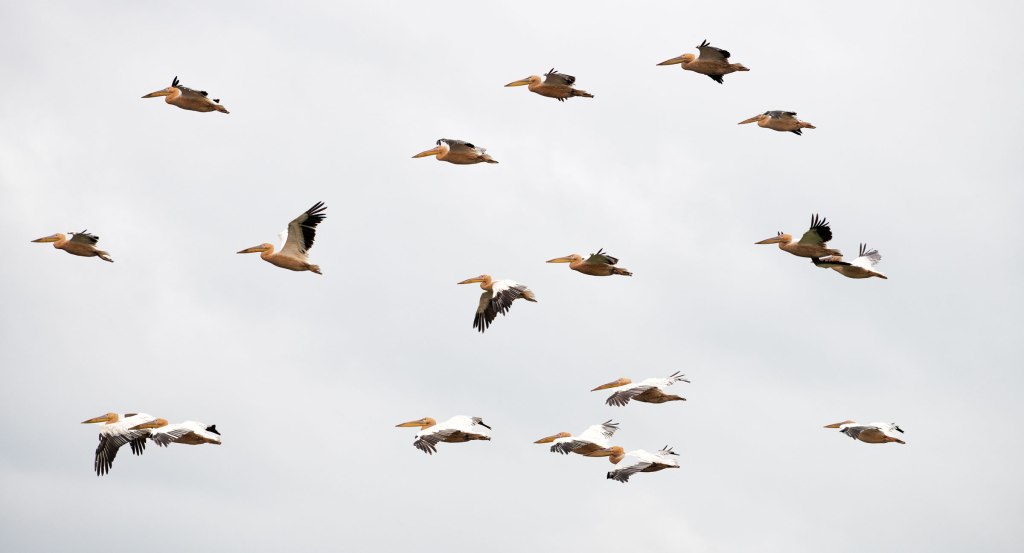
The sky is full of pelicans, silently circling the lagoon waiting for us to move on.

Not all the birds are disturbed by our arrival on the scene and we are mostly able to sit and watch the various waterbirds going about their business.
The Largest Feet
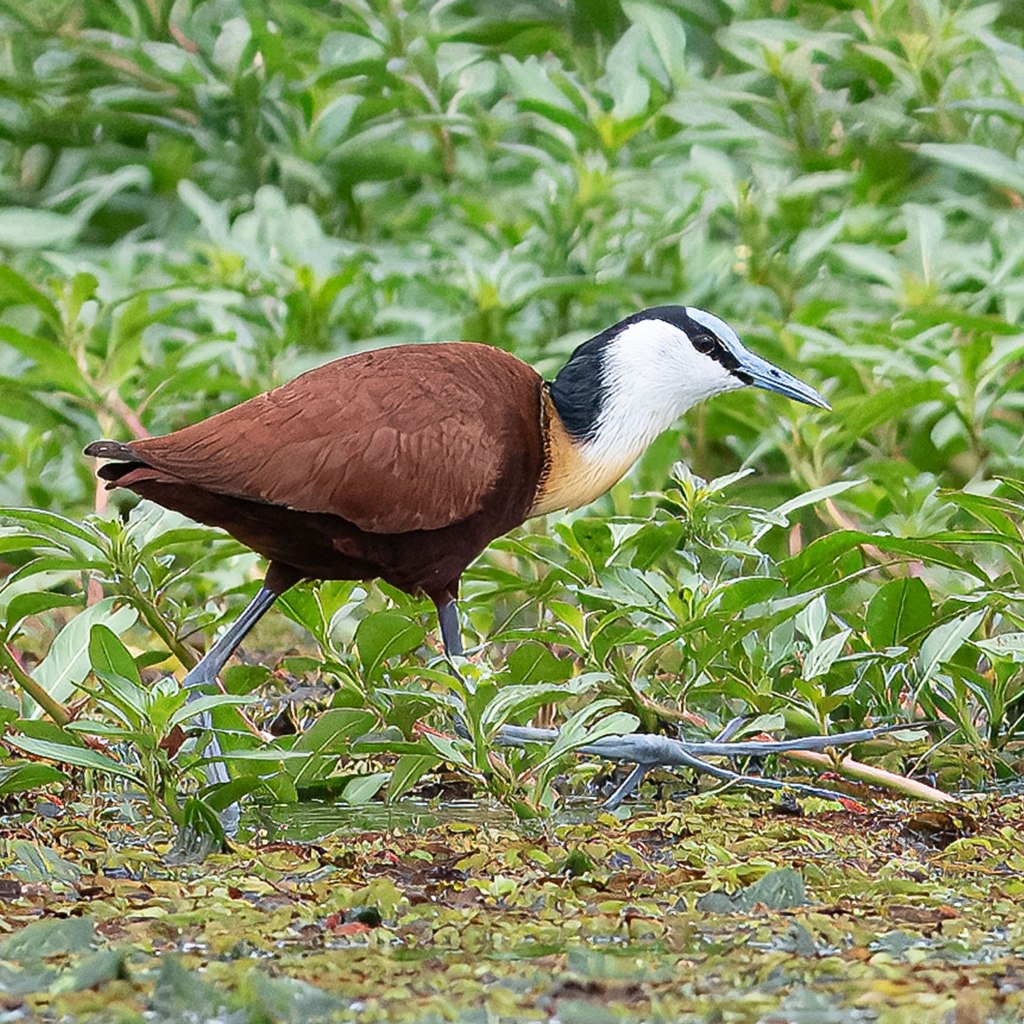
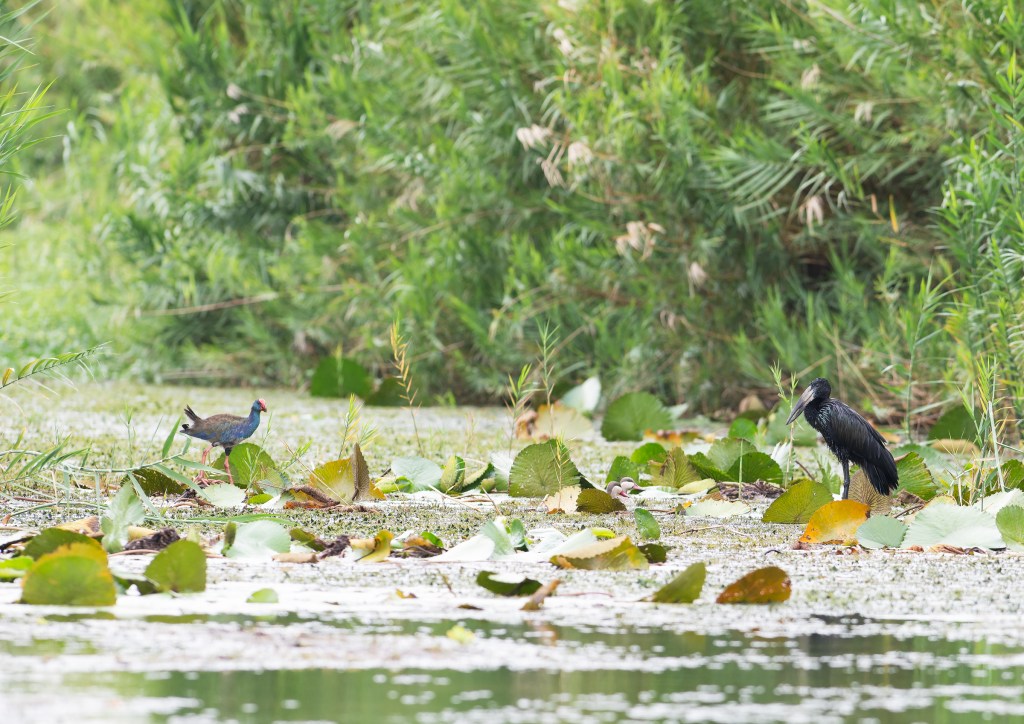
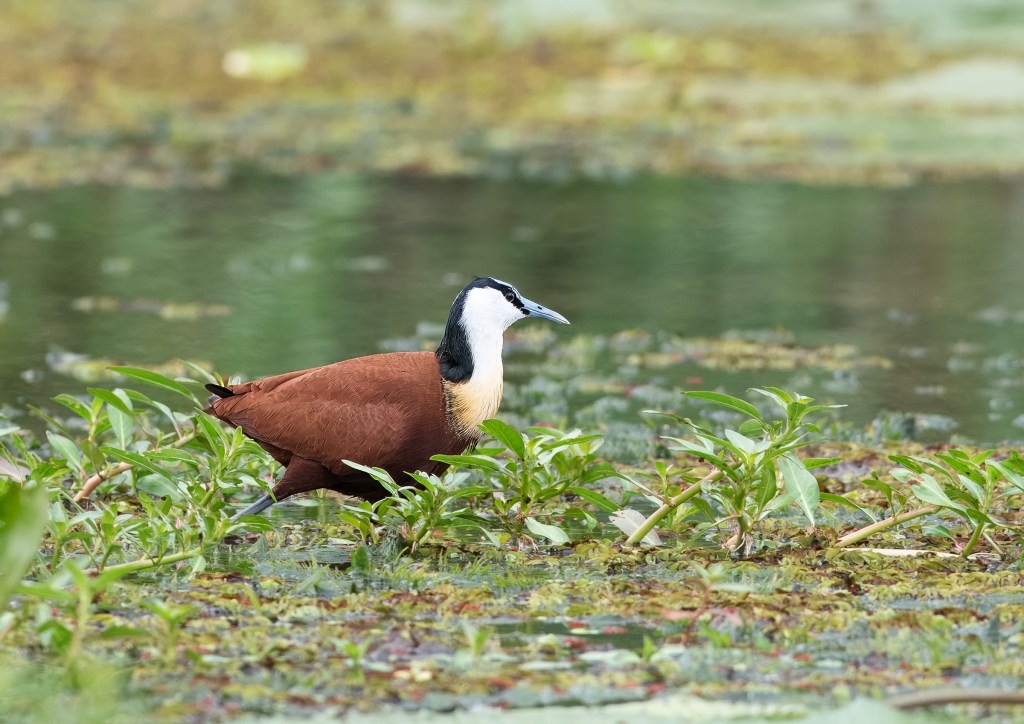
African jacanas are everywhere, an attractive bird with huge feet that appear out of scale with their bodies but allow them to run across lily pads and floating vegetation.
The African jacana has unusual lifestyle: they can breed all year round and are polyandrous, with one dominant female defending a territory from other females but attracting several males as mates. The males are similar in looks but smaller and she allows several to live in her territory which will typically feature plenty of water-lilies that the males use as a floating foundation for their nests. The female mates with several males and lays a clutch of eggs in each male-prepared nest.
©Steve Middlehurst
She then leaves the male to incubate the eggs, defend the nest and, when they hatch, feed the young until they fledge. Polyandry is very rare in vertebrates and only 1% of all bird species adopt this approach to breeding but its clearly works as the jacana is a common bird across nearly all of Sub-Saharan Africa.
Dean Veall of University College London suggests that this behaviour has been historically perceived as deviant and, as a result, the African Jacana rarely features in wildlife documentaries or in museum displays.
The Strangest Beak

©Steve Middlehurst
I was excited to see African skimmers close up, just three and they only treat us to two passes across the lagoon.
Livingstone saw them here saying:
“Flocks of scissor-bills (Rhyncops) are then also on the wing, and in search of food, ploughing the water with their lower mandibles, which are nearly half an inch longer than the upper ones.”
They are a unique looking bird with their lower mandible, which they use to skim the water to catch small fish, much longer than the upper mandible.
They remind me of the brown boobies we saw in Grenada last year but they are, in fact related to gulls and terns. According to the IUCN they are widespread in Africa with an estimate of 15,000 to 25,000 individuals but they are in the decline due to habitat degradation. A quite large flock breeds in Liwonde National Park each year and they are obviously at Elephant Marsh.
The Longest Legs

©Steve Middlehurst
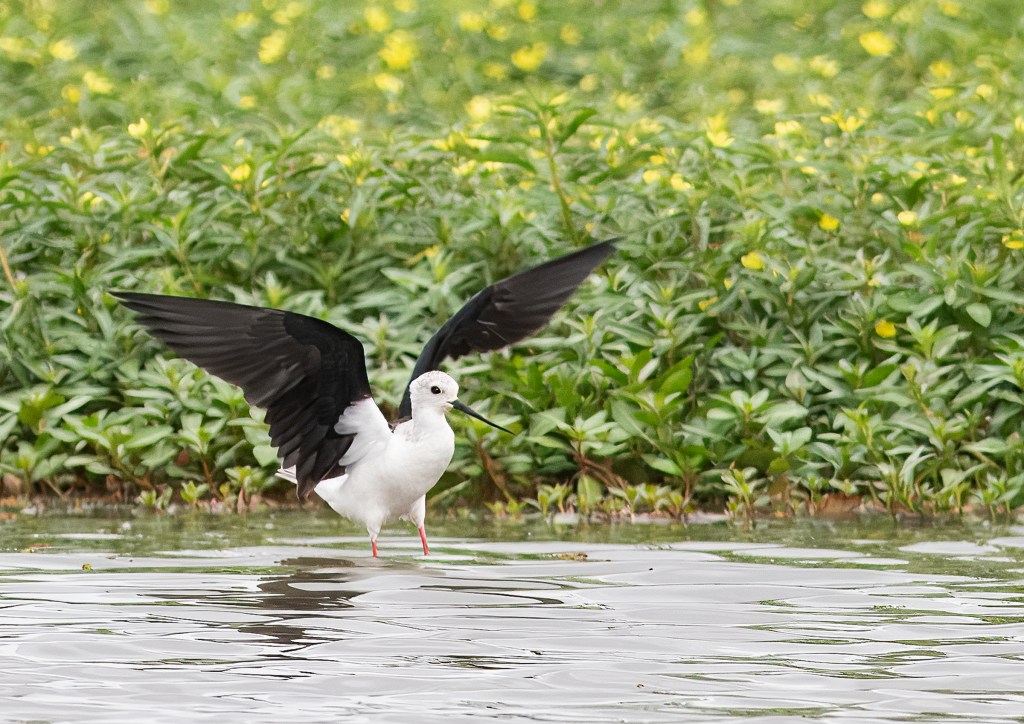
Well we’ve had the crazy oversized feet of the jacana and the bizarre XXL lower mandible of the skimmer so to complete a set of supersized features there is the black-winged stilt who boasts the longest legs in proportion to body size of any bird in the world. When they takeoff with their bright orange legs training behind them they look like a giant daddy longlegs.
©Steve Middlehurst
The black-winged stilts were everywhere at Elephant Marsh, wading in the shallows hunting with their needle-sharp beaks for insects, molluscs and crustaceans.
The Longest Necks
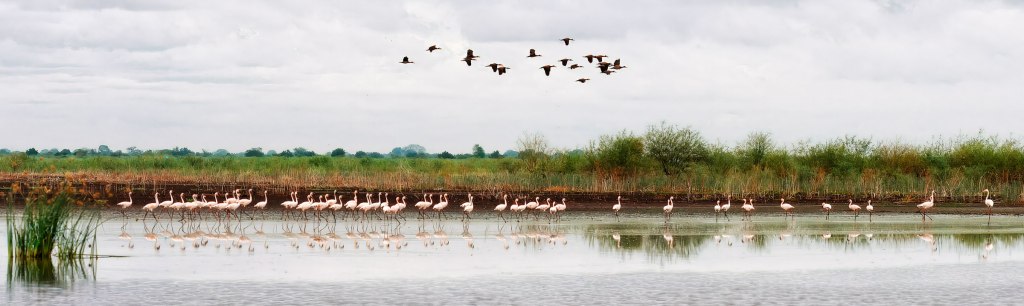
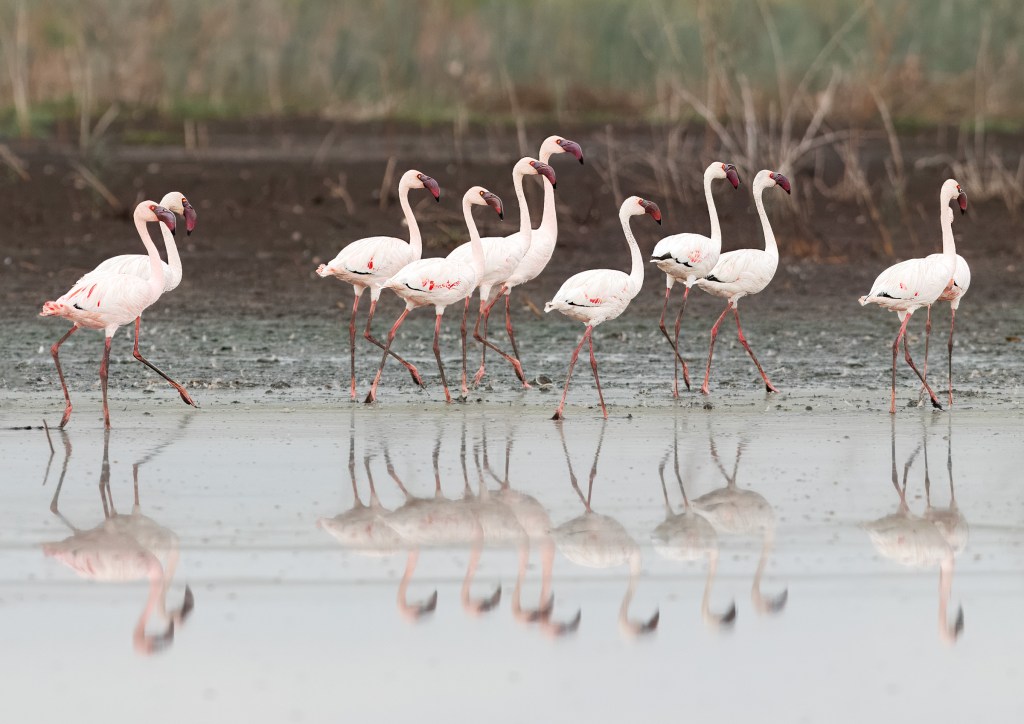
The flamingo has the longest neck in proportion to body size of any bird and both the lesser and greater flamingo regularly visit Elephant Marsh.
©Steve Middlehurst
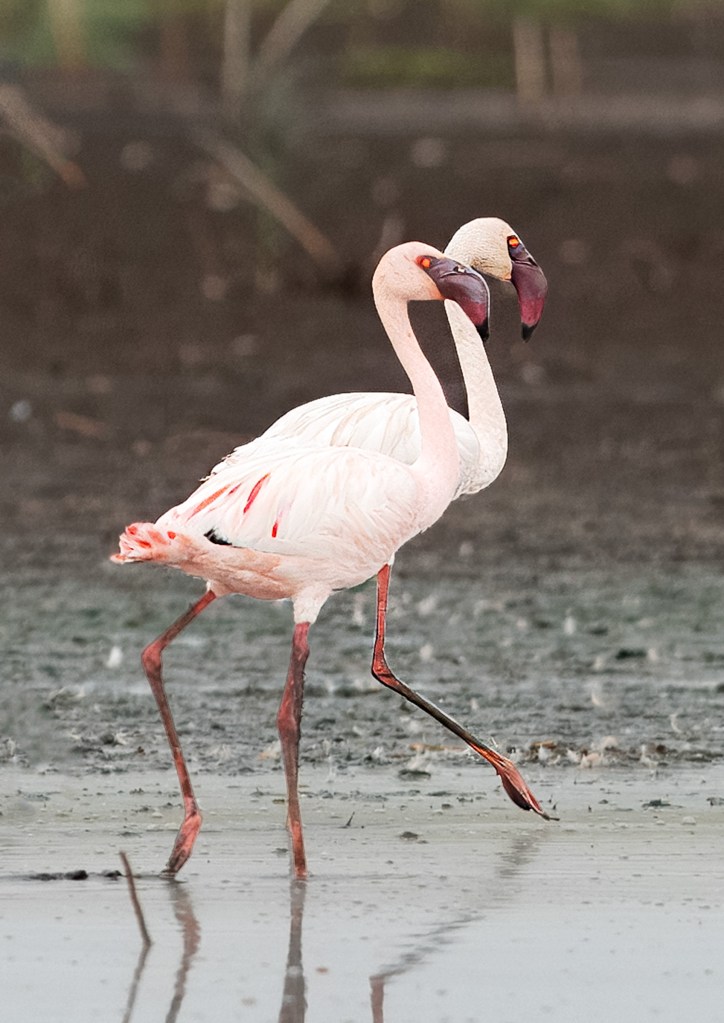
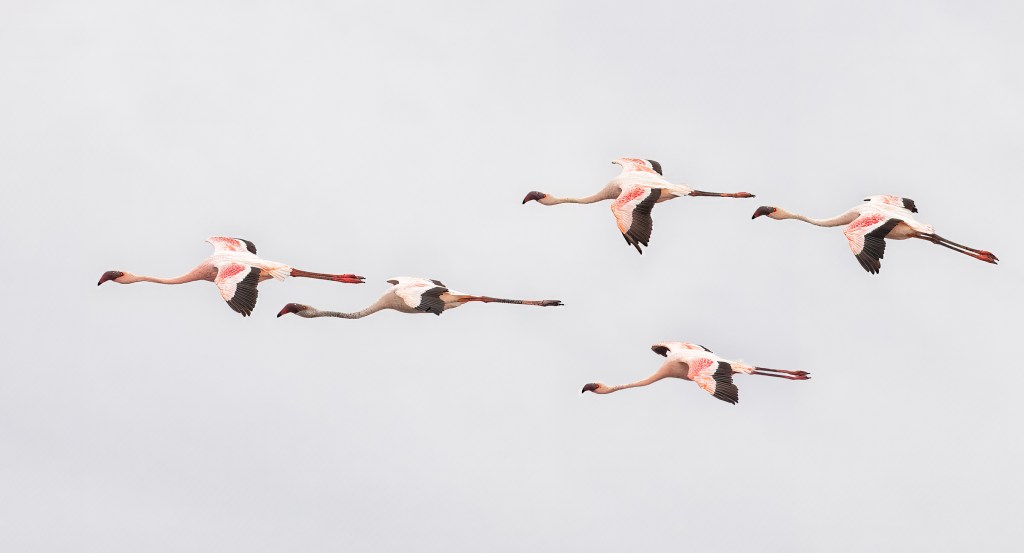
There was a good sized flock of lesser flamingos in one of the lagoons. They can be distinguished from their big cousins by their dark red beak with a black tip and their bright flame coloured eyes.
They are surface feeders and rarely submerge their heads in their search for algae.
As suggested by their name they are the smallest of the flamingos at about 1 metre tall.
©Steve MIddlehurst

©Steve Middlehurst

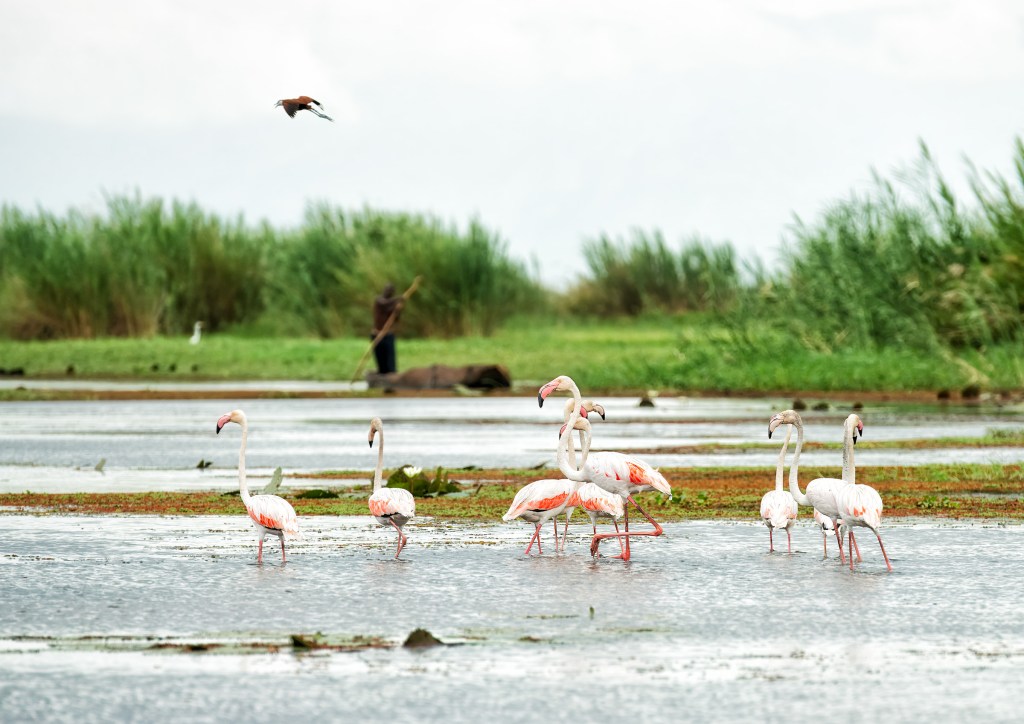
The greater flamingo is the largest in the family and can be as much as 150 cm tall.
Their beak is pink with a black tip and is longer and more slender than the lesser’s and their eyes are yellow.
They are bottom feeders so you might see them with their heads under water.
The greater flamingo has a wide range across Africa, Europe and Asia and is not currently considered at risk but the lesser flamingo is mostly restricted to sub-Saharan Africa and loss of habitat has reached the point where it is considered “Near Threatened”.
©Becky Jones
A Remarkable Place

©Steve Middlehurst
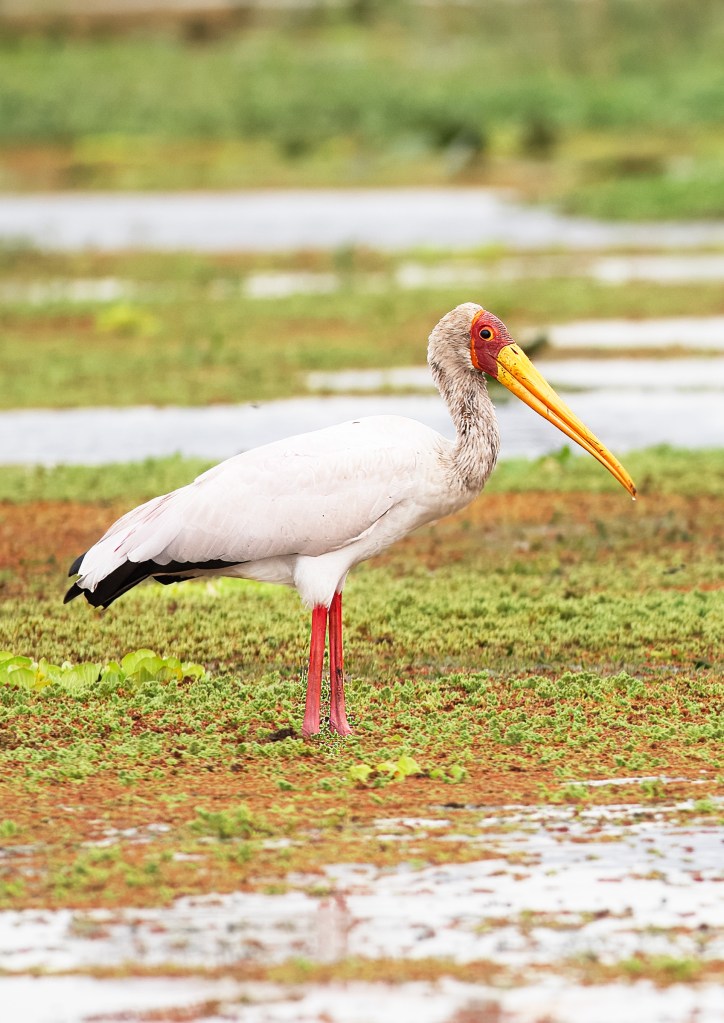
We were at Elephant Marsh for far too short a time but despite the gloomy weather and limited time we were treated to pelicans, flamingos and skimmers along with a fine array of herons and storks of every size from little squacco herons to huge yellow billed storks and, of course, lots of ducks, moorhens and coots all watched over by marsh harriers and reed cormorants.

©Steve Middlehurst
Thangadzi River Conservancy

©Steve Middlehurst
We arrived early evening and stayed overnight in the lodge at the Thangadzi River Conservancy (TRC) so our stay was too short to explore the forest, something we will correct on our next visit, but our cottage and the lodge overlooked the wooded area and a waterhole that are part of Malawi’s last remaining riparian forest habitat.
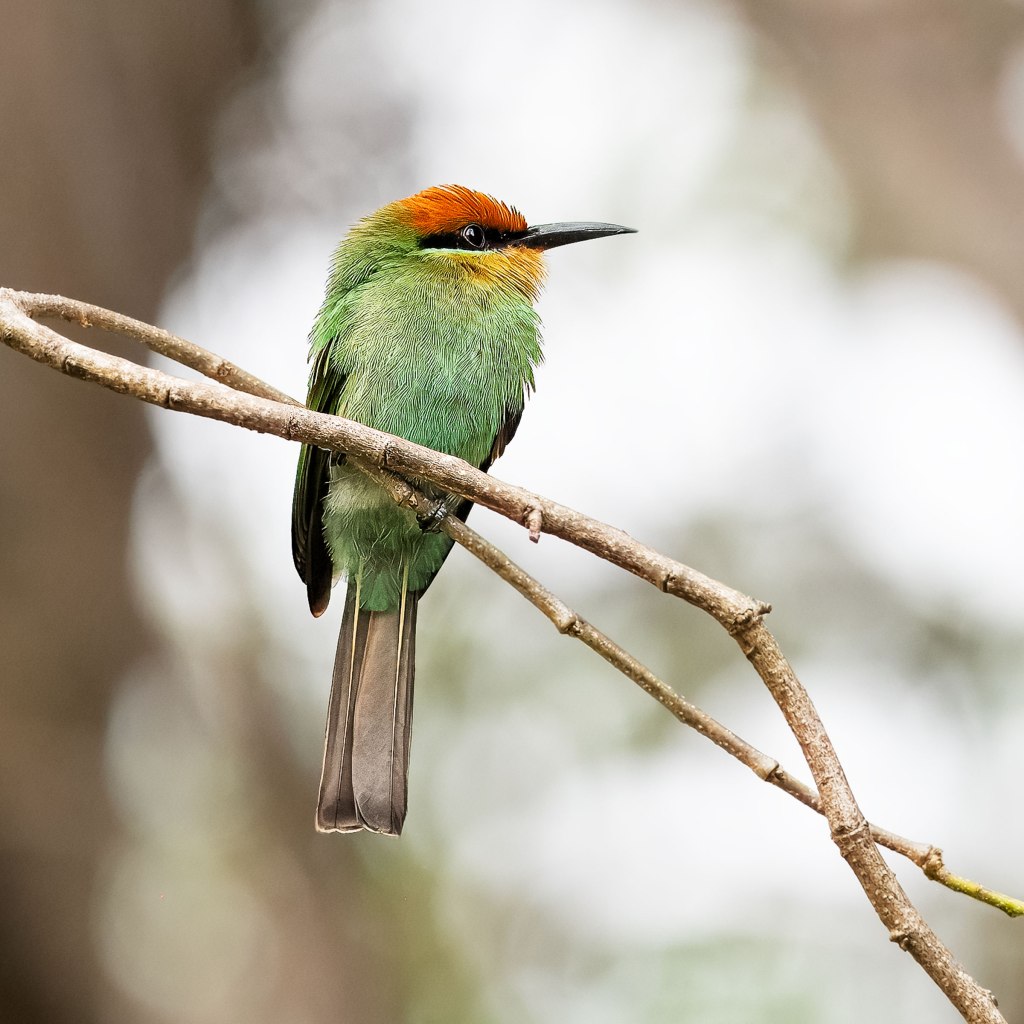
At dawn it was alive with bird song and, as we drank our coffee, it was thrilling to watch tiny Böhm’s bee-eaters darting in and out of the trees directly in front of the lodge. This gorgeous little fellow is not rare but as riverine thickets and riparian forest have disappeared they are only found in isolated pockets across Malawi.
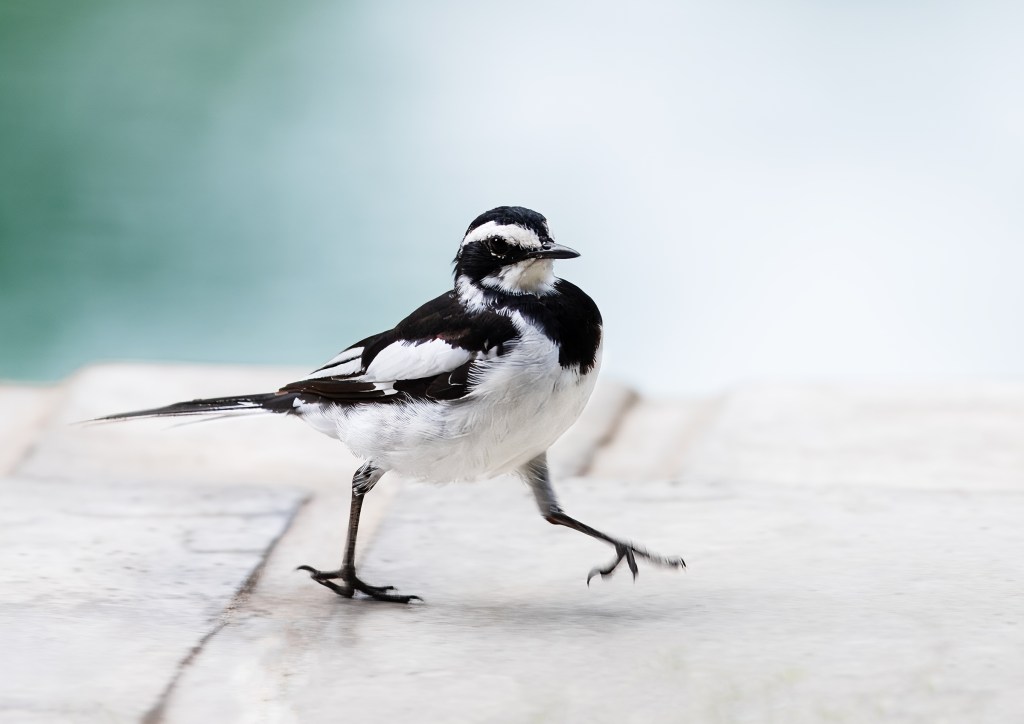
©Steve Middlehurst
The African pied wagtails hunting round the swimming pool are far more common but they are aways one of the most entertaining birds to watch with their aerial gymnastic displays as they catch insects.
Final Thoughts
Malawi is beginning to realise its goal of increasing tourism and moving from being a backpacker stop-off to a bonafide safari and eco-tourist destination. With 21% of its landmass protected as wildlife or forest reserves there are plenty of opportunities for visitors to explore varied habitats rich in wildlife plus 180 kilometres of Lake Malawi’s shore line with its beach resorts and the highest density of fish eagles in Africa.
Our short stay at Elephant Marsh and our glimpse of the Thangadzi River Conservancy has convinced me that a trip down to the south and two or three nights here is the perfect add-on for any international visitor planning to explore Liwonde National Park and Majete Wildlife Reserve.
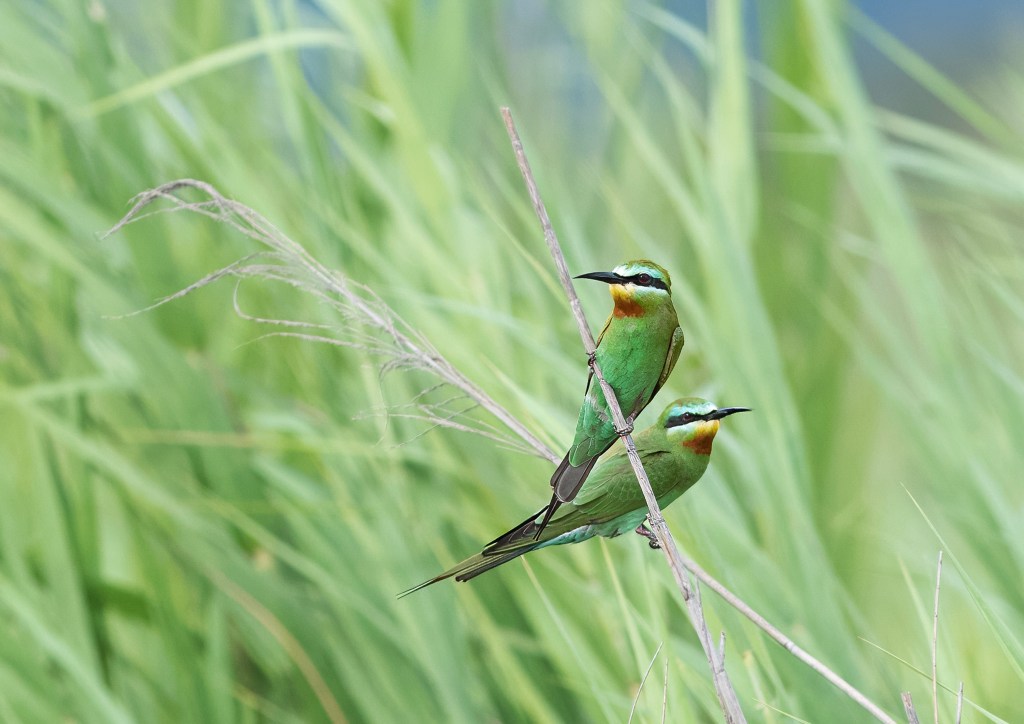
©Steve Middlehurst
There is a comment box at the bottom of this post after Footnotes and Other Sources. Please let me know if you have any thoughts on this subject and whether you found this post useful.
Footnotes and References
- Accommodation options: There is an excellent lodge with individual cottages at the Thangadzi River Conservancy which adjoins Elephant Marsh and is inside the Kaombe Estate, the bonus here is that you are staying in the forest reserve and the birdlife is extraordinary https://www.shirevalleyconservation.com/thangadzi-lodge They are also on Facebook https://www.facebook.com/thangadzi/ The other option is Jambo Africa who have a lodge and campsite inside the Lengwe National Park which is about an hour from the turning into the Kaombe Estate and access to the marsh. They can organise the boat ride on the marsh and are super helpful people. https://www.jambo-africa.com/nyala-lodge-3/
- Livingstone is only know to have converted one African to Christianity; Chief Sechele who was the chief of the Bakwena tribe, a Tswana people, in modern day Botswana. Sechele, who had five wives was persuaded to divorce four of them to enable Livingstone to baptise him in 1848. Inconveniently one of the divorcees became pregnant the next year which upset Livingstone and he recorded Sechele as having regressed to his pagan ways. So on face value Livingstone’s conversions netted out to zero. However Sechele, whilst Livingstone was with him, had learned to read and he became a teacher passing this skill on to his people using a Tswana language bible and, in doing so became increasingly interested in Christianity and eventually became a missionary in his own right. European missionaries were shocked and probably horrified when they found new potential customers in central Africa that were already praying to the Christian god.
- David Livingstone 1894 A Popular Account of Dr. Livingstone’s Expedition to the Zambesi and its Tributaries and the Discovery of Lakes Shirwa and Nyassa 1858-1864.
- In 1616 Gaspar Bocarro passed through the area travelling from Tete to Kilwa4 and appears to have passed just south of Lake Malombe camping on the banks of Shire River approximately where the Liwonde National Park is today. In his diary he refers to the “great river Mang’anja, or a lake which looks like the sea” which strongly suggests he knew of or saw Lake Malawi. In addition the Portuguese were actively trading with the Maravi people who had once ruled a kingdom that stretched from the Luangwa Valley in modern day Zambia to the Indian Ocean encompassing most of Malawi and a large part of modern day Mozambique.
- Kilwa was an ancient Arab city-state in what is now Tanzania that was conquered by the Portuguese in the 16th century. It appears to have dated back to 800 AD that at the height of its powers was a major trading centre buying gold from the interior of Africa and trading with India and Arabia.
- E.D. Moore 1931 Ivory: Scourge of Africa. USA: Harper & Brothers. Accessed 10/4/24 at https://archive.org/details/in.ernet.dli.2015.77345/page/n5/mode/2up
- R.A. Hamilton 1954 The Route of Gaspar Bocarro from Tete to Kilwain in 1616 https://www.jstor.org/stable/29545718?seq=1
- Stephen Tomkins 2013 The African Chief Converted to Christianity by Dr. Livingstone. https://www.bbc.co.uk/news/magazine-21807368
- Terry H. Elkiss 1973 Kilwa Kisiwani: The Rise of an East African City-State. https://www.jstor.org/stable/523737?read-now=1&seq=1#page_scan_tab_contents
- The Convention on Wetlands 2017 Malawi Declares Elephant Marsh as its Second Ramsar Site https://www.ramsar.org/news/malawi-declares-elephant-marsh-its-second-ramsar-site
- Ramsar Site no. 2308 https://rsis.ramsar.org/ris/2308
- Ramsar 2017 Ramsar Fact Sheet, Malawi, Elephant Marsh https://rsis.ramsar.org/RISapp/files/RISrep/MW2308RIS_1707_en.pdf
- Thangadzi River Conservancy
- Shire Valley Thangadzi River Conservancy https://www.shirevalleyconservation.com/thangadzi-river-conservancy
- Jambo Africa MV Elephant Marsh Master https://www.jambo-africa.com/elephant-marsh-master/
- Hugh Chittenden 2006 Böhm’s Bee-eater https://www.birdinfo.co.za/rarebirds/05_bohms_bee-eater.htm
- Dean W Veall 2018 African Jacana https://blogs.ucl.ac.uk/museums/2018/03/02/specimen-of-the-week-332-african-jacana/#:~:text=Within%20her%20territory%20she%20will,and%20raising%20of%20the%20young.

 Travelogues and Other Memories
I would appreciate hearing your thoughts on this subject.