
- Introduction
- Colonel Rigby and the Eight Thousand
- The Liberated Zanzibar Slaves
- Tembo & Tippoo
- David Livingstone
- Bishop Mackenzie & Magomero
- The Fate of the Magomero Liberated Slaves
- Daoma
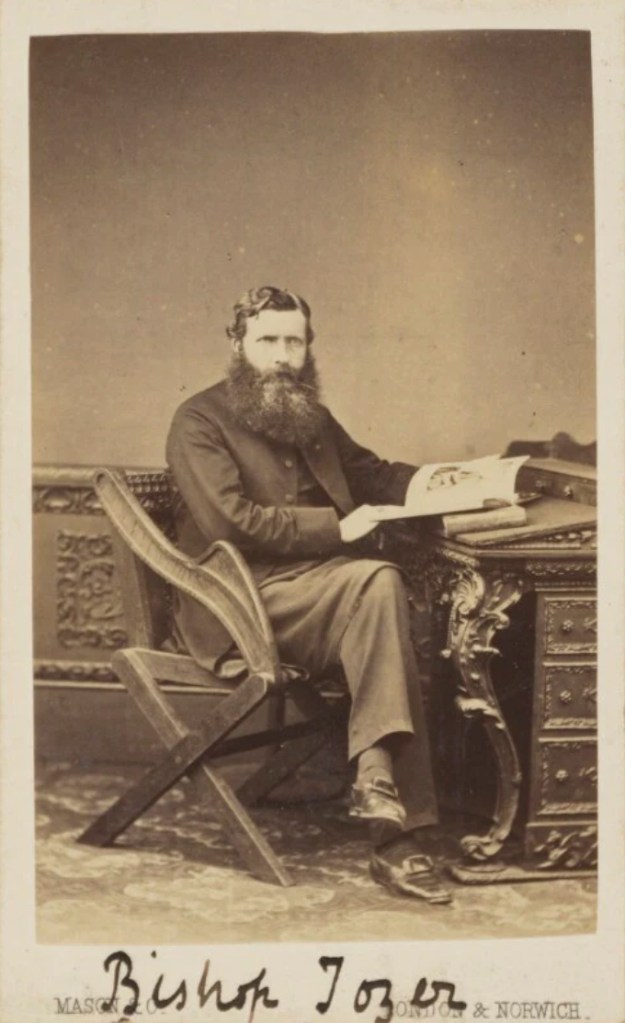
- Bishop Tozer
- The Five Slave-Boys Gifted by the Sultan of Zanzibar
- Cecil Majaliwa
- Conclusion
- Footnotes
- Other Sources and Further Reading
Introduction
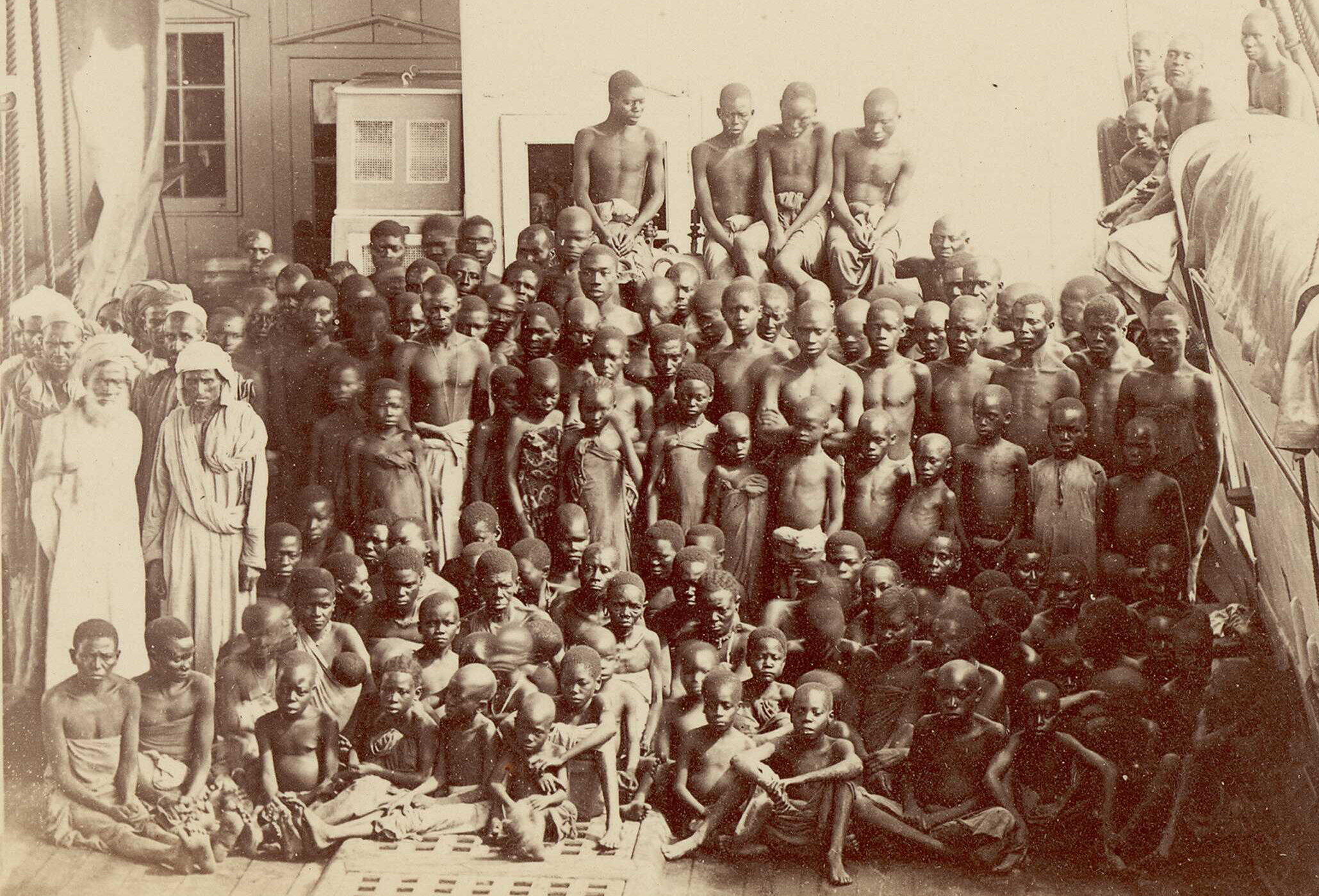
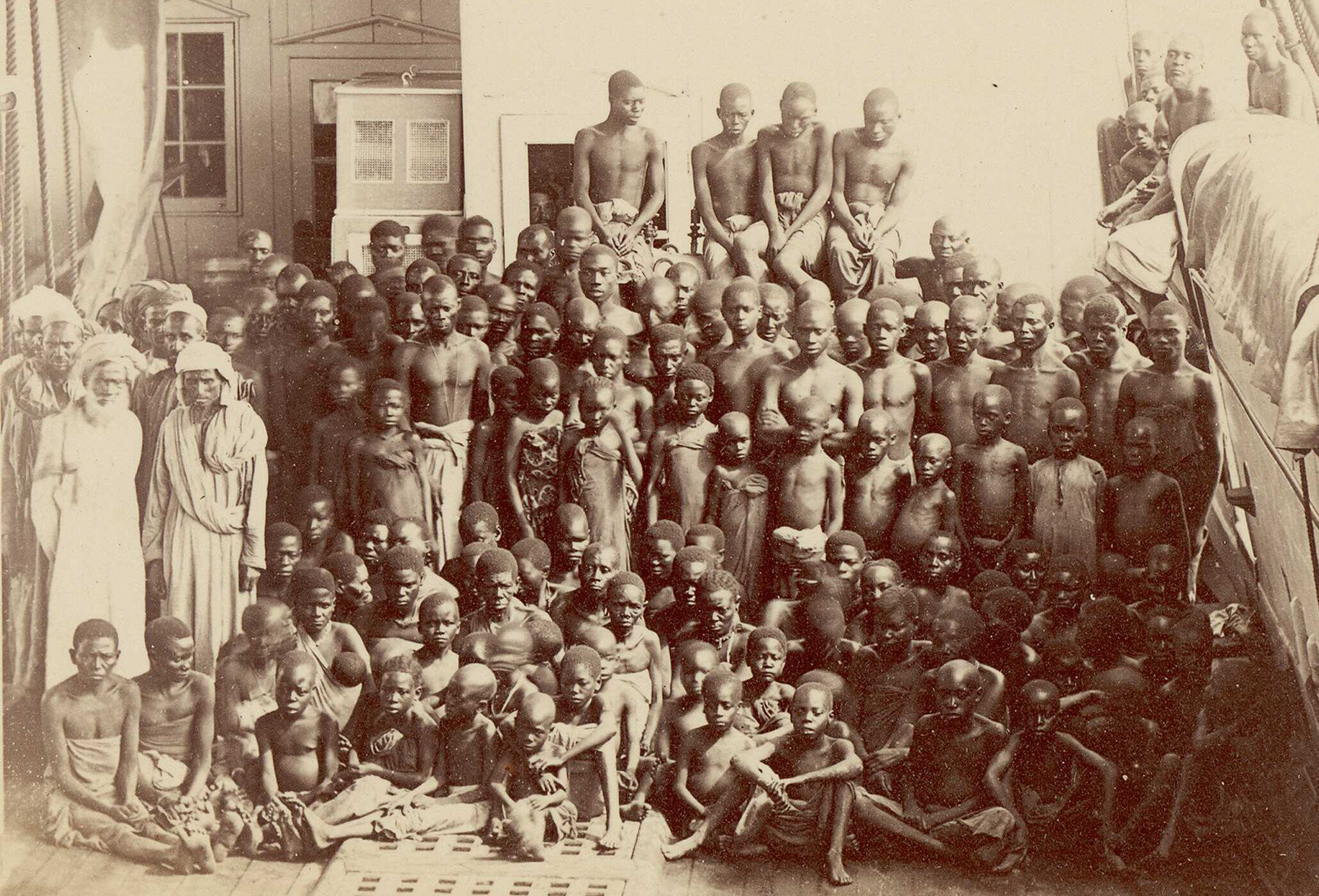
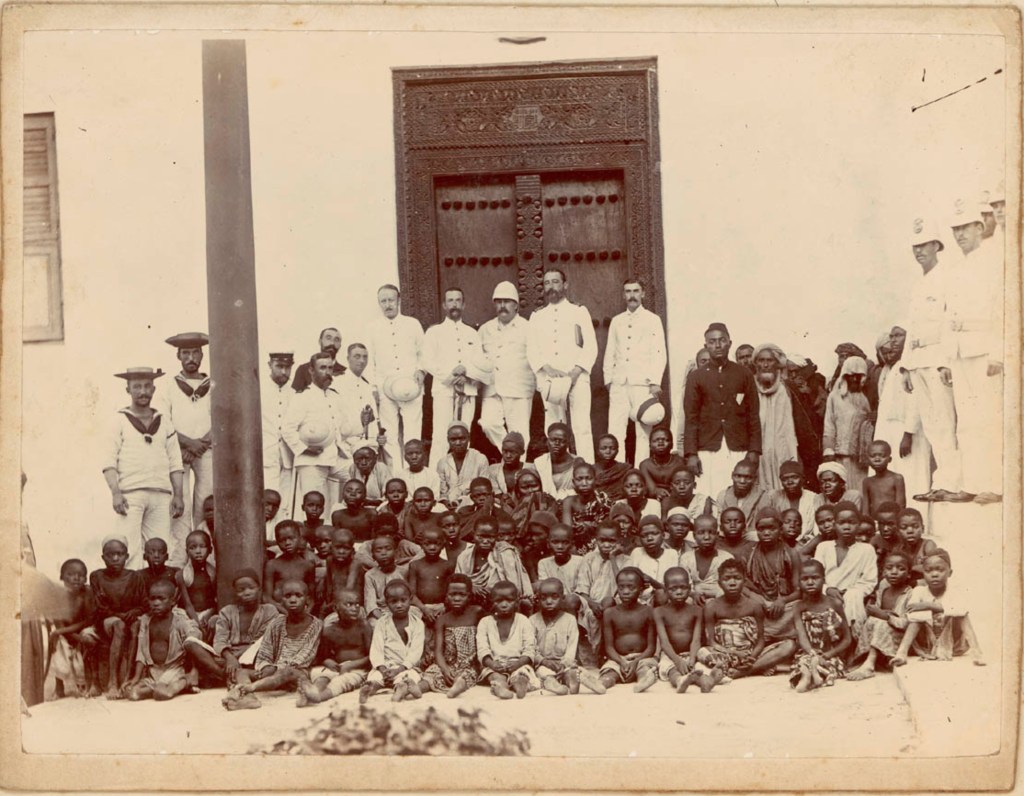
The men in Arab-style clothes to the left may have been their captors but could also be Zanzibari interpreters employed by the Royal Navy
Michael Graham-Stewart slavery collection
Between 1808 and 1900 tens of thousands of liberated slaves, African men, women and children, predominantly from central and eastern Africa, were disembarked by the Royal Navy at Aden, Bombay, Cape Town, the Seychelles, Mauritius and Freretown in Kenya. Others were liberated in Zanzibar or from slave caravans, slave pens and slaver settlements on the African mainland, particularly in Malawi.
Despite being freed from the slavers who were usually in the process of transporting them between the many slave markets that stretched from Delagoa Bay in southern Mozambique to Arabia few of these liberated slaves could look forward to bright future.
From a twenty-first century perspective their treatment appears callous but, as ever with history, it is pointless to cherry-pick a modern-day value and to apply it to events that occurred in a different place at a very different time. There was a strong moral imperative to stop the slave trade in the nineteenth-century and, even if it was a case of poacher turned gamekeeper, the British Government became the loudest voice and the most active campaigner in diplomatic circles to stop the trade in the nineteenth century. The Royal Navy was deployed as the blunt instrument with which to blockade slaver ports and disrupt the transport of slaves by sea.
However, there was certainly very little sentimentality about the slaves freed as a result of the process. The objective in 1808 was to stop the slave trade but it not until 1833 that the objective evolved to stop slavery and even then it was to be a gradual process. Apart from a few enlightened administrators, Royal Naval officers, missionaries and churchmen liberated slaves were generally seen as a problem by the government and a source of free labour by colonists.
It was rarely practical for liberated slaves to return to their place of origin. Even Malawian slaves freed in Malawi generally stayed with their liberators or at the nearest friendly village because that was the safest option; women and children in particular sought strong protectors rather than our definition of freedom.
The end result was that these many tens of thousands of liberated slaves and their descendants were scattered around the perimeter of the Indian Ocean. Very few are known by name and even fewer have left a mark on history.
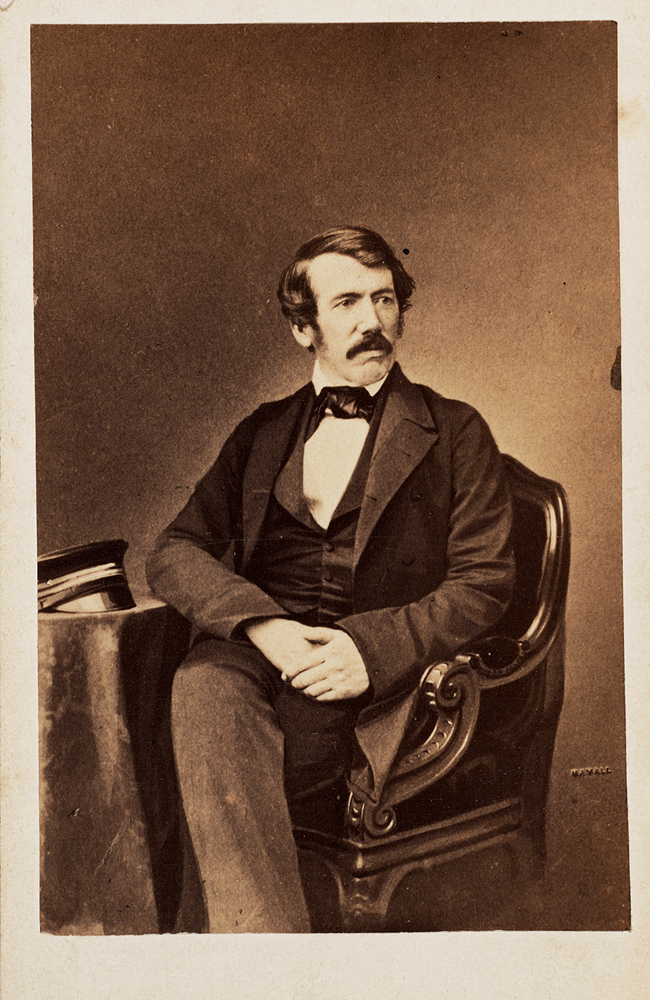
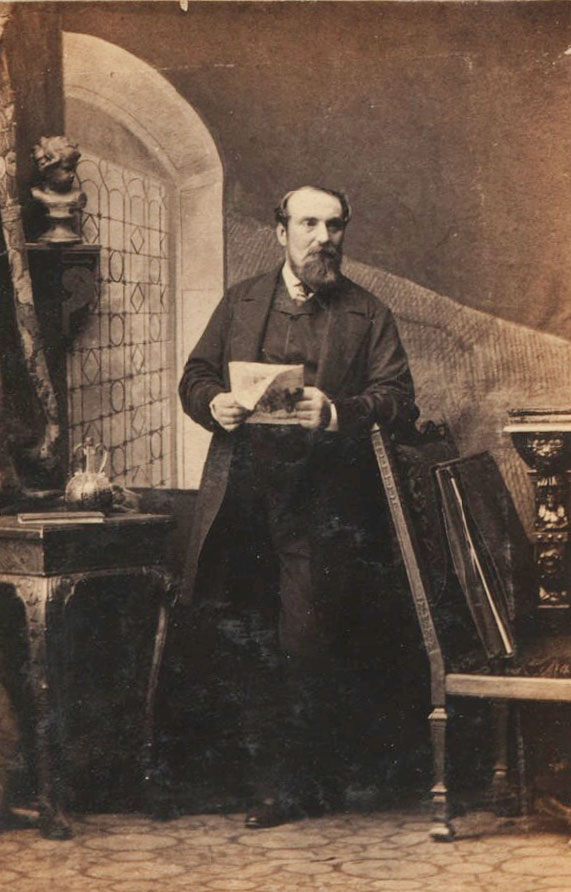
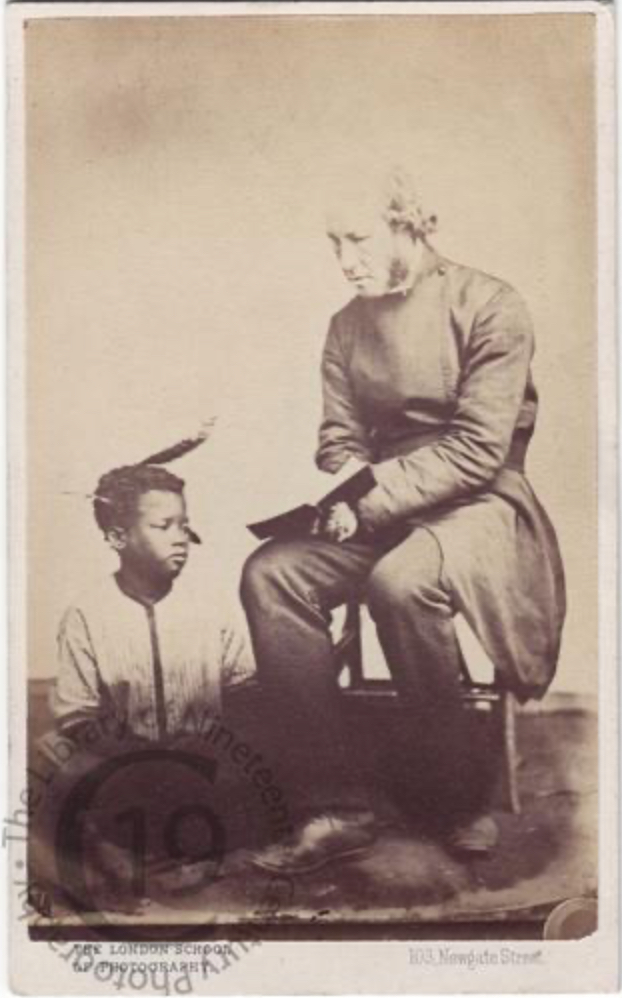

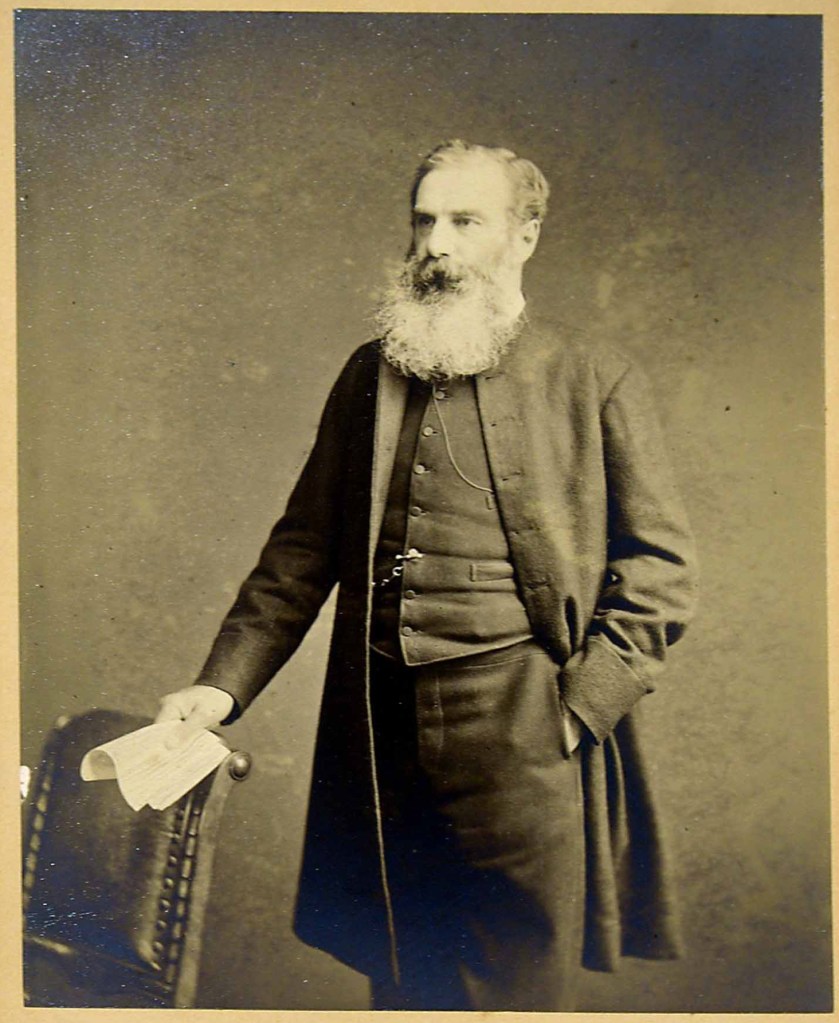
This is the first in a series of articles where I have searched for traces of the tiny proportion of liberated slaves who were photographed, sketched or mentioned in written histories. Their histories are intertwined with the stories of Victorians such as Colonel Christopher Rigby, David Livingstone, Horace Waller and the first three Bishops of the Universities Mission to Central Africa (UCMA), Charles Mackenzie, William Tozer and Edward Steere who all had a very direct impact on the liberation and settlement of East African enslaved people.
Colonel Rigby and the Eight Thousand
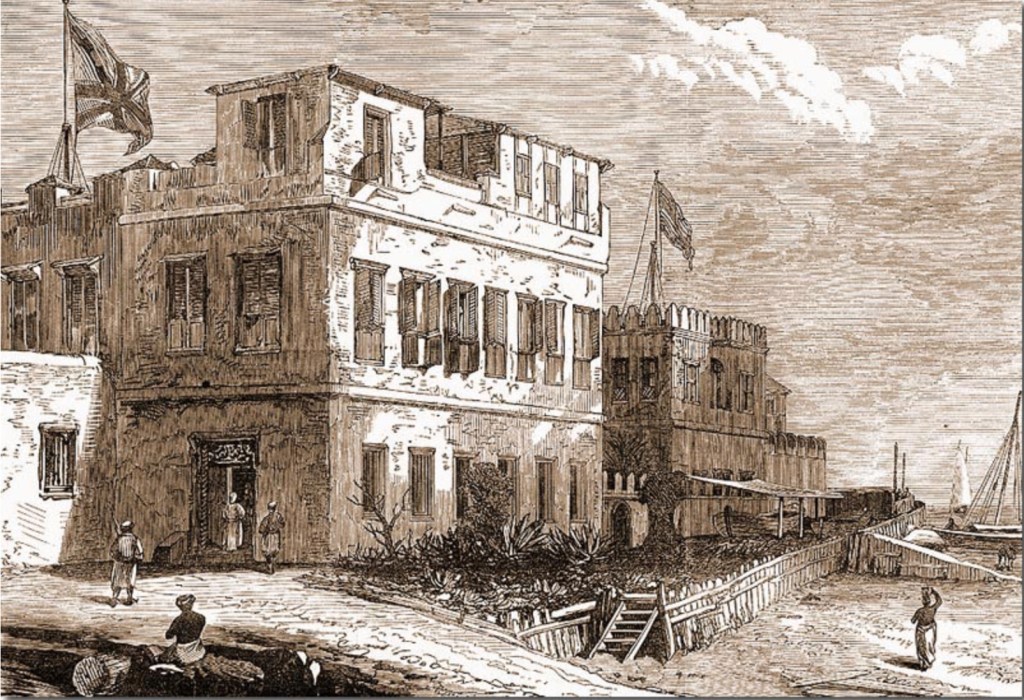
In 1858 Christopher Palmer Rigby was the British Political Agent and Consul in Zanzibar. When he arrived and introduced himself to the Sultan on July 27th and when HMS Falkland, the ship that had brought him from Bombay, departed he became the only British person on the island.
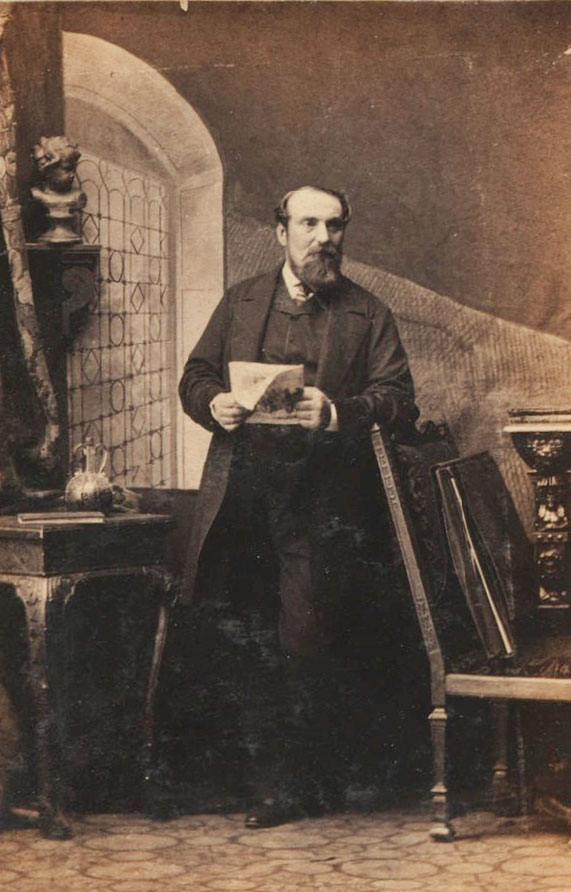
He quickly realised that there were two contrasting worlds in the City. One where he presented letters from Queen Victoria to the Sultan, attended “full dress” functions at the French Consulate and dined out or entertained every night, whilst always formally dressed for dinner.
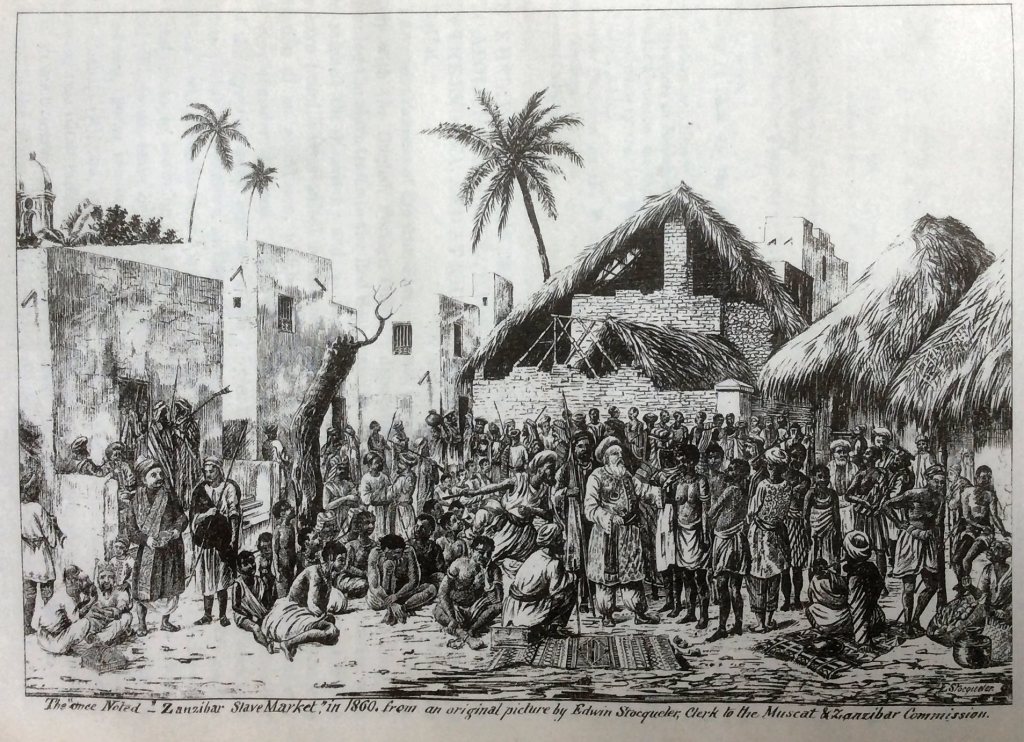
The longer he stays in Zanzibar the more he becomes aware of the other world in which French ships anchor in the harbour full of slaves, where a merchant in Marseilles contracts to land 25,000 slaves on Bourbon1 over a two year period and where the bodies of slaves lie on the beach at the harbour. He estimates that 19,000 slaves from Nyassa country (Malawi) pass through Zanzibar every year and describes the horrors of the city’s slave market and the slave-trade in general in graphic detail in his letters and diary.
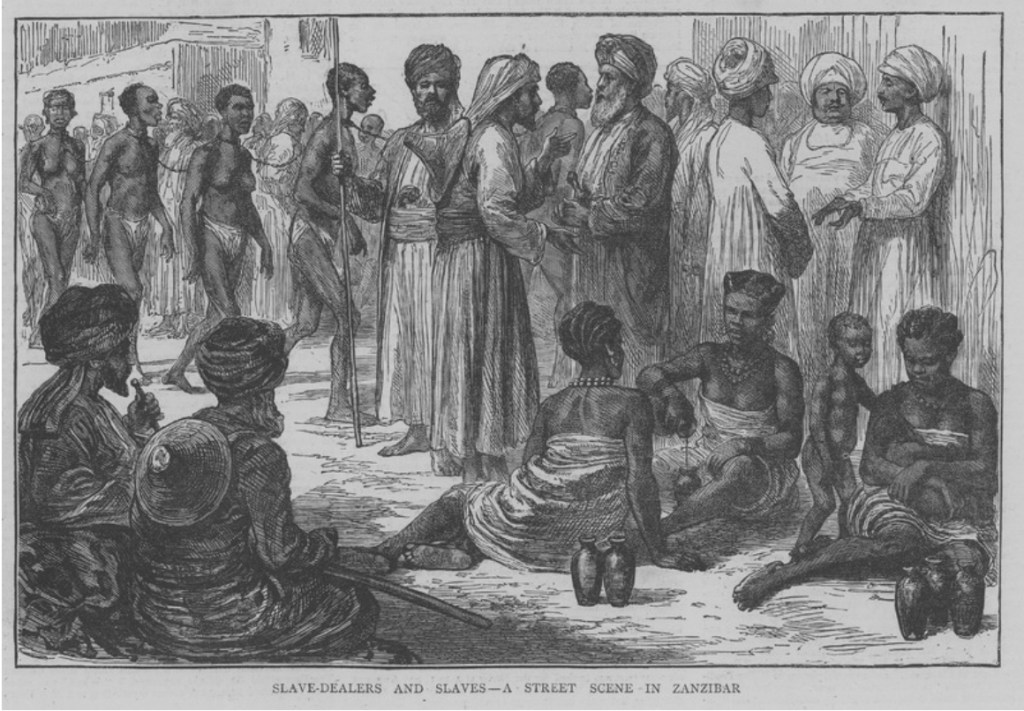
Rigby saw that everyone in Zanzibar, including the British-Indian merchants were complicit in the trade, but no-one had interfered with it on land or sea at any point before he arrived. The British-Indian Government:
“….was averse from stirring up even the question of slavery by British subjects, and would give no authorisation for steps to put a stop to so outrageous a wrong.”2
For British subjects, which included all her colonies and dominions, the Abolition of the Slave Trade Act of 1807 had made it illegal for any British subject to engage in the trade of slaves, the Abolition of Slavery Act in 1833 made ownership of slaves illegal and required the gradual emancipation of enslaved people. Furthermore Britain had signed treaties with Persia, Somalia, Muscat and various Arab states in Arabia and the Persian Gulf and Zanzibar to restrict or stop the trade. In Rigby’s mind, he had no need to request authorisation from his superiors in India to enforce British law and International treaties.
On the 12th February 1859 he is horrified to discover that one of his most trusted Consulate officials had purchased a slave-boy in the market for $12, this seems to have lit the fuse of Rigby’s one-man campaign to suppress slavery in Zanzibar. On the 28th he imprisoned Cassini, a British-Indian shopkeeper, for having purchased a slave-boy.
In May 1859 he wrote:
“I discovered that a British Indian subject had purchased a Galla slave-girl for 159 dollars. I therefore sent her to the Cazee or High Priest to be legally emancipated, gave her a Consular Certificate of freedom and imprisoned her master.”3
Throughout 1859 he pursued British subjects, taking slaves to be legally emancipated after fining, flogging or imprisoning their owners. And, so he continued into 1860, interviewing slaves with his newly acquired skills in Swahili, investigating British-Indian owned plantations and reminding the Sultan of his own laws and proclamations.
He posted a notice at the Sultan’s custom house and at the British Consulate to the effect that:
“Whereas British subjects residing in the Zanzibar dominions were in the habit of buying and selling Africans as slaves, and also held numbers of slaves in their possession, they would be granted one month to bring all slaves in their possession to the Consulate for the purpose of being emancipated, and that all persons failing to comply with this order would be punished according to the provisions of Act V of George IV, which Act gives power to every British Consul to inflict a fine to the amount of £100 upon any British subject holding or buying or selling African slaves for each and every one of such slaves.” 4
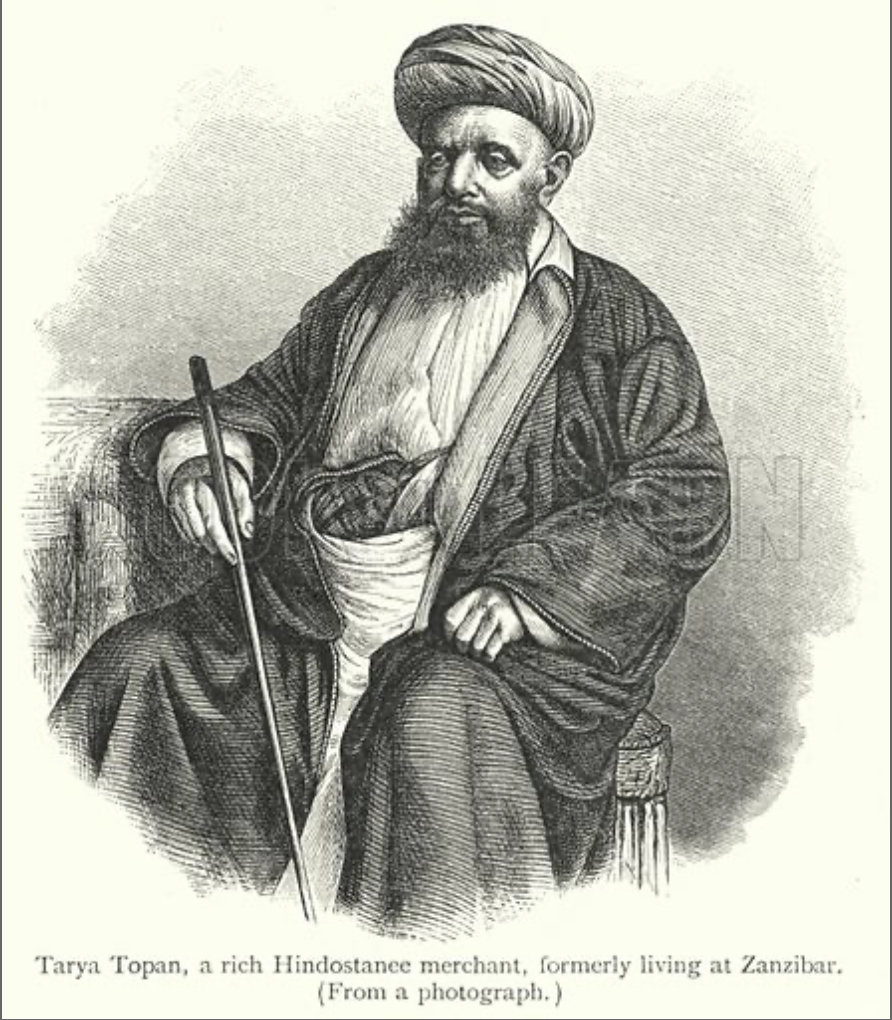
The proclamation was ignored, not a single slave was handed over in the course of the next month so Rigby instructed Kanoo, one of the richest British-Indian merchants in the city to attend a meeting at the Consulate.
Kanoo arrived naked to the waist so, to establish their comparative status, Rigby fined him £100 on-the-spot for disrespect.
We can imagine the scene, Colonel Rigby, an imposing man at the best of times, in full formal dress as Consul confronted by an overweight, nearly naked merchant.
Rigby asked why Kanoo had not handed over any of the four hundred slaves he was known to own.
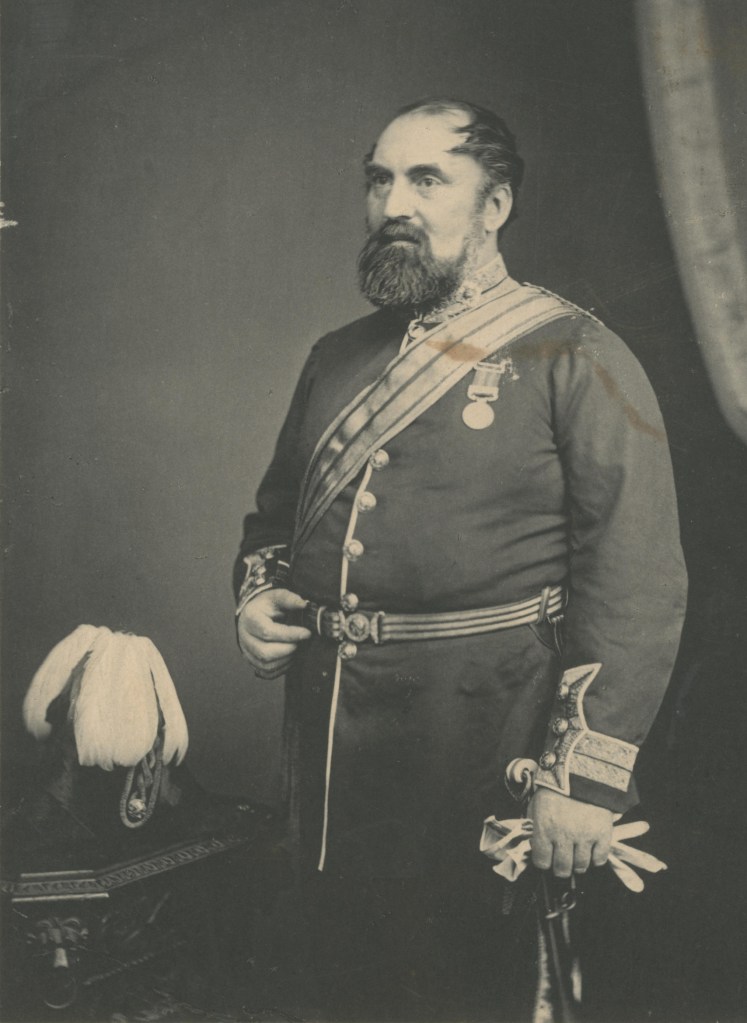
Kanoo replied that the slaves were his property and that he did not recognise the authority of the Consul. Rigby calls a blacksmith into the room and instructs him to place the merchant in irons. This wealthy and influential British-Indian is then marched, still half naked, dragging the heaviest leg-irons the blacksmith could find, through the streets of Zanzibar to be imprisoned in the fort.
The merchants of the town react by shutting their shops and informing the American and German traders that all foreign trade is suspended until the Consul sees sense. Rigby’s reaction is to tell a deputation of merchants that he will not rest until every slave owned by a British-Indian is liberated. To ensure that they know he means business he orders stocks and whipping posts on British-Indian plantations destroyed and all slave chains and shackles, any instruments or punishment or torture confiscated and anyone dealing in them fined and imprisoned.
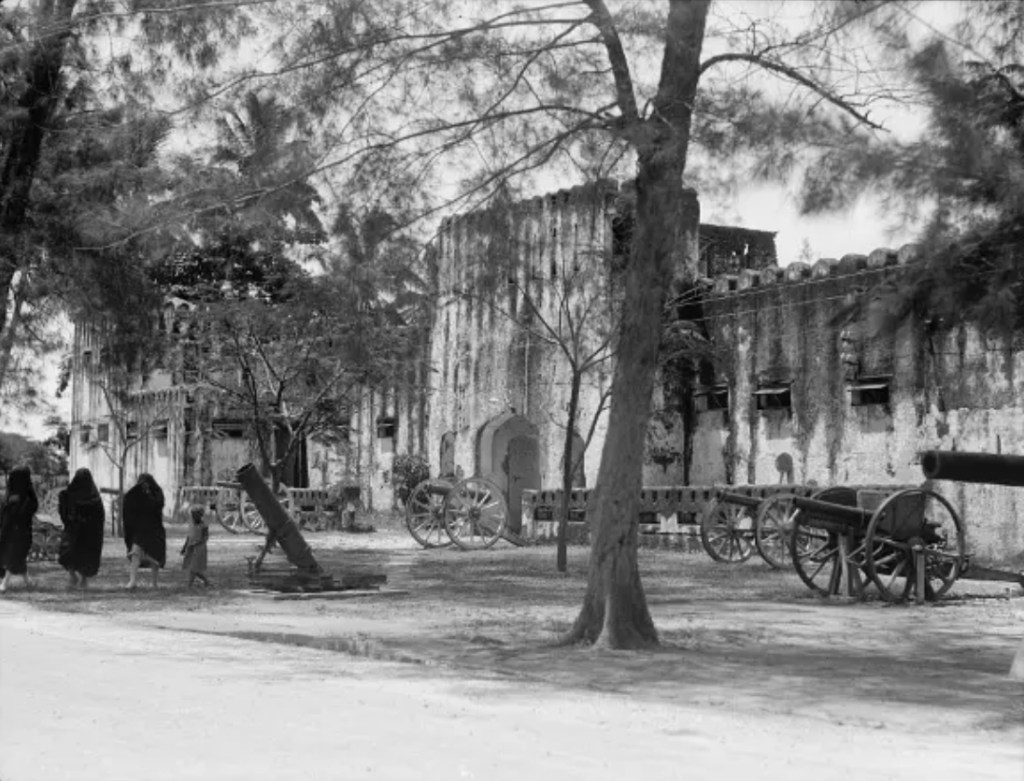
Resistance collapsed and everyday more slaves are brought to the Consulate and handed into Rigby’s care. His diary entires for February 1860 are remarkable:
“16th – Emancipated 48 slaves belonging to Kanoo.
8th – Emancipated 15 more slaves belonging to Kanoo.
12th – Went to Kanoo’s shumba5, and made it over to his emancipated slaves.
17th – Went to Mahommed’s shumba and emancipated all the slaves.
21st to 25th – Busy the entire day writing out certificates of emancipation for slaves
28th – Still busy all day emancipating slaves at the rate of 300 a day.”
Kanoo repents and hands over his four hundred slaves but Rigby isn’t finished with making him an example and orders that he pays each of his, now liberated, slaves £20 in compensation. Initially the merchant refuses but after a further stay at her Majesty’s pleasure he relents, pays the compensation and is freed.
The British-Indian community is shocked to its core but continues to offer some resistance by hiding slave children, telling them the Consul wants them as food for British sailors. Rigby announces that every slave-boy who comes to the Consulate will receive a new red fez and a white jacket whilst every girl will be given a new dress and all children will be given a large quantity of sweets. This does the trick and slave children flock to the consulate.
In 1861, when he finally left Zanzibar suffering from ill health, Rigby reflected on his time there and his journal entry reminds us that he was entirely alone in his endeavours. He was the only Briton in the Consulate, working against the “turn a blind-eye policy” of his superiors in the British-Indian Government and alienating merchants, foreign envoys and the Sultan.
“I was alone, the only Englishman in Zanzibar. I was threatened with death, with prosecution by foreign governments, by entire stoppage of all trade with British subjects. But to all, the Sultan included, my invariable reply was, ‘rather should this Island, with all that it contains, sink beneath the sea, than that this cruel, detestable traffic in human beings should continue.’”
Excluding the many hundreds of slaves landed from British Naval ships during the time that Rigby was Consul he personally liberated 8,000 enslaved Africans.
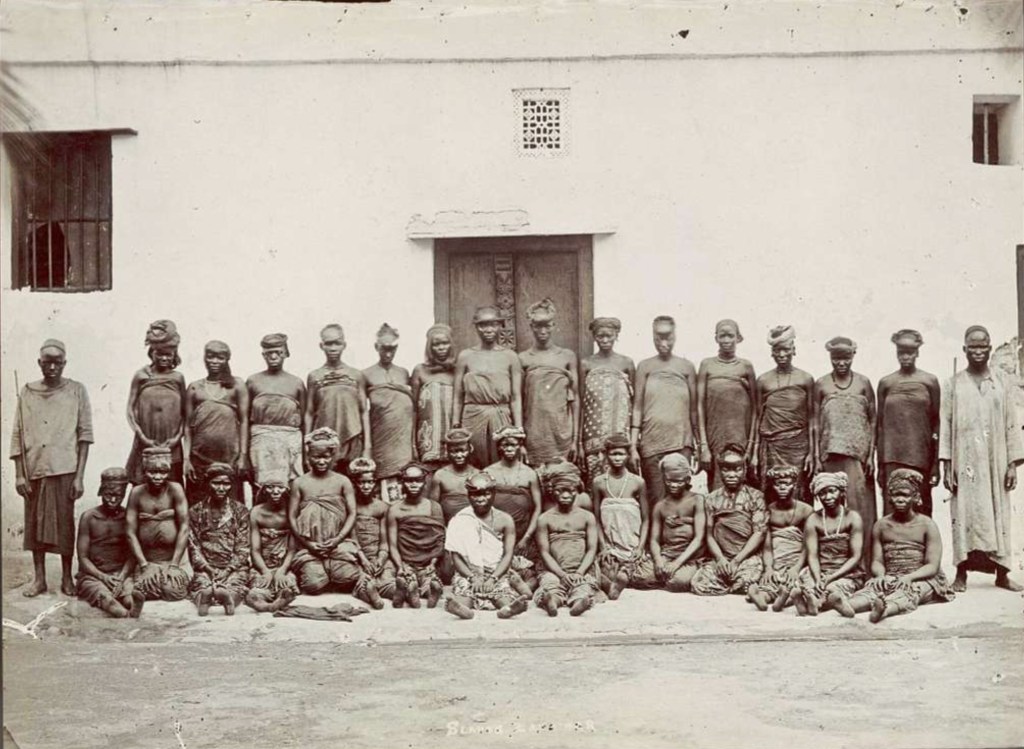
Royal Museums Greenwich
The Liberated Zanzibar Slaves
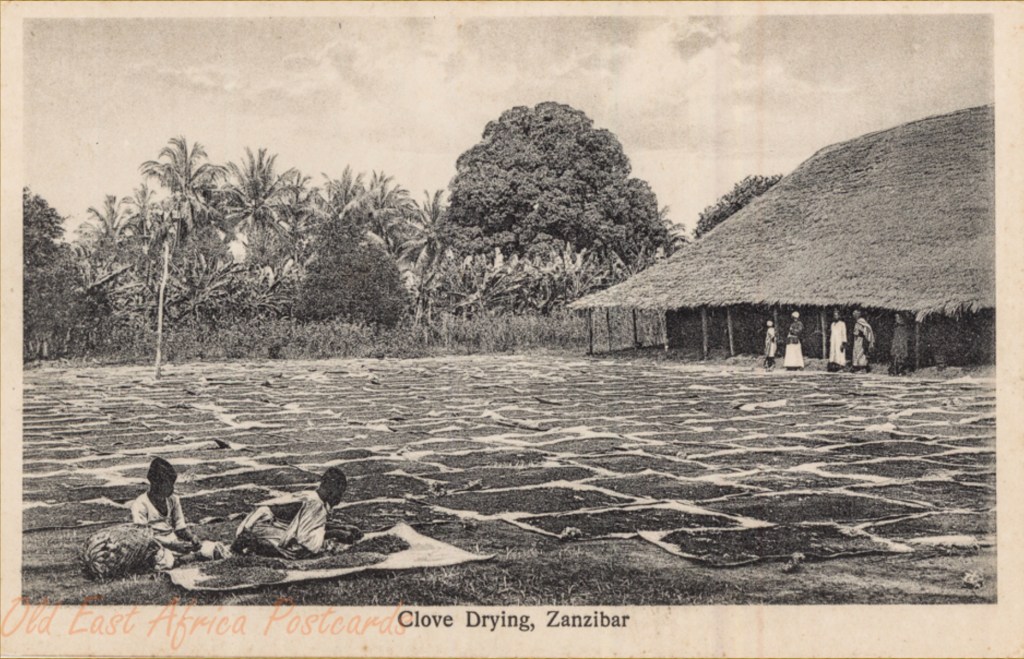
Unlike many other British officials involved with the liberation of slaves Rigby recognised that freedom was not an end in itself. There were now 8,000 people who needed a livelihood.
He sent many of the children to one of Kanoo’s plantations with guardians to teach them agriculture skills and where they are apprenticed for twelve years.
Former plantation slaves were given the option to stay on their former masters’ estates with portions of the land allocated to support them in return for working for the plantation owners for four days a week.
The trades and industries that made Zanzibar the most important commercial centre on the east coast of Africa as well as American, French and German trading houses all offered employment. Some men became sailors and other men and women were shipped to the Seychelles where there was always a labour shortage.
Over the years that followed Rigby often met these former slaves in the ports of the Indian Ocean or in Zanzibar and the Seychelles. Many still carried their certificate of freedom in little cases hung around their necks or on their wrists. One of Rigby’s successors, Churchill, said in 1867 that he had never heard of one of the 8,000 becoming slave again.
Tembo & Tippoo
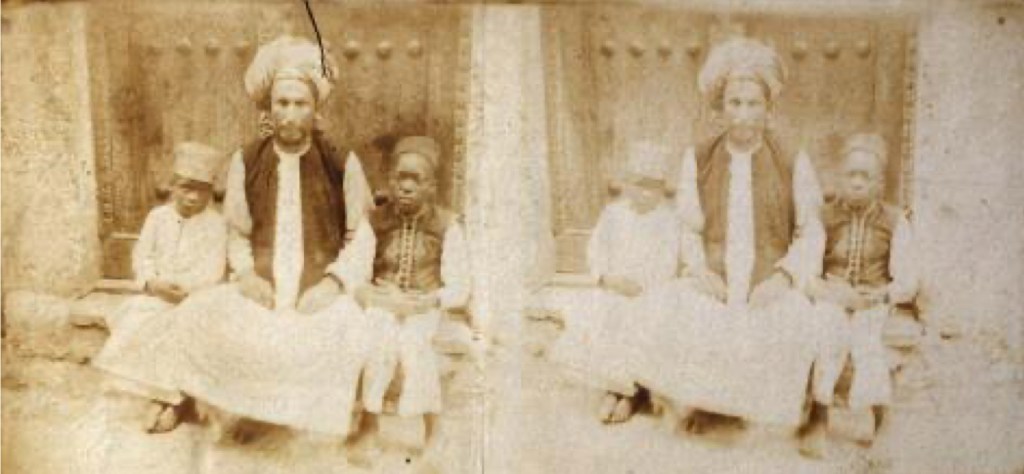
J. A. Grant, 1860. 6
When he left in 1861 he took back to London a liberated slave-boy who had no relatives in Zanzibar and for whom Rigby had been unable to find a suitable family willing to adopt or employ him. Rigby thought the little boy came from the area between Lake Nyasa (Lake Malawi) and the coast in modern day Mozambique and he had given his name as “Tembo” which is the Swahili word for elephant but is also a common family name in Malawi and Zambia.
Rigby became very attached to Tembo as a travelling companion and treated him as an adopted son. Rigby’s youngest sister, Mrs. Gardner, introduced Tembo to her church and he was Christened as a Roman Catholic with the name George Francis Tembo.
There was a second, younger boy who either came to London with Rigby and Tembo or was set for later; The London Illustrated News called him “Tippoo Sultan”.7 In 1863 London society was excited by the return of James Augustus Grant and John Hanning Speke fresh from discovering the source of the Nile.
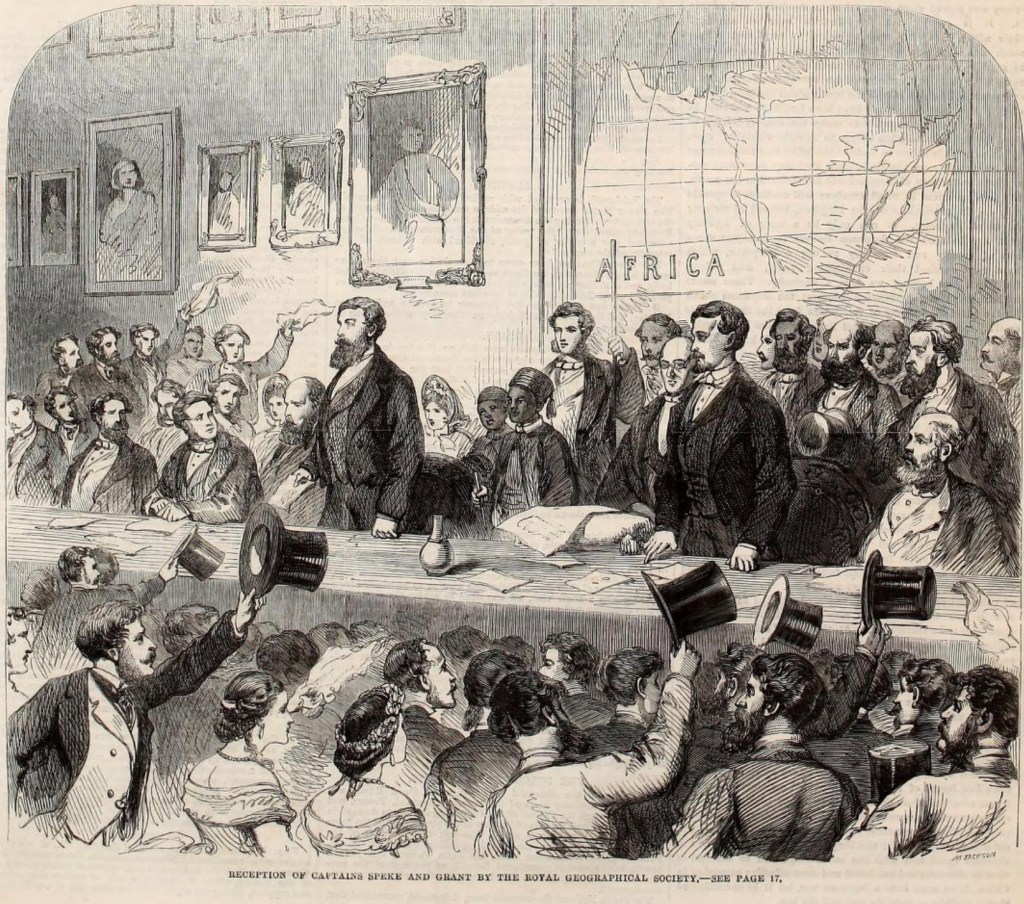
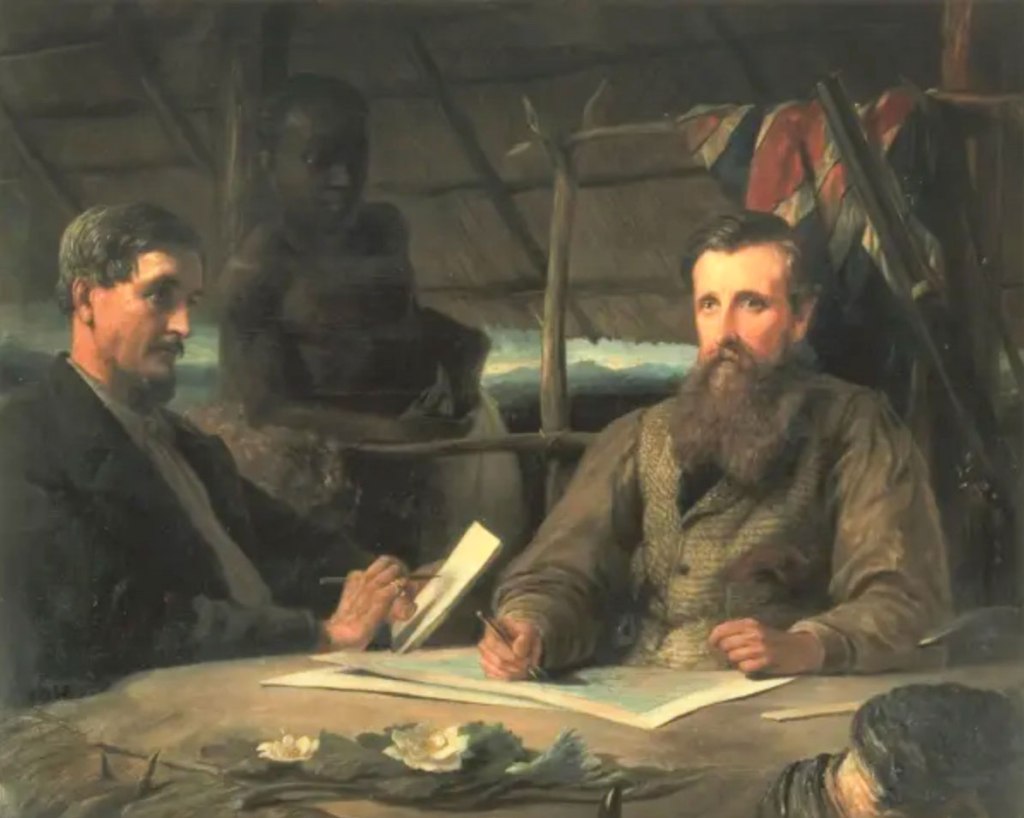
In London in 1863 the two boys are drawn into the celebrations; Victorian explorers were the celebrities of their day and they were as adept at self promotion as any Instagram Influencer. In the engraving that appeared in the Illustrated London News in July 1863 Tembo and Tippoo stand, in their tasseled hats, in the the centre of the picture with Sir Roderick Murchison, Grant and Speke and a huge map of Africa on the wall behind them. Later in the same publication the boys reappear as “Negro Boys of Central Africa”.
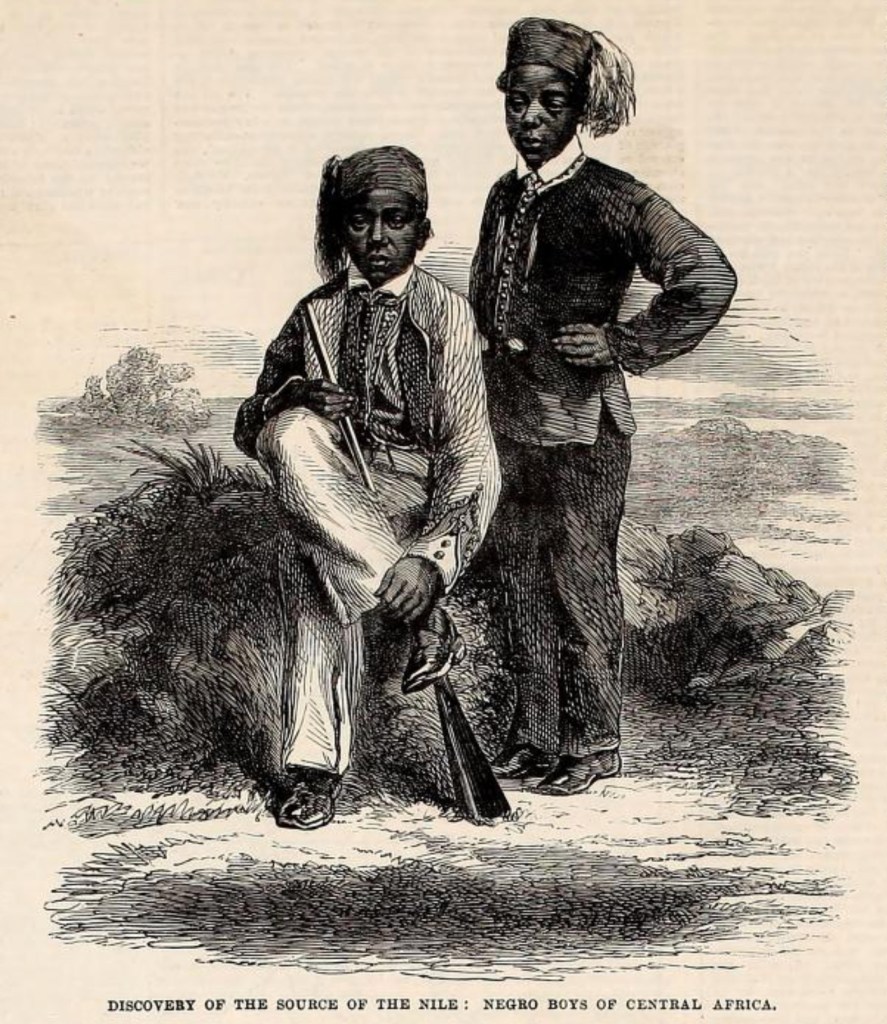
Grant knew Rigby from Zanzibar and, in 1860, had taken the photo shown at the top of this section of the Head Guard at the British Consulate with two liberated slaves; who were probably Tembo on the right and Tippoo on the left. When he and Speke arrived back in London it seems he “borrowed” the boys from Rigby to accompany the explorers to their public engagements. They, in effect, became props but they appear worryingly like trophies.
Royal Geographical Society9
There is an even more strange image of Tembo painted by Henry Wyndham Phillips in 1864. It shows Grant and Speke in Africa, in a grass-roofed hut with Tembo standing in the background. Again it appears that Tembo was a useful prop adding an exotic and African feel to a very posed and static painting.
Tippoo quickly returned to Zanzibar but Tembo stayed and attended a convent school at Rigby’s expense. He lived with Rigby and his wife for “some years” as a “confidential servant” before returning to Zanzibar to escape the British climate. He was employed by the British Consulate and served there for the rest of his life. He accompanied Sir Gerald Portal to Uganda in 1893 and twice returned to London with British Consuls.10
He was described by Mrs. Rigby as:
“Affectionate, humble-minded, unassuming, loyal, intelligent, deeply grateful. George was a shining example of what sympathy, respect and education may make of the primitive African.”
David Livingstone
In 1861 David Livingtsone led Bishop Mackenzie and his missionaries through the Shire Highlands in Malawi.
They encountered a slave caravan at Mbame, where the Blantyre Mission Church stands today11. Livingstone intervened and freed the enslaved people.
The slavers ran off when confronted and the Europeans cut the cords that restrained the women and sawed off the six-foot-long, forked, slave sticks that shackled the men.
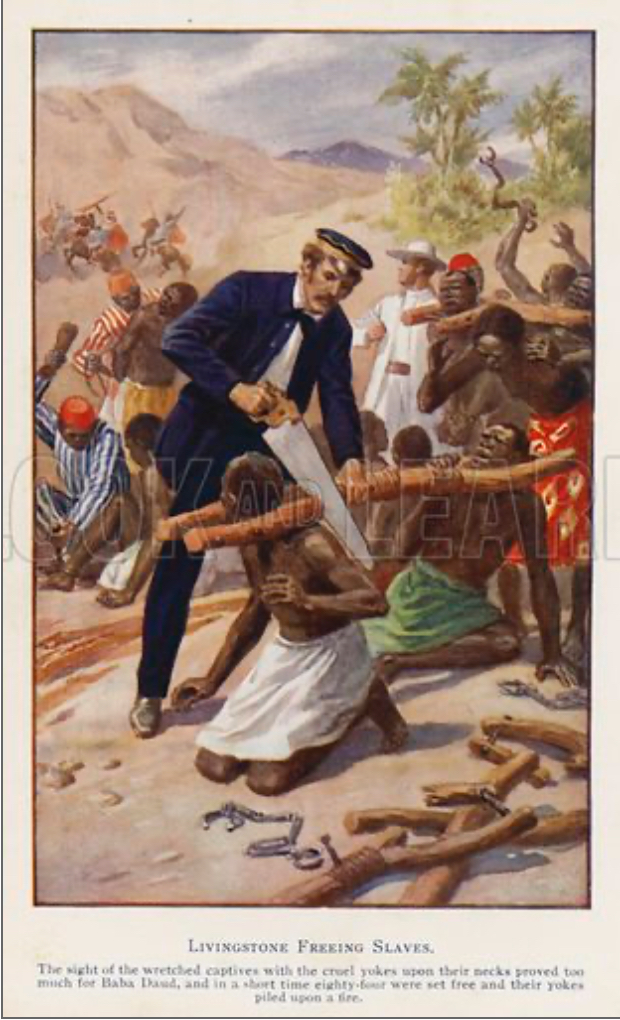
The eighty-four freed slaves become the bishop’s first congregation.12 The group included two boys Chuma who would later become famous and his friend Wakotane (see my later article on the Bombay Africans).
Bishop Mackenzie & Magomero
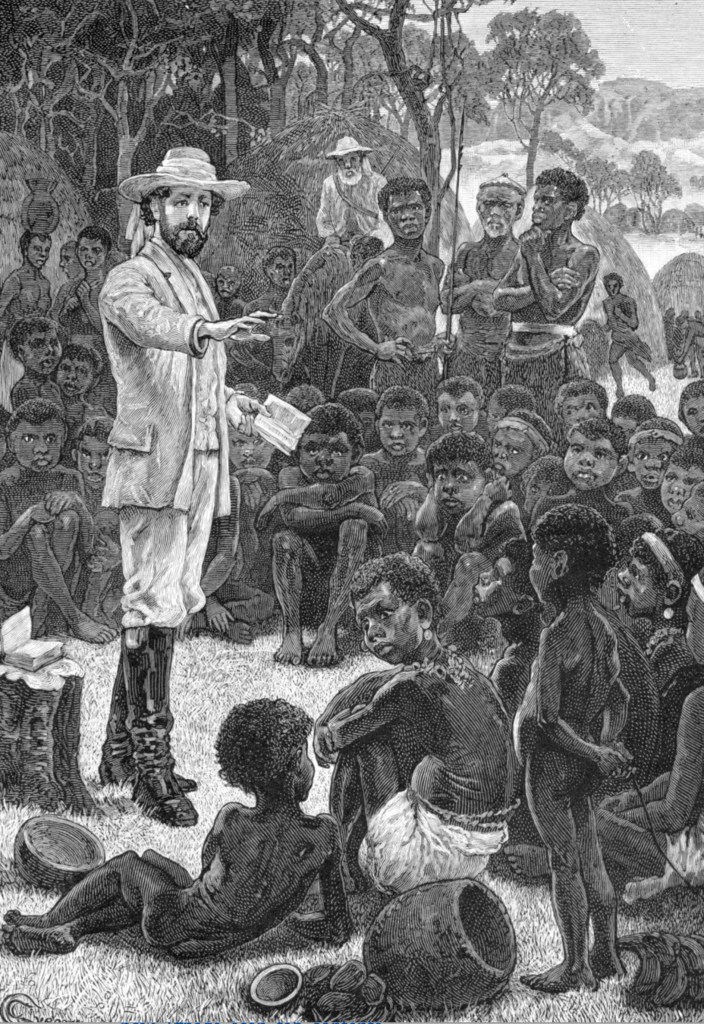

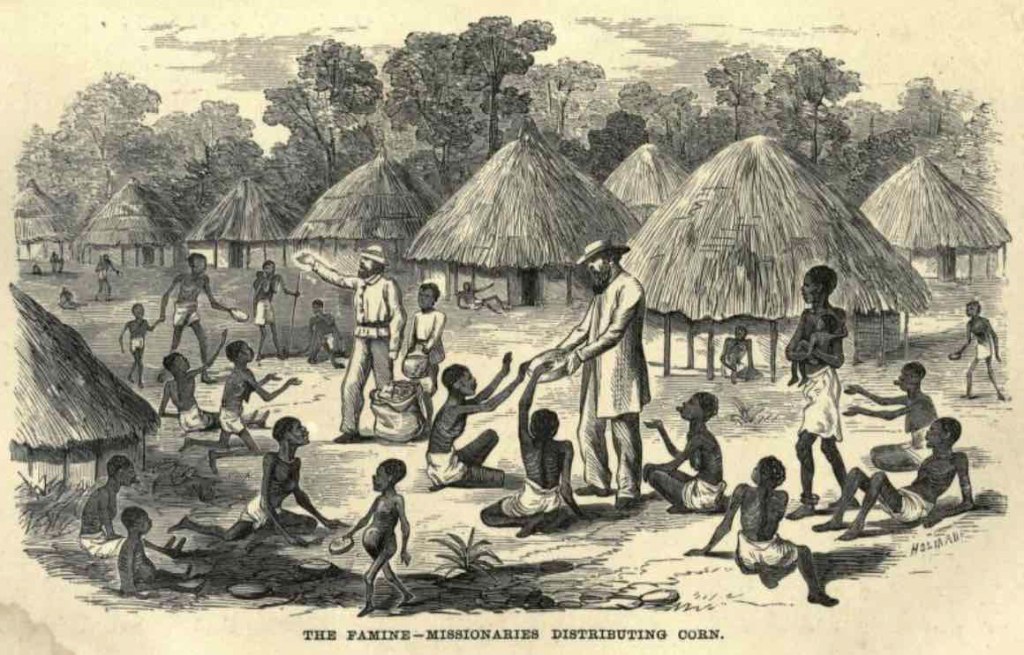

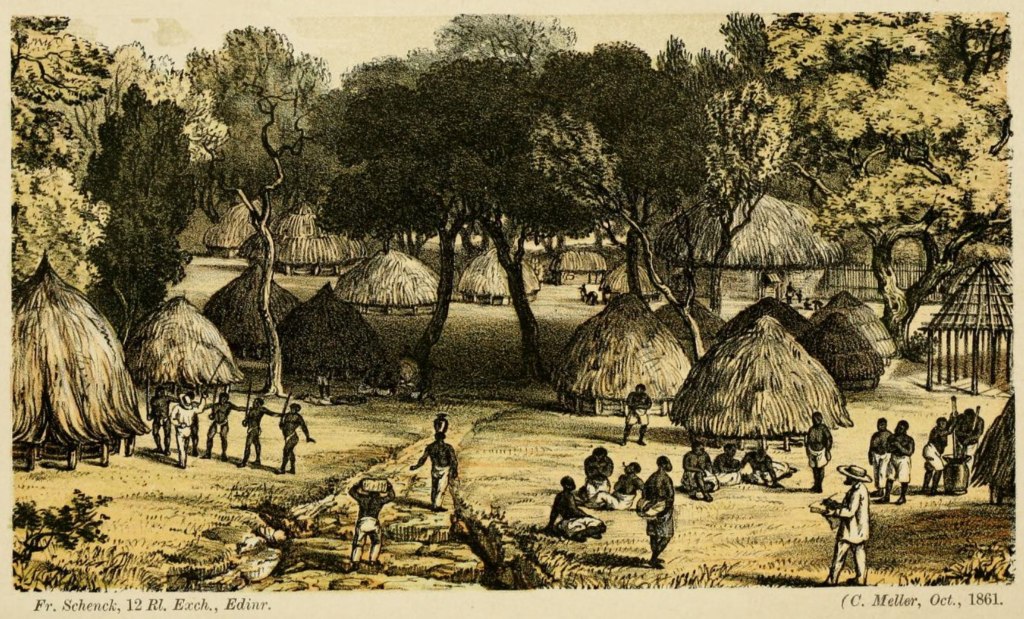
Bishop Mackenzie established the Universities Mission to Central Africa (UMCA) at Magomero in 1861. He and Livingstone continued to confront slavers and as a result collected liberated slaves as they made their way from the Shire River to Magomero and later the Bishop embarked on ill-thought-through, military style attacks on Yao villages even after the mission was established.
The Bishop died in 1862 and the mission, which was suffering from disease and famine was abandoned soon after in April 1862.
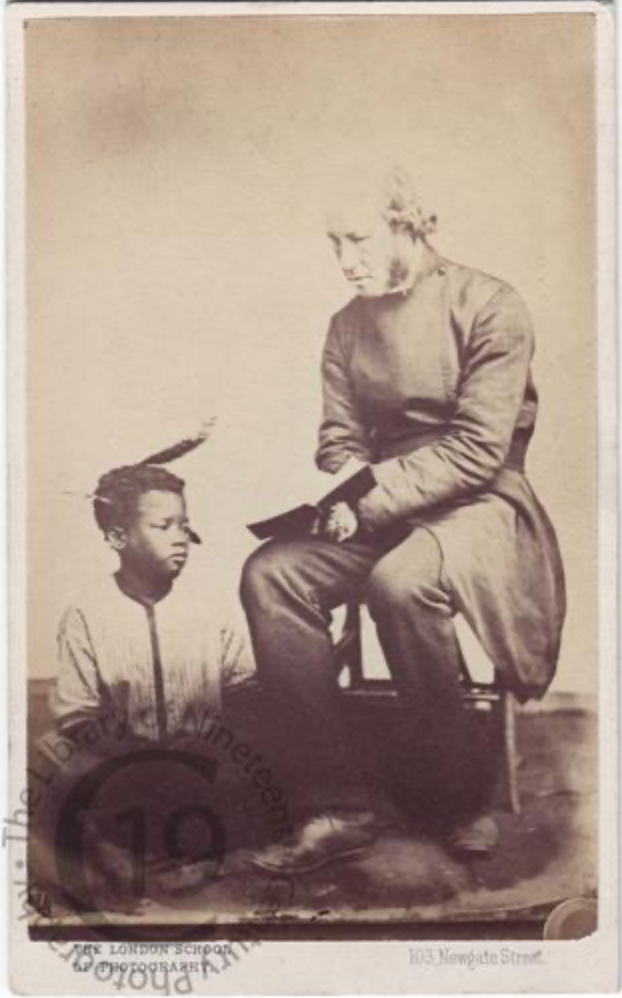
For more on Bishop Mackenzie and the Magomero Mission see Magomero and the East African Slave Trade
The Fate of the Magomero Liberated Slaves
Of the many liberated slaves who made their home at Magomero very few are remembered by name. At the beginning of 1862 the mission was suffering from a desperate lack of food and as the shortage evolved into a famine they were struck by a severe outbreak of amoebic dysentery caused by drawing water downstream from where the river was being contaminated by human effluent. Fifty women and children died from a combination of malnutrition and dysentery between December ’61 and April ’62.
Livingstone’s Kololo companions who had followed him since he crossed Africa in 1856 left the mission taking wives who were some of the liberated slaves.
When the mission packed up and left Magomero for the relative safety of the Shire Highlands and then to a new site at Chibisa’s on the Shire eight more women and children decided to stay at Chigunda’s neighbouring village.
(Chasika, a Yao girl at the mission – see right)
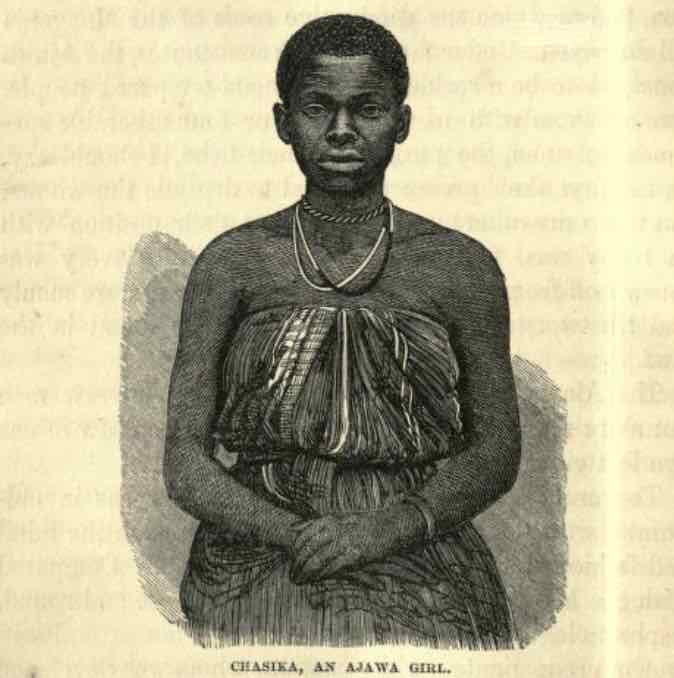
The depleted mission now at Chibisa’s was under threat and increasingly isolated from the Mang’anja villages of the Shire Highlands that had mostly fallen to the Yao. There was also tension with the Kololo who were busy creating a new territory for themselves near Chibisa’s.
In June 1863 their new Bishop, William Tozer, arrived and resolved to withdraw the mission. Bishop Tozer wanted to distance himself from the whole history of the ill-fated mission at Magomero arguing that the release of the slaves from the slave caravan in 1861 had been “highland robbery”. None of the surviving, liberated, slaves had been baptised so, in his mind, they were not his problem and should be left to fend for themselves. After many furious arguments with the surviving missionaries he agreed to set up a school at Morumbala near the River Zambezi for twenty-five orphaned boys but that was his only compromise.
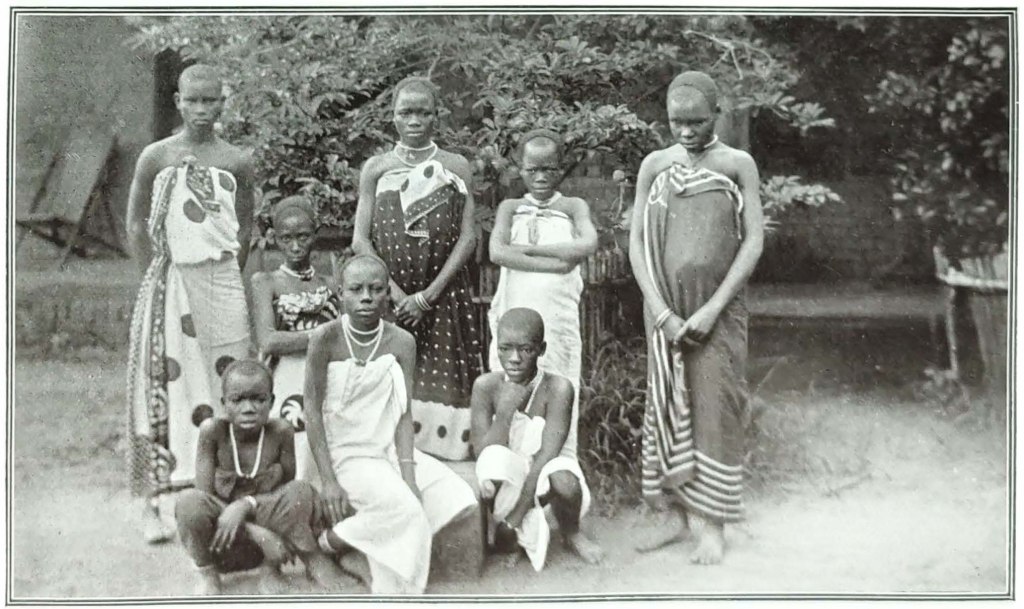
Horace Waller, one of the missionaries, refused to take no for an answer and resigned from the mission and, after a failed attempt to follow Tozer in canoes, stayed at Chibisa’s with thirteen liberated women and their children. They were joined by a few others including Chinsoro and Chasika.
Tozer failed to build his mission station at Morumbala and withdrew to Zanzibar offering to take the orphaned boys with him. Six refused and returned to Chibisa’s and, after yet another argument, Livingstone gained custody of the rest. Livingstone took Waller’s little community and the orphaned boys down the Zambezi to the coast in 1864.
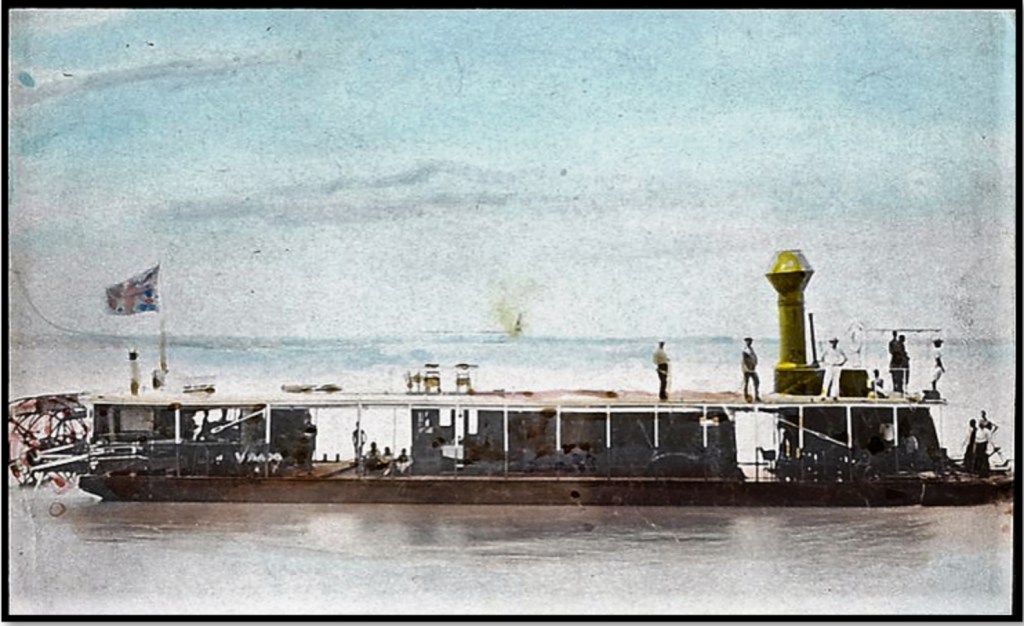
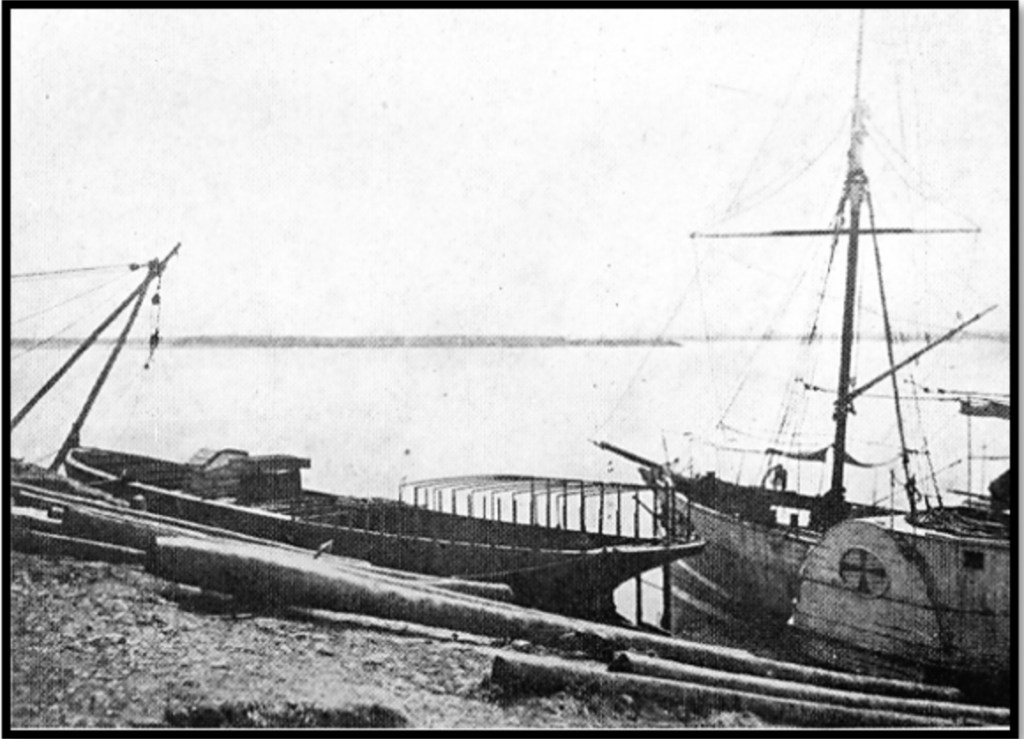
Photo by Dr Kirk15
On 30th April 1864 Chuma and Wakotane (see above) sailed with Livingstone to Bombay in the Lady Nyasa along with seven Zambesians who were selected from a large number who had volunteered to go with him as crew and who were paid 10 shillings a month.
They were named as: Chiko, Abdullah Susi, Amoda, Bizenti, Safuri, Nyampinga and Bachoro. 16 The Zambesians were paid off in Bombay on 22nd June but some will come back into our story later.
Livingstone placed Chuma and Wakotane in Dr Wilson’s school before he returned to England.
Wilson College was founded in 1832 by the Scottish missionary Reverend John Wilson (see right). It is still operating and is affiliated to the University of Mumbai.


Horace Waller now had forty-two people on his hands, a mixture of liberated slaves and their children. He set sail in Pioneer for Cape Town where he planned to place the boys in the Zonnebloem College which was a school set up by Bishop Robert Gray for the sons of African chiefs. Unfortunately this proved politically inconvenient and most of Magomero’s liberated slaves just drifted into the Cape’s “prize negro”18 community which hovered around the lowest rung in a highly stratified society.
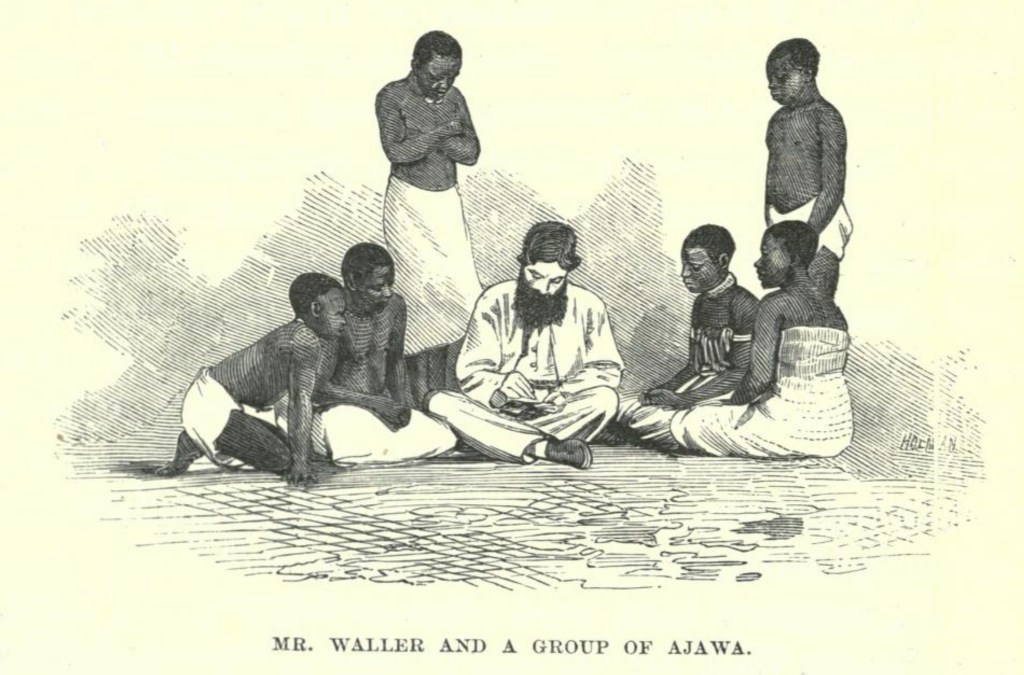
Robert Keable when writing his 1912 study of the UMCA paints a far rosier picture:
“Livingstone and Waller brought twenty orphan boys and one little girl down to the mouth of the Zambesi, together with as many more adults; and from there they were shipped, one or two to be educated at the Doctor’s charge in Bombay, the children and others to Cape Town.
Mr. Waller shepherded them all the way, and they found a home among that large coloured congregation which Bishop Mackenzie had addressed on his way north. They were adopted, says the historian of the Mission ‘with that great and unselfish generosity which is one feature of the African character.’”
Daoma
An exception to the unnamed people from Magomero is Daoma or Dauma who was rescued from the Yao20 at the Battle of Sasi Hill on the 14th August 1861 which is described in an early article.21 Bishop Mackenzie attacked a Yao settlement near Mount Zomba and carried away around eighty women and children who turned out to be a mixture of Man’anja slaves and the Yao’s wives and children.
On the long walk back from Zomba to Magomero the missionaries organised the men in the company to carry the children:
“For one little thing (a girl named Dauma) we could find no carrier, so after she had trudged along some distance tbe Bishop shouldered her and carried her into Magomera. It was dark before we arrived.”22
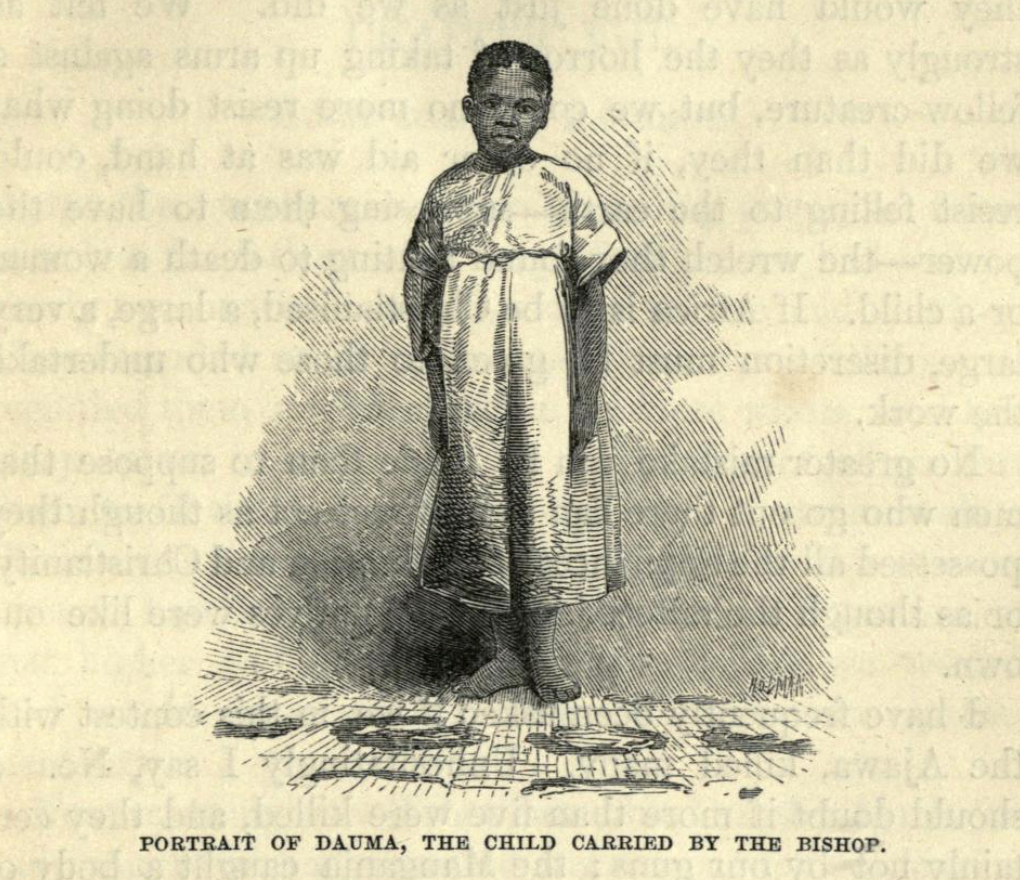
Daoma stayed at Magomero and was part of Horace Waller’s party that travelled to Cape Town. Waller found her a place at St. George’s Orphanage where she stayed initially as a child and then as a teacher. In 1912 two UMCA missionaries visited the orphanage and wrote:
“Our second visit was to S. George’s Orphanage, where Ann Daoma has spent the last forty-nine years. She has never married, knows no language but English and Dutch, and looks as young as most African women do at thirty. For many years she has been second teacher (under a European lady) in a large day-school attached to the Orphanage. This school is known locally as Miss Ann’s school; she herself is always called ‘Miss Ann’ ; and the Principal of the Orphanage told us many stories of the great influence she has on the children in her school, even after they art grown up.24
She stayed in touch with Horace Wallace and supported the UMCA financially25 until her death in 1936.
Bishop Tozer
William Tozer, the second UMCA Bishop arrived in Zanzibar in 1864 and began to organise is mission. He managed to liberate five slave boys without even trying:
“So happily did matters go, that the Sultan not only leased the suggested house to the Mission on very reasonable terms, but within a week sent round five little slave boys as a present to the Bishop. Of these it was found that three were Yaos, one a Nyasa, and one a Gindo.”
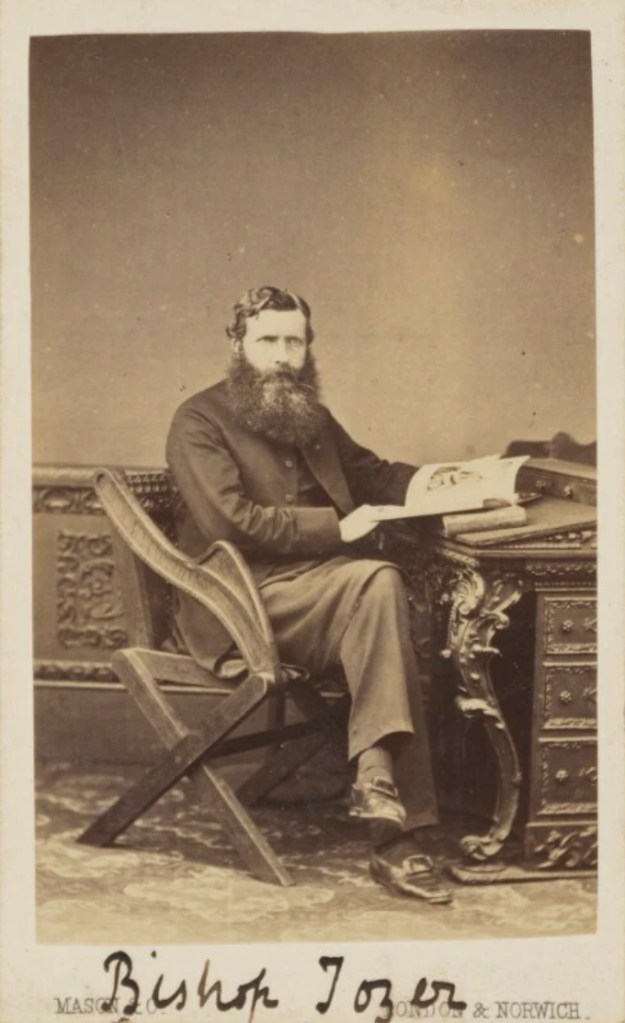
The Bishop was very excited, he had been sent from Britain to bring Christianity to the people around Lake Nyasa and they were being delivered to his door. “Morning after night.” he was convinced that God’s hand was in his decision to come to Zanzibar.
The mission school grew quickly: In May 1865 HMS Wasp captured three hundred enslaved people, landing them in the Seychelles, and the Bishop and his sister selected nine girls to start the girls school at the mission and a further five boys.
We are given too few opportunities to see the liberated slaves as humans, to hear them described in terms of character and appearance; but, luckily Miss Tozer, the Bishop’s sister, was a dedicated letter writer and in those letters we find a treasure trove of information about the individual children in her care.
She wrote of her journey to and from the Seychelles to collect the new children and in passing names one as Sutia, “who was the darling of the main deck.” In the same letter Miss Tozer describes the boys at the mission:
“The nine boys are perfect little gentlemen – nice soft manners, full of intelligence; they speak a little English with a pure accent, and understand all you say.
Yesterday I gave them a singing lesson in chapel; they sang the Glorias and two hymns in English very nicely, and their conduct is beyond all praise. I have seen two sums in addition and multiplication both right, and long rows of figures; and to-day I heard six of them read a card – the history of Joseph – in English and Swahili, and their answers to questions were quite beautiful, evidently attending to and understanding all the story.
Two of the boys are Christians in will; and [Samual] Kongo, the oldest, we always call the future Bishop – he is so good, steady, grave, and thoughtful. Mabruki is the dearest, brightest little fellow – very pretty, with lovely white teeth, and of a sweet temper, very quick and clever; while ‘Mkono the Malagasy is so good and obedient, and withal so quick in apprehension. These three and a fat little Songolo and Feruzi, who is as fat as a sheep, are my chief acquaintances as yet.
They are so gentle and obedient and so still when required to be, as in chapel and at lessons, that they are totally unlike English boys; you can trust them with glass or tender things – they rarely break them.26
HMS Nymph brought them thirteen more slave children of “whom one is tattooed all over his face ‘he may be exceedingly attractive and sensational hereafter in a surplice’”; and HMS Daphne another fourteen. They came from all over East and Central Africa including Nyasa, Kenya and Abyssinia. By the end of 1868 there were fifty-five children at the mission school. Soon after they began taking adults and larger groups of children.
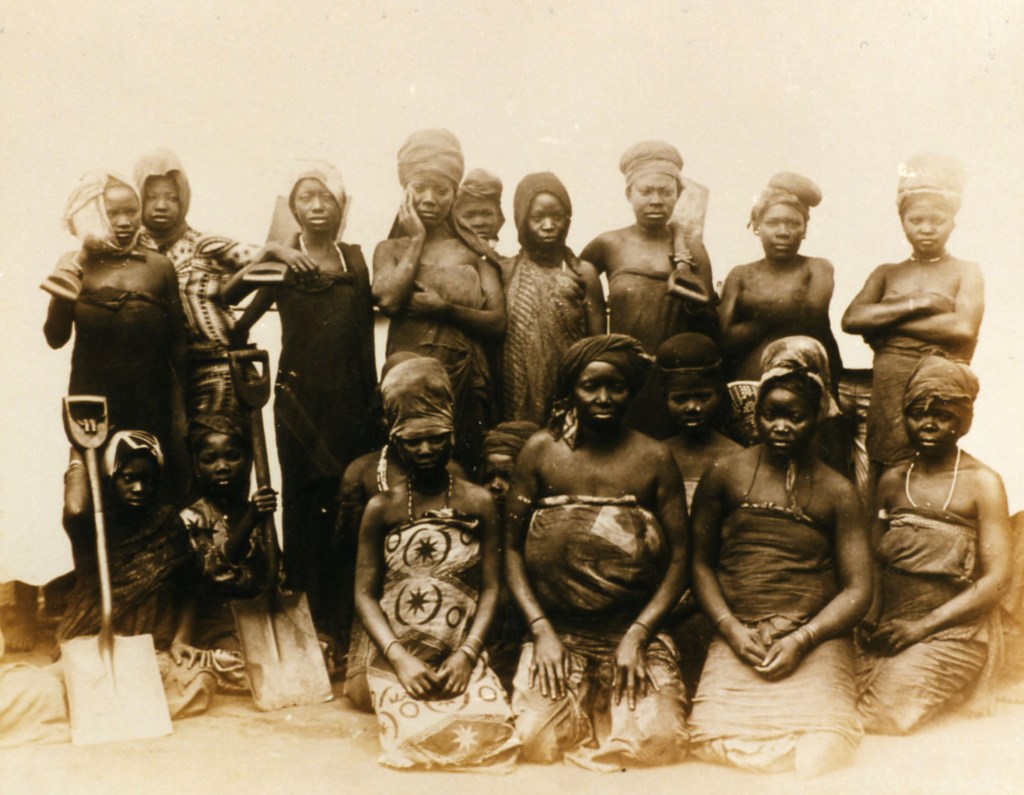
The mission developed and grew adding a college to train African priests, a hospital and the founding of Mbweni in 1871 as a settlement where liberated slaves could live.
After the slave market was closed in June 1873 the UMCA acquired the site and Bishop Edward Steere started to build Christ Church, the cathedral on the site of the old market with its altar where the whipping post had once stood.
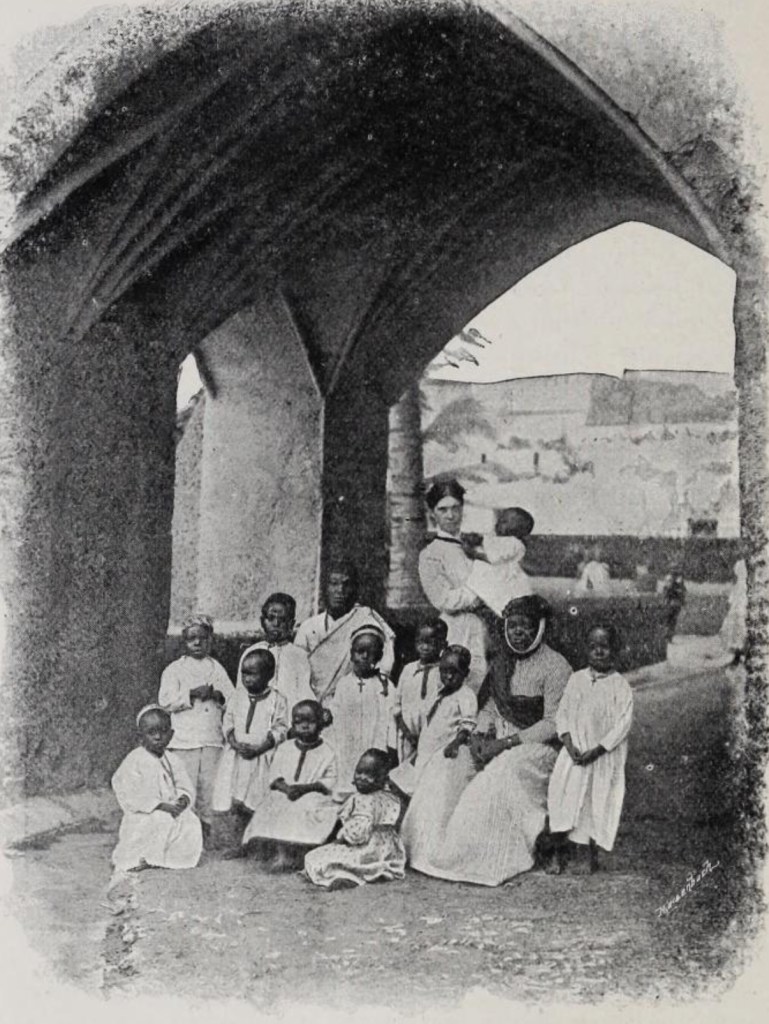
When Sir Bartlett Frere inspected the mission in 1875 he was impressed with the teaching of academic subjects but disappointed that more was not being done to teach practical trades for the boys who were less academically inclined. At that time there were seventy-eight boys and thirty-two girls at the mission and all but five were liberated slaves. Most had been rescued by Royal Navy cruisers.
UMCA opened a number of missions on the mainland and they often placed freed, baptised, slaves in the new sites as a “nucleus of all operations”. By 1890 the mission schools had educated and baptised 272 boys who had been freed from slavery. By 1894 few of the boys in the school were freed slaves but by then many were the descendants of freed slaves living at Mbweni. 28
The Five Slave-Boys Gifted by the Sultan of Zanzibar
John Swedi, George Farajallah, Robert Feruzi, Arthur Songolo, & Francis Kabuki were the five boys gifted by the Sultan to Bishop Tozer on his arrival in Zanzibar in 1864.
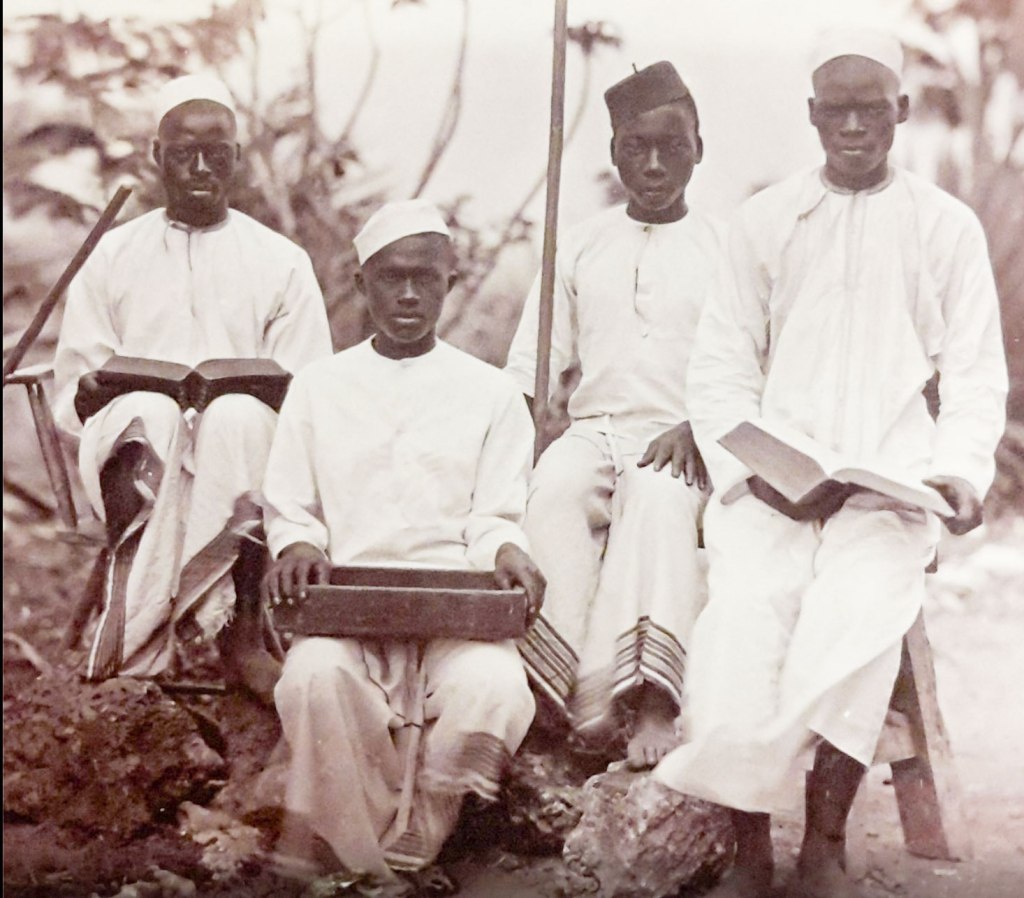
John Swedi, a Ngindo30, stayed with the mission and became a sub-deacon in 1870. He was a deacon at the cathedral for the rest of his life. We know that he married one of the mission girls. Along with Francis Mabruki he was sent to Magila on the mainland as a missionary in 1872.
He is mentioned again in August 1875 when he “presided” at the St Bartholomew’s Day dinner in Zanzibar, a dinner party that included James Chuma and Abdullah Susi as honoured guests.
Swedi became a full deacon in June 1878.
George Farajallah, a Yao, was also ordained as a sub-deacon but died shortly after in the cholera epidemic of 1870. He was wrapped in a native mat and buried at Kiungani.
The role of a sub-deacon was:
“The care of the vessels of the sanitary, and the waiting on those who ministered there …… as well as reading the Holy Scripture in Church, interpreting the teaching of the clergy and the instruction of the young. Thus the first milestone on the way to a native ministry was reached.”31
Robert Feruzi, a Nyasa, became a caravan leader and guide and travelled with two of Henry Morton Stanley’s expeditions into Africa.
He was in modern-day Uganda with Stanley and Maftaa, another freed slave from the mission who was also a Nyasa. Maftaa was not thought of very highly by the mission but he now wrote to the Bishop to ask for help teaching Christianity to the “King of Uganda.”
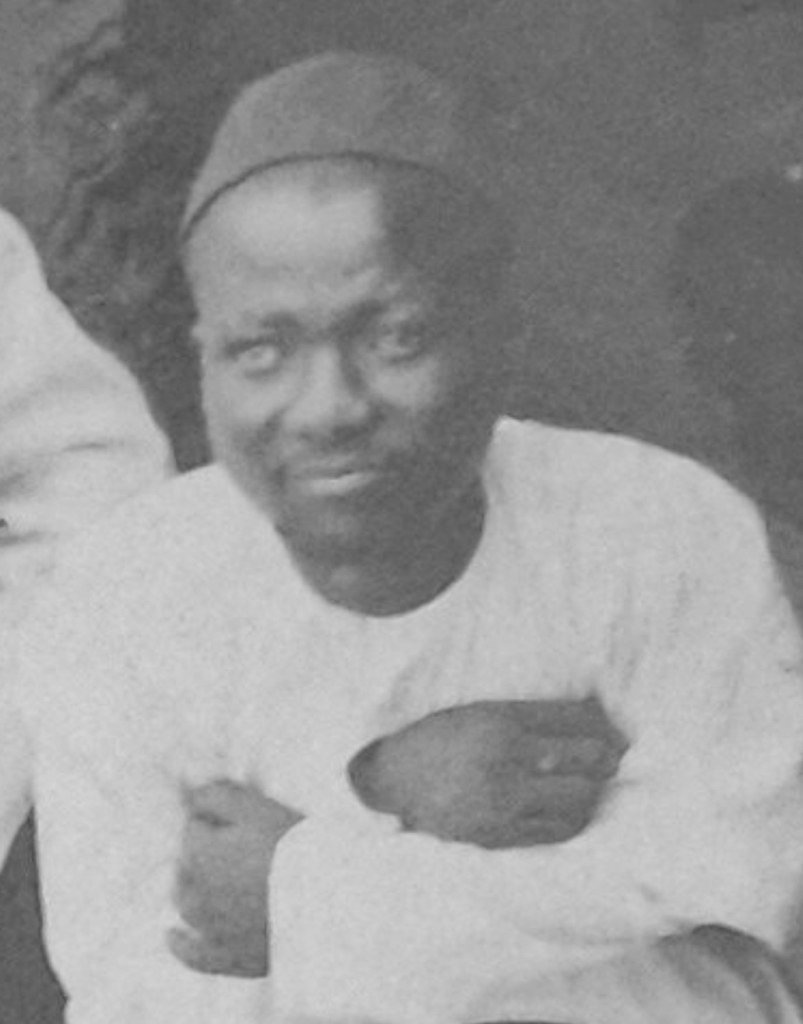
Arthur Songolo, a Yao, was known for being a “sweet singer in the choir” but rejected Christianity.
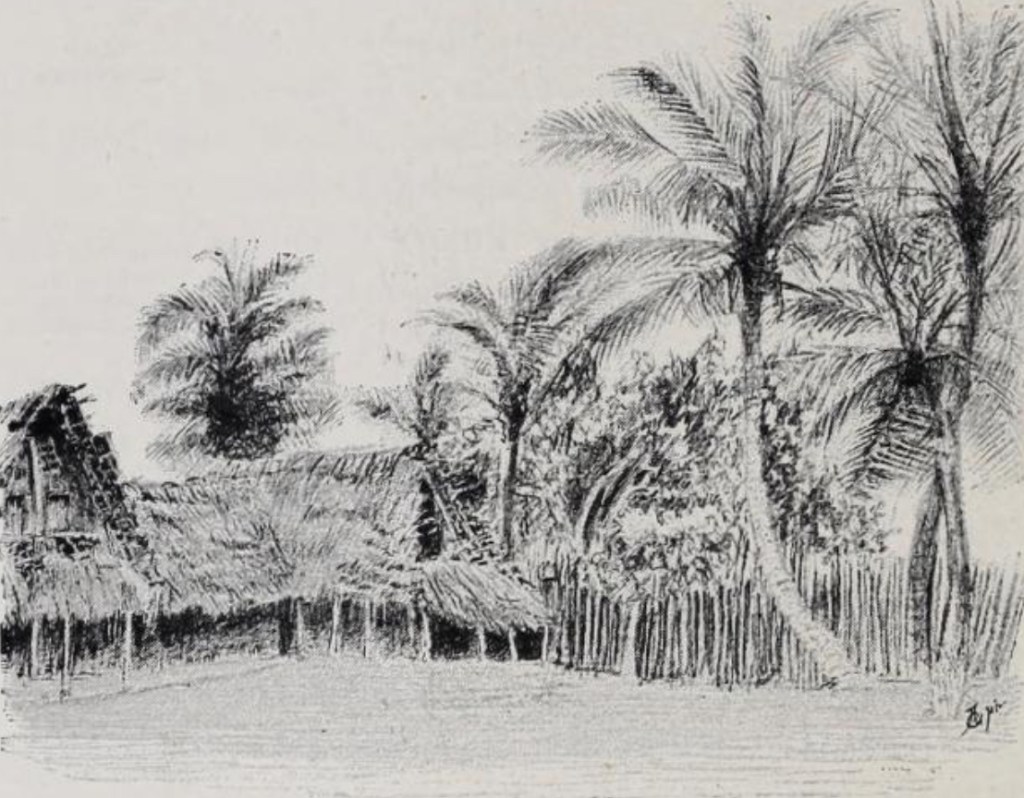
Francis Mabruki, a Yao, was also ordained as a sub-deacon. There is a record of him accompanying the Bishop to Malawi in July 1885 where he repaired the boat they were using near Elephant Marsh.
Mabruki left the UMCA partly due to paternalism in the mission.32
Cecil Majaliwa
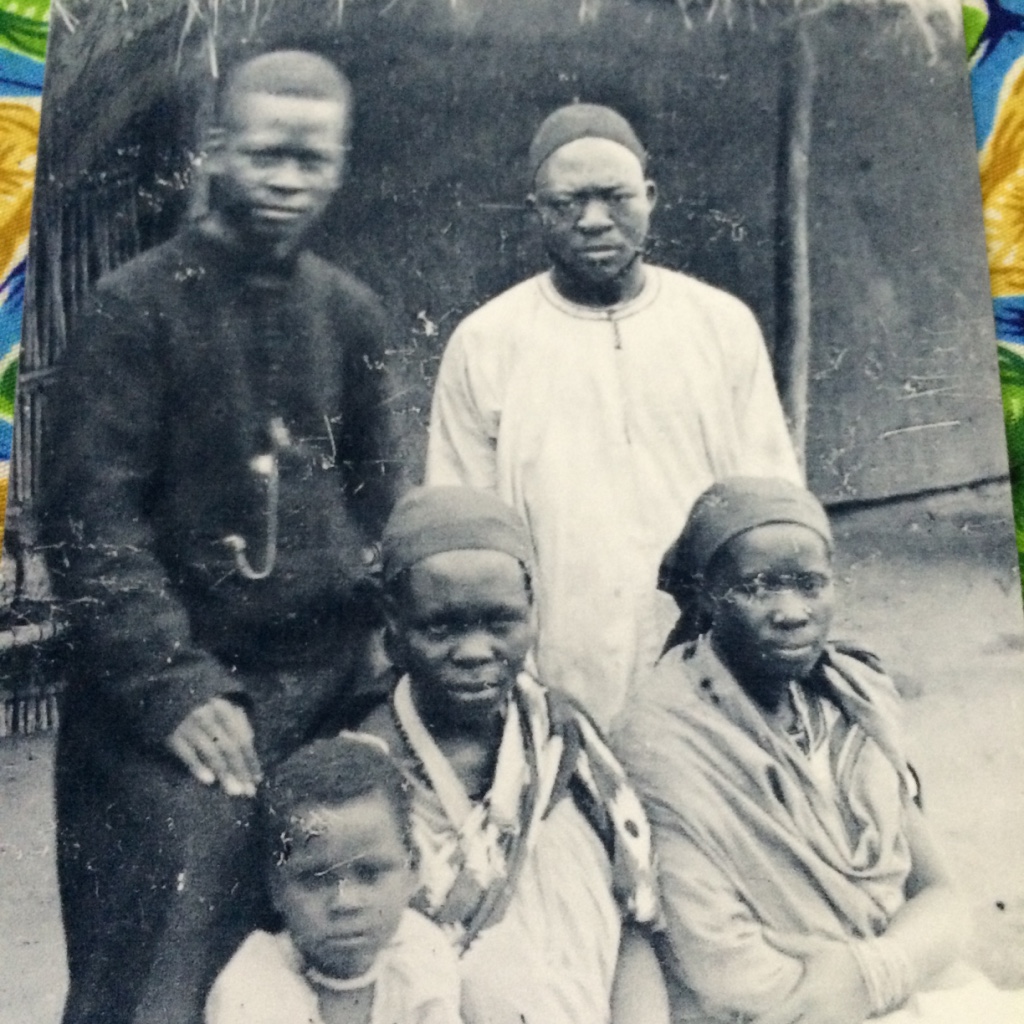
Cecil Majaliwa, a Yao, was captured sometime in the 1860s or 70s in Mozambique or Malawi and rescued by a Royal Navy cruiser in 1872 (or was sold in the Zanzibar slave market at the age of six).
He entered the UMCA orphanage under the leadership of Bishop Edward Steere and by 1879 had become a teacher and married to Lucy Magombeani who was also a liberated slave.
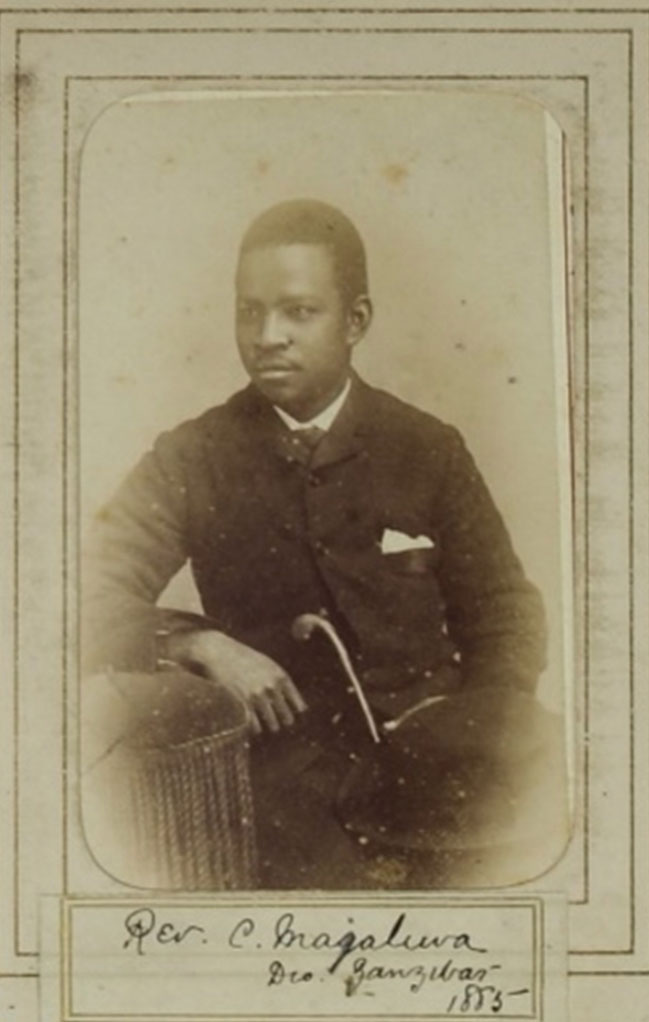
In 1883 he was sent to England for further training and in 1886, after returning to Zanzibar, he was ordained as a deacon. He was ordained as a priest on 25th January 1890 in a highly symbolic ceremony at Christ Church, on the site of the old slave market in Zanzibar. Four Royal Navy chaplains took part.
“Two days’ whole holiday was given in honour of the event in all schools throughout the Mission. It is not easy to estimate what this day will become in the annals of the East African Church, nor what must have been the feelings of any present who could remember the old sad scenes that used to take place in that very spot where now one rescued from actual slavery thus received his heavenly Master’s commission to loose the captive bonds of sin from the hearts of his fellow-countrymen.”33
He was the first African outside of South Africa to be ordained as a priest and in June 1886 he was sent to work at the Ruvuma Mission in Chityangali, Tanzania.
Conclusion
I wanted to focus on the names and faces of the African people liberated from slavery but it is impossible to tell the stories of the tiny proportion who have left any mark in documents or images without talking about the Victorian men and women who were connected to them.
Some of these Victorians are famous and well remembered, often through their own writings or popular biographies, but others such as Christopher Rigby and Horace Waller are little known. In many ways, these two men are perfect examples of people who were shocked and sickened by slavery but, rather than peaching or writing about it, took very direct action to make a difference. Both, were isolated, both made their employers very angry, both came to know Africans as people, and neither felt compelled to write self-congratulatory autobiographies.
Rigby was an Army officer and diplomat, Waller an ordained priest and missionary. They were Victorian in their attitudes, committed Christians, and men of the Empire who probably believed Englishmen to be superior to all other races. But, instead of condemning them for holding the same views as nearly ever other British Victorian, they should be remembered as people who selflessly, risked their social standing, careers, health and even their lives not only to save enslaved people but to take quantifiable steps to ensure the men, women and children they liberated had a future.
Please let me know if you have any thoughts on this subject and whether you found this post useful.

 Travelogues and Other Memories
I would appreciate hearing your thoughts on this subject.