- Introduction
- Conquering the Lozi Empire
- King Sebetwane
- Administration and Customs
- Engaging in the Slave Trade
- Engaging in the Ivory Trade
- Queen Mamochisane
- King Sekeleteu
- The Demise of the Makololo Lozi Empire
- Barotseland, The Lozi Kingdom Restored
- Appendix 1 – Magomero and the UCMA
- Footnotes
- Other Sources and Additional Reading
Introduction

In 1863 the demoralised remnants of the Universities Mission to Central Africa (UMCA) withdrew from the region we now know as Malawi. Their sad story is told in Magomero and the East African Slave Trade.
Behind them they left a group of African people of whom many were liberated slaves and who had come to depend on them for their freedom and protection. Bishop Mackenzie who had led the mission and overseen the building of the mission village at Magomero was dead. Three other missionaries had died and two were in urgent need of being evacuated to a healthier climate. (see Appendix 1 below for a fuller account)
Also left behind were fifteen Makololo men who had been with Livingstone since 1858 and had only left him to stay with the mission at Magomero in the hope that they would gain land and a permanent home.
This group were to become an important part of Malawi’s story. They had originated in Transorangia in southeast Africa but under pressure from Griqua people and Shaka’s Zulus they had left to trek for twenty years through what is now Botswana. That story is told in The Makololo: Origins and the Mfecane.
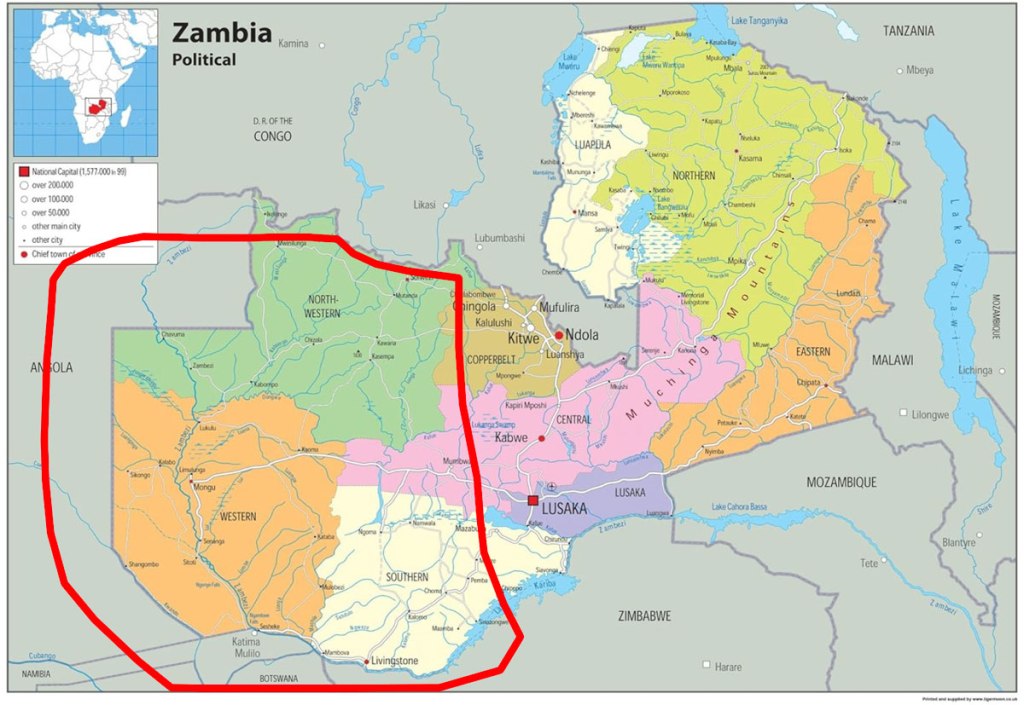
They eventually reached the Zambezi region and went about conquering the Lozi people and creating a state. That part of the Makololo story and what was to become Barotseland is told here.
Conquering the Lozi Empire
Sometime between 1820 and 1840 1 the Makololo chief Sebetwane finally left Botswana, and began to carve out a state in, what is now, Zambia’s Southern Province. He had arrived on the borders of the Lozi Empire, which at that time controlled the southwest of modern day Zambia, after defeating Chief Moremi of the Tawana people on the banks of the Linyanti River.
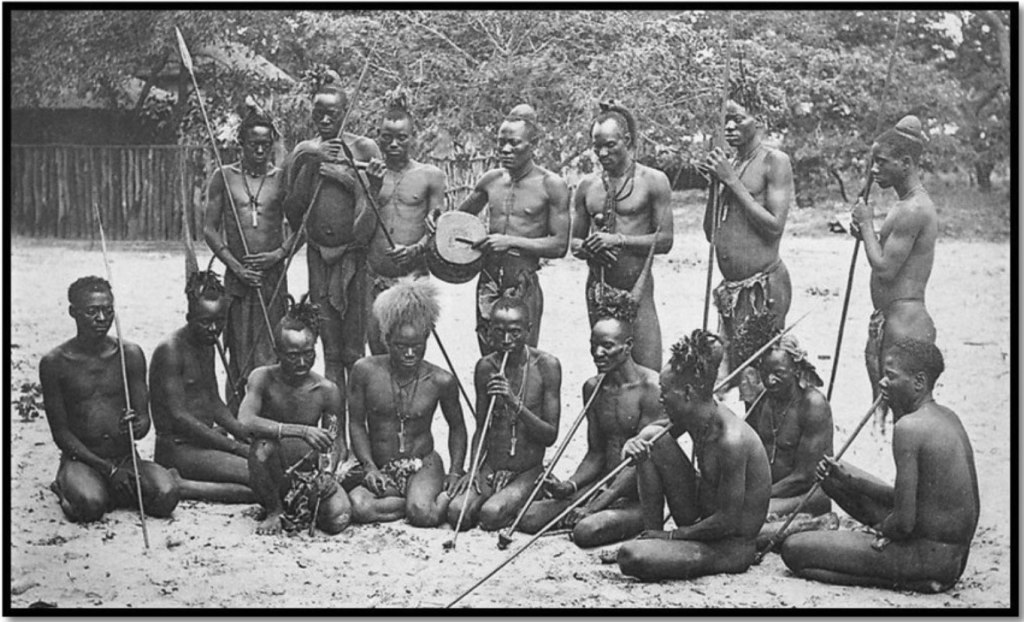
Somewhere between 1830 and 1836 Sebetwane headed northeast to the Zambezi River where he overwhelmed the Toka-Leya people on Kalai Island near the Victoria Falls recruiting many into his regiments.
In 1990 the current chief of the Toka Mubitana Musokotwane gave his version of his clan’s origins:
“The hereditary title of Toka chieftainship is Musokotwane which may have been a nickname given to the Toka leader by the Kololo when they first came to the Victoria Falls area.
The name is said to have originated from the Toka or Tonga word Kusitoka (to cross or jump). It is stated that, when Sebitwane asked the then Toka leader whence he and his people originally came, the latter replied ‘twakasotoka mwami’ (we crossed over, chief) – referring to himself and his people having crossed the Kalomo river from Kabanga to settle in the Ngwezi, Senkobo and Sinde areas; whereupon the Kololo called him Musokotwane (probably meaning ‘the jumper’).
Musokotwane’s people also claim that it was the Kololo who first called them Toka, which is really a corruption of the word ‘Tonga’.”
“Musokotwane first resisted the invading Kololo and then, having been defeated, went on to serve them loyally. It was the Toka who led the Kololo up north to the Tonga and Ila territories; it was with the help of Toka auxiliaries that Seitwane (sic) and, later, Sekeletu kept peace on the north bank of the Zambezi in the Victoria Falls region.
The Toka, with the encouragement of the Kololo, also plundered the surrounding villages. As Musokotwane told Livingstone in 1860: ‘The Makololo have given me a spear; why should I not use it?’. 3
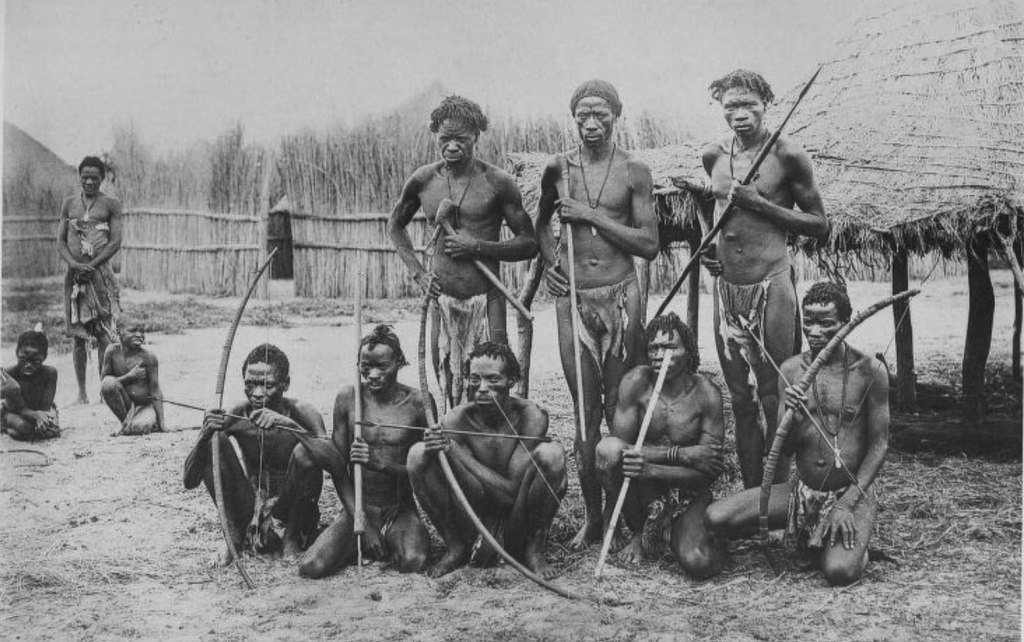
The Toka led Sebetwane to the cattle-rich Kafue Flats that were the domain of the Tonga and Mashukulumbwe or Ila people where he fought a long battle of three days and nights before victory.
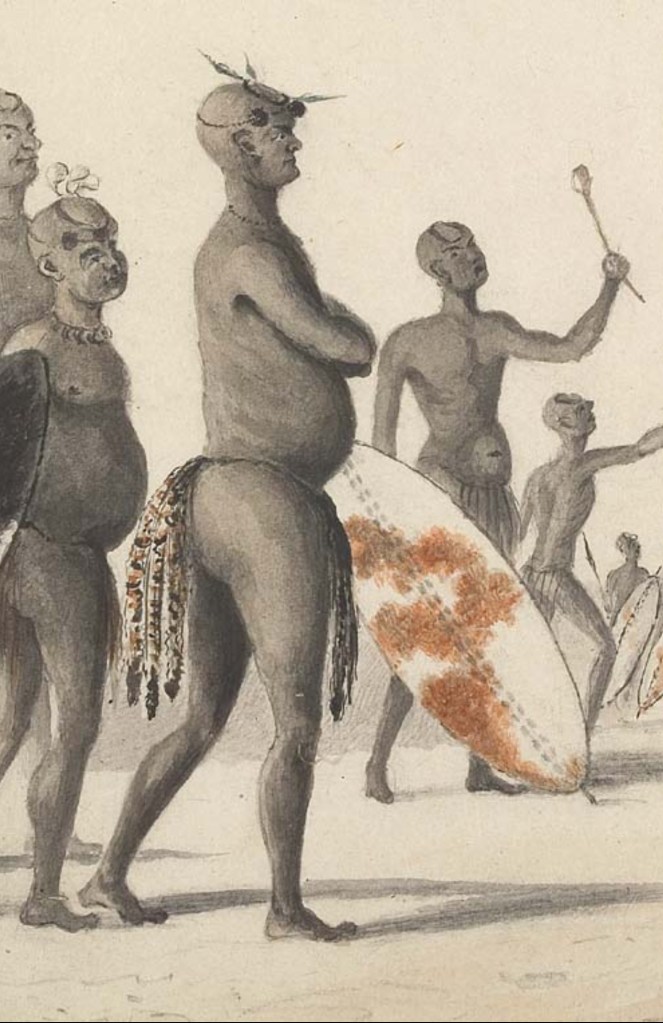
Sebetwane settled the Makololo at Kapoli, near Kalomo, but was soon under attack by regiments belonging to Mzilikaze the King of the Northern Ndebele or Matabele people, another refugee from Shaka Zulu’s kingdom.
(Mzilikaze is seen left as portrayed by William Cornwallis in 1836) 5
Sebetwane led the Makololo, and the many disparate people who had joined them, west to the Bulozi plain where he had heard large herds of cattle grazed.
Here, in 1845, he fought a series of battles in a decisive engagement against the Lozi chief Mubukawan who was leading a hastily assembled army of previously and recently waring factions. Victory gave Sebetwane dominion over, the old Lozi Empire, the Makololo Lozi Kingdom or what was to become Barotseland.
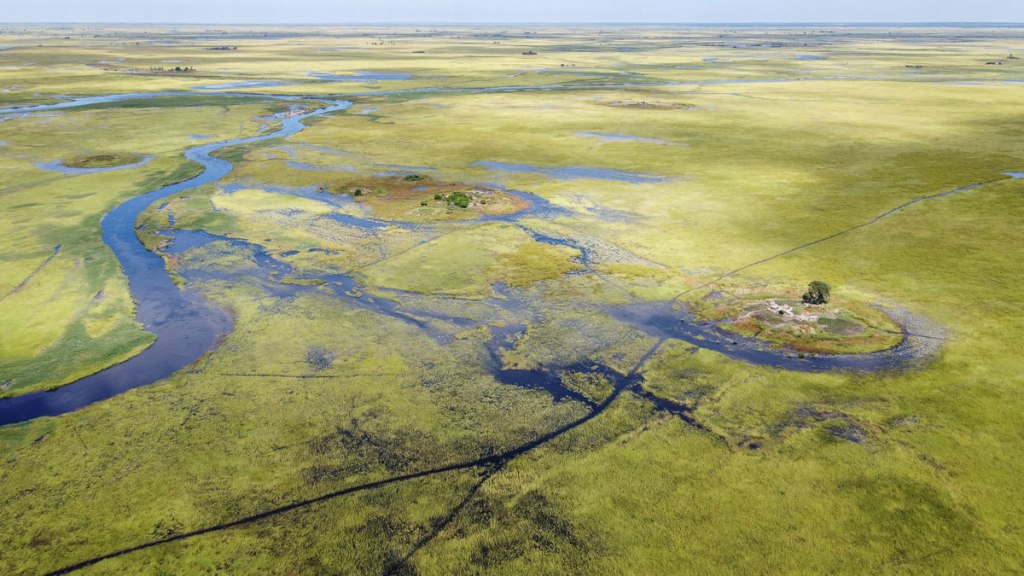
Sebetwane’s people had been engaged in one conflict after another for around twenty years (see The Makololo: Origins and the Mfecane). They had always been a warrior led society but their long, often violent, passage through the Transvaal and what is now Botswana had left them battle hardened with a multi-generational experience of warfare.
However, they were never totally secure in the region and suffered endless raids by Mzilikazi’s Ndebele whose appetite for cattle and women was equally insatiable. Sebetwane responded by moving his capital to Linyanti near the Chobe river where swamps and deep rivers gave some protection from raiders. Ultimately this was a fateful decision as his southeastern people were ill-suited to living in a malarial zone.
By the 1850’s when Livingstone met him Sebetwane had extended his control to create an empire that according to Kalusa:
“Stretched from the Nkoya country in the northeast through the northern edge of the Bulozi plain and the Chobe flats in the south to the enclave between the Victoria Falls and the Kafue River in the southeast and Tawana and Tswana territories in precolonial Botswana.” 7
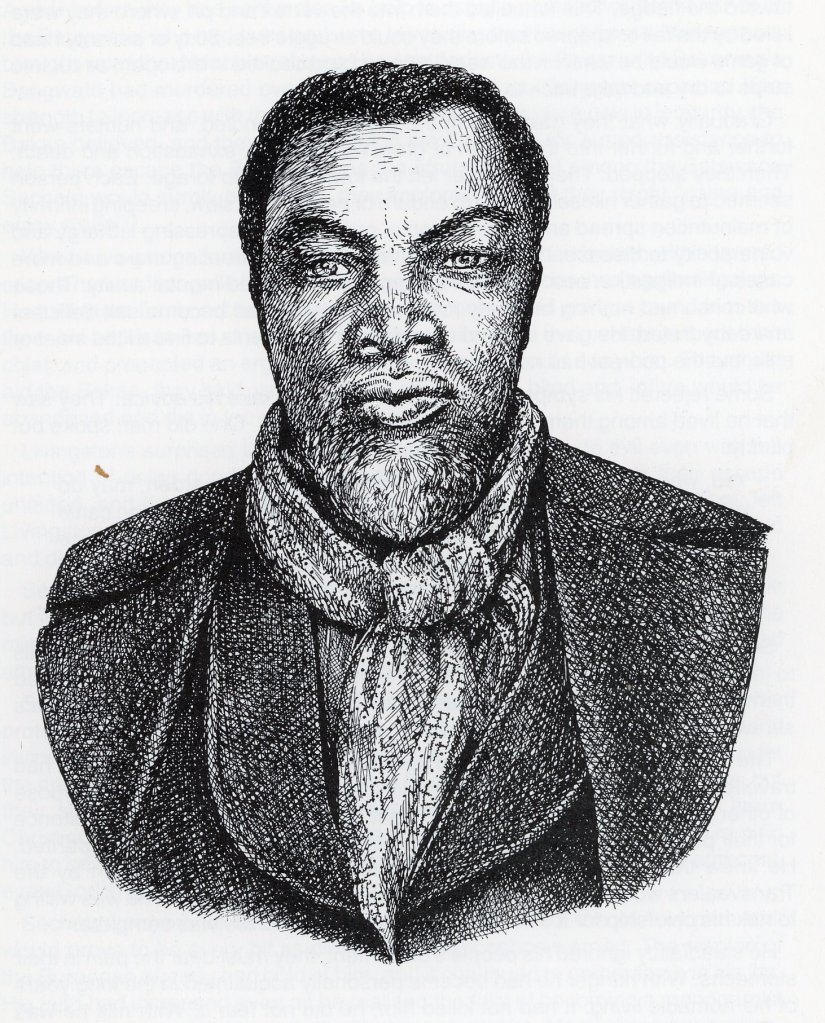
King Sebetwane
David Livingstone, whilst still a missionary in Botswana, was keen to meet Sebetwane, whom he calls Sebituane.
This was partly because King Sechele (See right8) of the BaKwena people who was close to Livingstone was a great admirer of Sebetwane having lived with him as a young prince after being captured by Makololo warriors.
Livingstone believed that an enlightened King such as the man described by Sechele would help him establish a mission in central Africa and allow him to progress his vision of finding a navigable river route into the African interior that would stimulate the growth of trade routes that were not reliant on slaving.
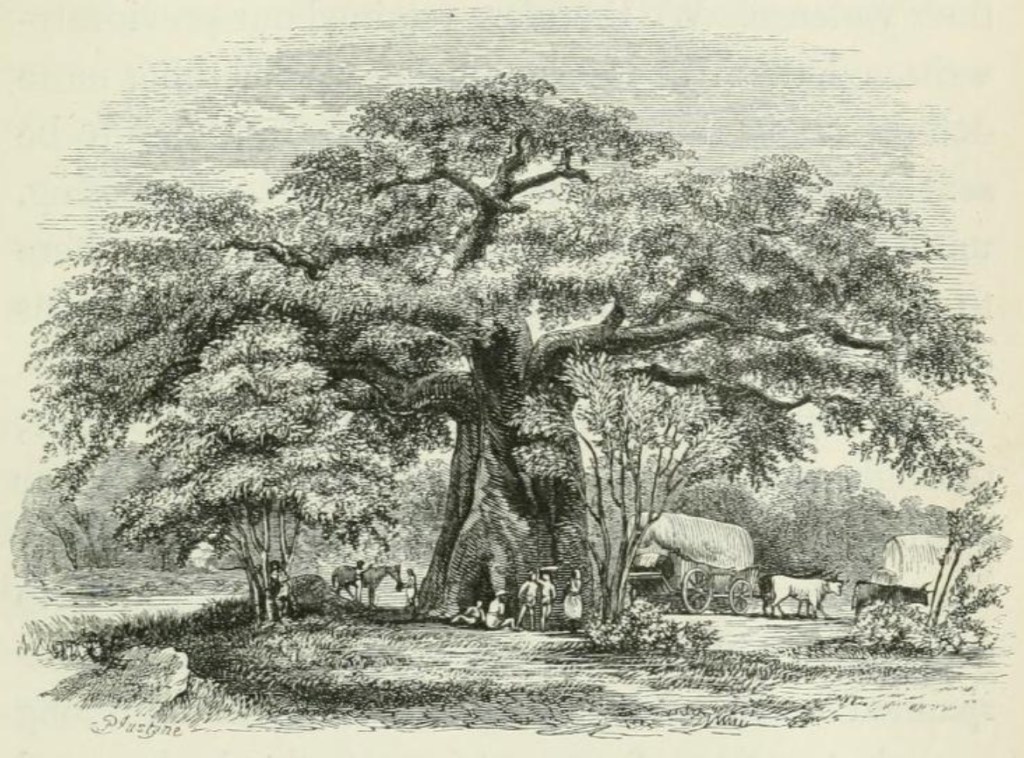
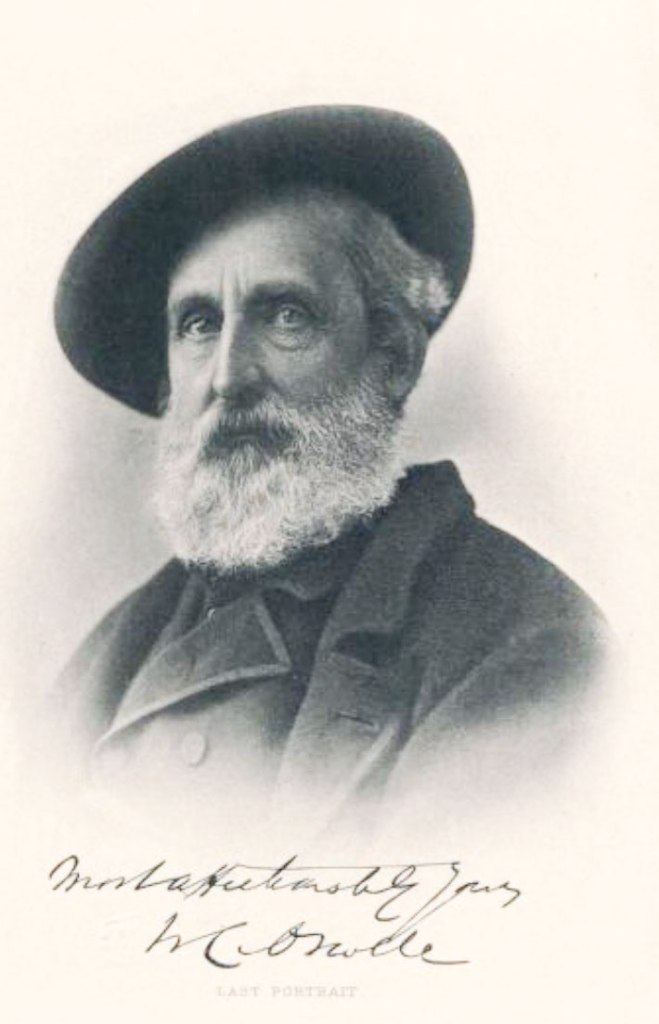
Livingstone was travelling with William Cotton Oswell (see right 9) when he met Sebetwane on June 21st 1851 on an island in the Chobe river where he had established a temporary residence around 100 miles from his capital at Linyanti. The fact that Sebetwane’s entourage included Setswana speakers with whom the Scottish doctor could converse was, to his mind, a sign of God’s will that the two men should form an alliance.
Sebetwane, on the other hand, was mostly interested in contact with Europeans to give him access to more weaponry; he believed that friendship with Livingstone might afford the Makololo protection from Mzilikaze and perhaps his preaching would provide knowledge that might teach the Kololo more about guns.
Sebetwane immediately impressed the missionary:
“Sebituane was about forty-five years of age ; of a tall and wiry form, an olive or coffee-and-milk colour, and slightly bald; in manner cool and collected, and more frank in his answers than any other chief I ever met. He was the greatest warrior heard of beyond the colony, for, unlike Mosilikatse, Dingaan, and others, he always led his men into battle himself.“10
In long journey north from Transorangia Sebetwane’s warriors had fought battle after battle, winning many victories yet suffering several defeats.
Many of his original warriors had been killed on the battlefield or died from wounds, disease or old age; during the same journey the clan had been joined by people who had been displaced by the so-called mfecane or who saw Sebetwane as a strong leader who would give them protection.
Right: Chief Sebetwane tells Livingstone and Oswell his life story. 11
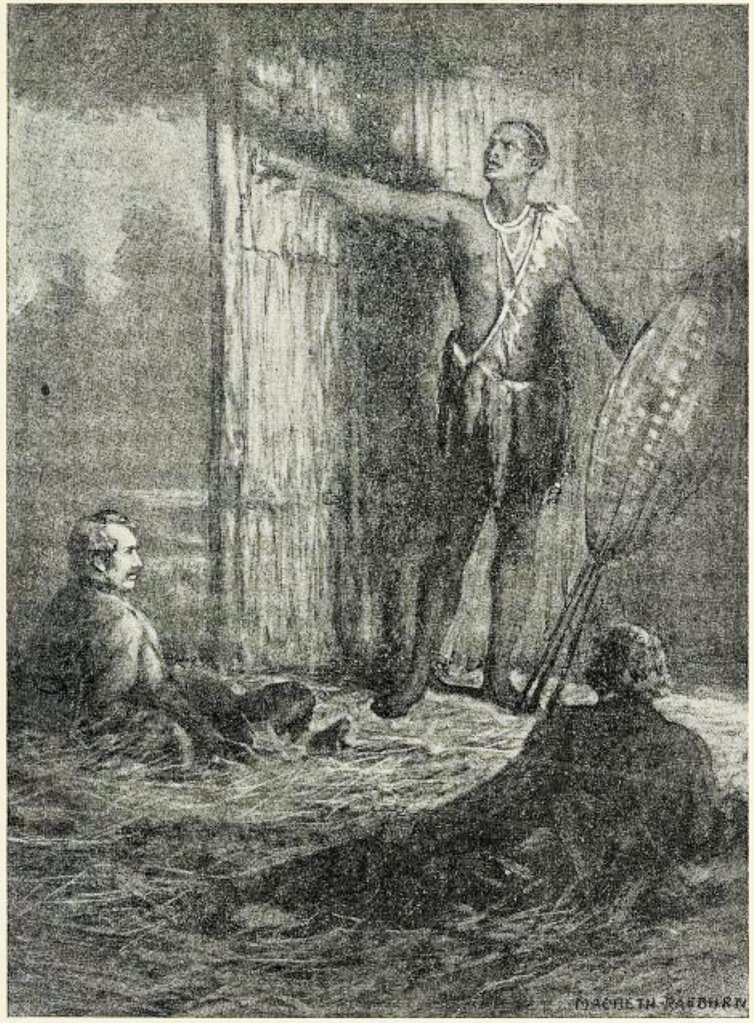
Many women and children captives had been absorbed into the clan along the way and given the length of the journey boys had become warriors and hundreds of children had been born. Sebetwane looked for young men with ambition and leadership potential regardless of their background and ensured that they were trained and ready to be promoted to important roles based on their ability rather than their ethnicity or clan.
The missionary Adolph Jalla wrote:
“Sibitwane (sic) himself was very kind to everybody, even to the poor people. Strangers were always hospitably received by him. Nevertheless he always expected and received the respect due to such a powerful chief as he was. When strangers are (sic) returned to their homes, they would say of him: ‘He has a heart! He is wise!’ As a result, the Barotse, the Batoka and all the other tribes continued to surrender to him. All were received and some were even given positions of importance.”12
The Makololo who conquered the Lozi Kingdom were therefore a mixture of different peoples originating from all over southern Africa and, as noted by Livingstone, speaking a number of different languages.
Sebetwane had the strength of character and foresight to forge this disparate band into a coherent clan that he called the Makololo. 13
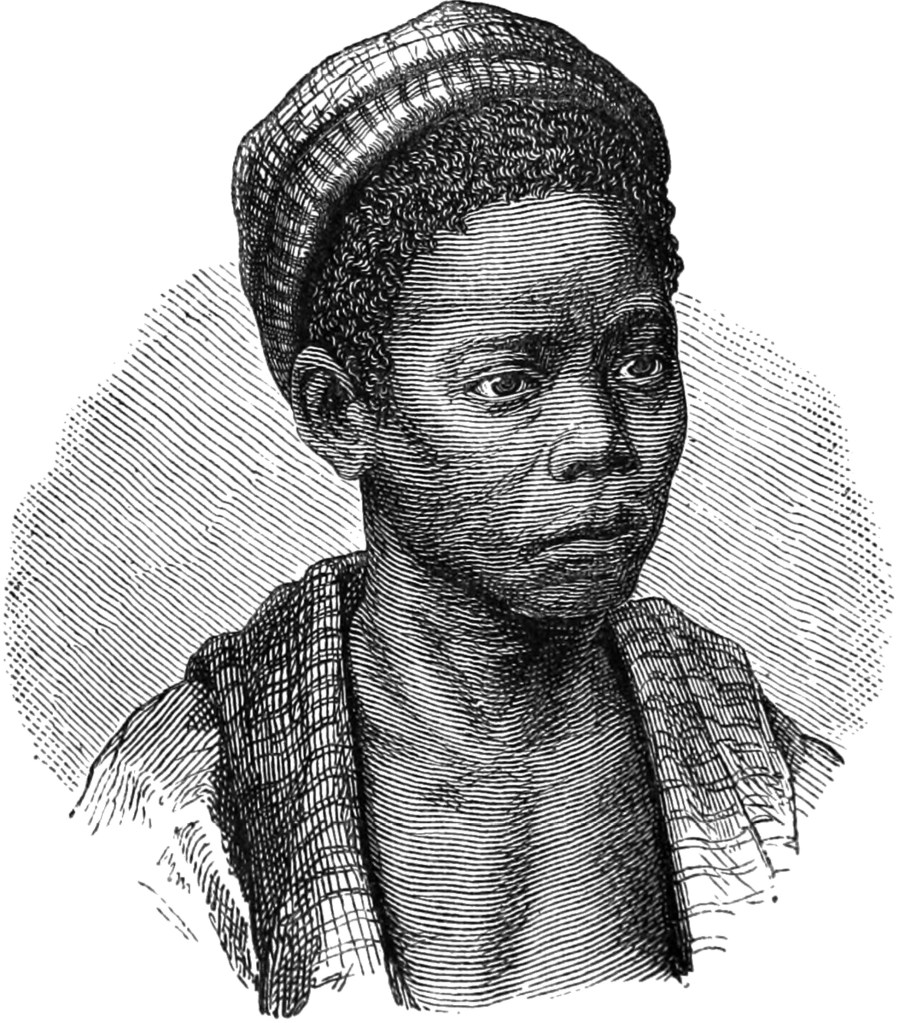
One story is that during the migration through Botswana, Setiutiu, the wife of one of the young sub-chiefs, caught Sebetwane’s eye and inevitably found herself as one of his wives. Setiutiu was of the MaKollo people and “the name “kololo” might derive from this clan’s name.
Left: A young Batswana woman 14
She would later be known as Masekeletu, the mother of Sekeleteu, Sebetwane’s son and successor.
Sebetwane died on July 7th 1851 just seventeen days after meeting Livingstone; possibly from pneumonia connected to the badly healed chest wound he had suffered twenty years previously but Lozi oral history records that he fell from Livingstone’s horse, Scarab, whom he had insisted on riding because it reminded him of his youth on the high veldt and that this fall opened the old wound.
Livingstone was disappointed
“He was decidedly the best specimen of a native chief I have ever met. I never felt so much grieved by the loss of a black man before; and it was impossible not to follow him in thought into the world of which he had just heard before he was called away, and to realise somewhat of the feelings of those who pray for the dead.” 15
And in a letter to his wife Mary:
“I never felt so sorry for the death of a black man before. He became quite frank with us, and placed confidence in our good intentions at once. I still feel sorry.” 16
As discussed below Livingstone and Oswell needed royal permission to leave so they filled their time exploring. On August 4th 1951 they first set eyes on the Zambezi River that was to plan an important part in Livingstone’s and his Makololo porters’ story.
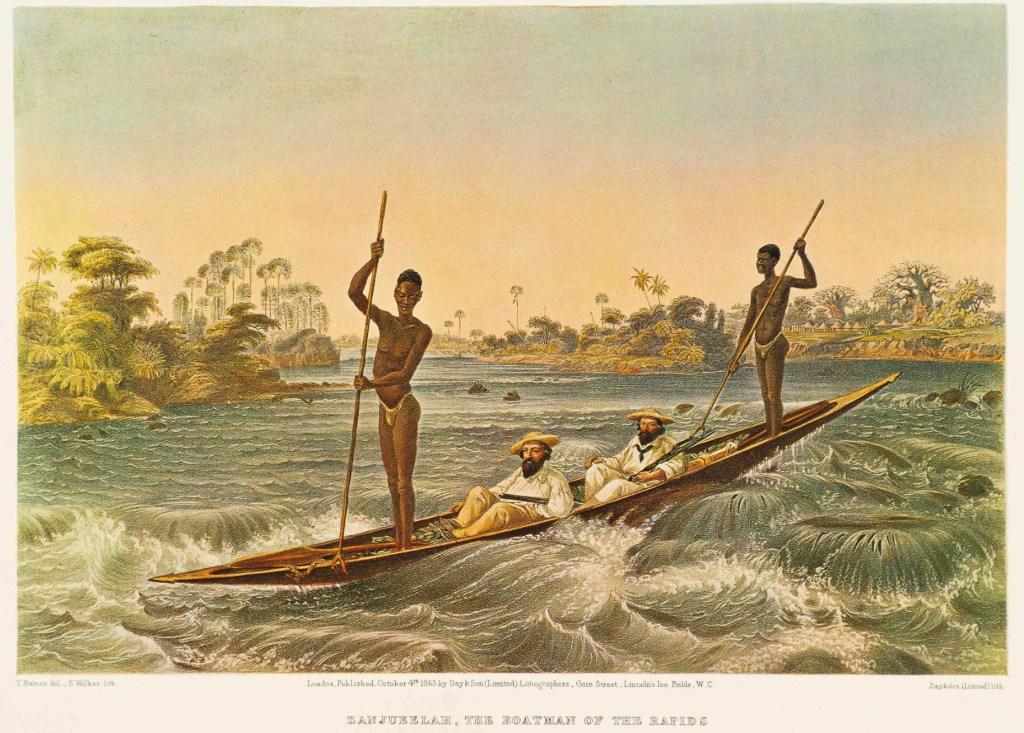
Administration and Customs
Sebetwane centralised power in his capitals, first at Naliele in the Bulozi Plains and then at Linyanti at modern-day Sangwali in the Caprivi Strip. From here the Makololo extracted cattle, ivory, slaves and beeswax as tribute from the many clans and ethnic groups that lived in the vast territory they now controlled. Livingstone believed that the ruling family became the richest cattlemen north of South Africa.
The kingdom was divided into four military districts overseen by an indunas or commander who supervised Makololo under chiefs thinly spread across the Empire supplemented by Lozi headmen who retained their previous positions of authority. Sebetwane married several Lozi women and included Lozi leaders in his court; young, talented Lozi leaders could rise to the most senior positions including Kwenane who became an indunas; and, many Lozi were proud to call themselves Makololo. 18
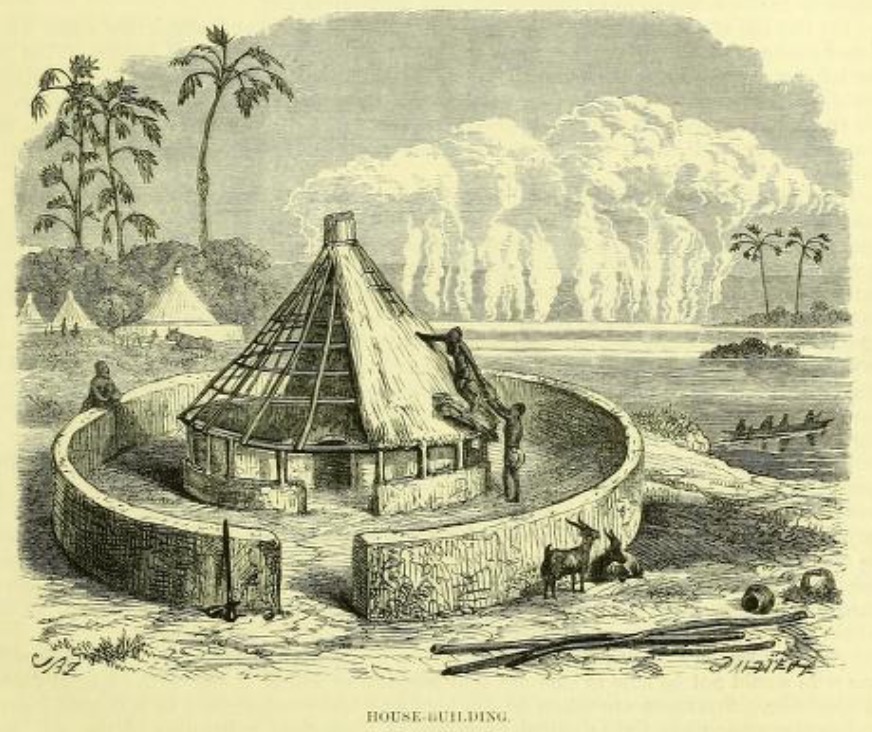
The Illustration above from J. G. Wood’s “The Natural History of Man” was printed with the following description:
“The illustration is from a sketch kindly furnished by Mr. Baines. It represents a nearly completed Makololo house on the banks of the Zambesi river, just above the great Victoria Falls.
The women have placed the roof on the building, and are engaged in the hnal process of fixing the thatch. In the centre is seen the cylindrical tower which forms the inner chamber, together with a portion of the absurdly small door by which it is entered. Round it is the inner wall, which is also furnished with its doorway.
These are made of stakes and withes, upon which is worked a quantity of clay, well patted on by hand, so as to form a thick and strong wall. The clay is obtained from ant-hills, and is generally kneaded up with cowdung, the mixture producing a kind of plaster that is very solid, and can be made beautifully smooth. Even the wall which surrounds the building and the whole of the floor are made of the same material.
It will be seen that there are four concentric walls in this building. First comes the outer wall, which encircles the whole premises. Next is a low wall which is built up against the posts which support the ends of the rafters, and which is partly supported by them. Within this is a third wall, which encloses what may be called the ordinary living room of the house; and within all is the inner chamber, or tower, which is in fact only another circular wall of mixch less diameter and much greater height. It will be seen that the walls of the house itself increase regularly in height, and decrease regularly in diameter, so as to correspond with the conical roof.” 19
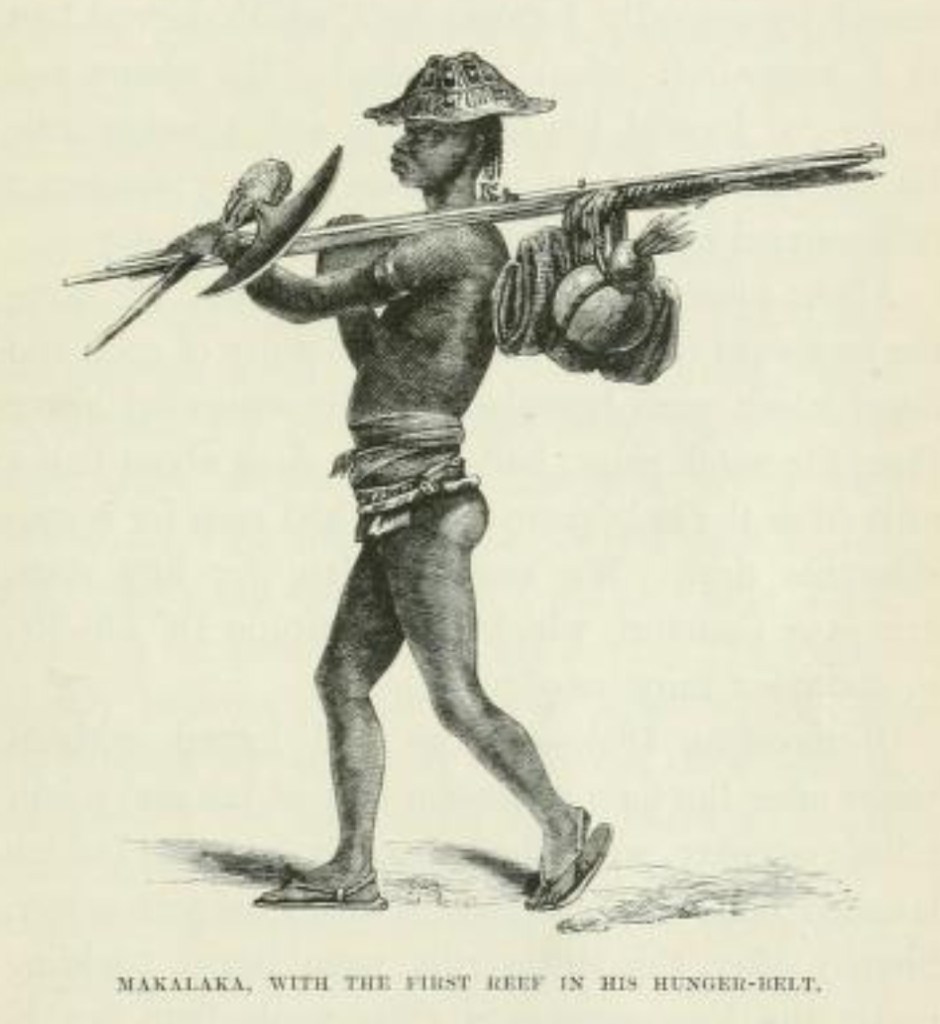
The subjected population was controlled in a way that Livingstone makes sound like a benevolent form of serfdom however the term for these people was Makalaka which was used by the Makololo and others to describe conquered or slave tribes and clans.
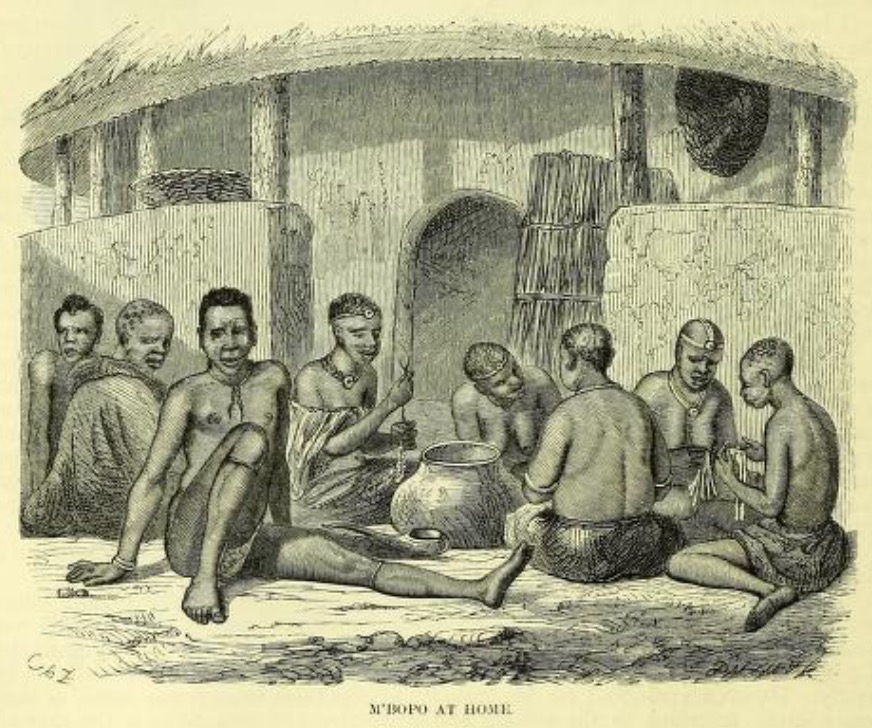
Unlike the Makalaka the Makololo men had little or no work and spend much of their time drinking beer and smoking bhang; 22 Livingstone believed that Sekeletu was himself an addict.
“Each smoker takes a few whiffs, the last being an extra long one, and hands the pipe to his neighbour. He seems to swallow the fumes; for, striving against the convulsive action of the muscles of chest and throat, he takes a mouthful of water from the calabash, waits a few seconds, and then pours water and smoke from his mouth down the groove of the bamboo. The smoke causes violent coughing in all, and in some a species of frenzy, which passes away in a rapid stream of unmeaning words, or short sentences, as, “the green grass grows,” “the fat cattle thrive,” “the fish swim.” No one in the group pays the slightest attention to the vehement eloquence, or the sage or silly utterance of the oracle, who stops abruptly, and, the instant common sense returns, looks rather foolish.” 23
Makololo had traditionally worn the skin of a small animal like a short skirt and added a larger skin as a cape in cold weather. By the time Livingstone visited in 1860 they were wearing a jacket along with the skirt. The men bathe daily in the river but the women prefer to oil themselves with melted butter to keep the bugs at bay.
Engaging in the Slave Trade
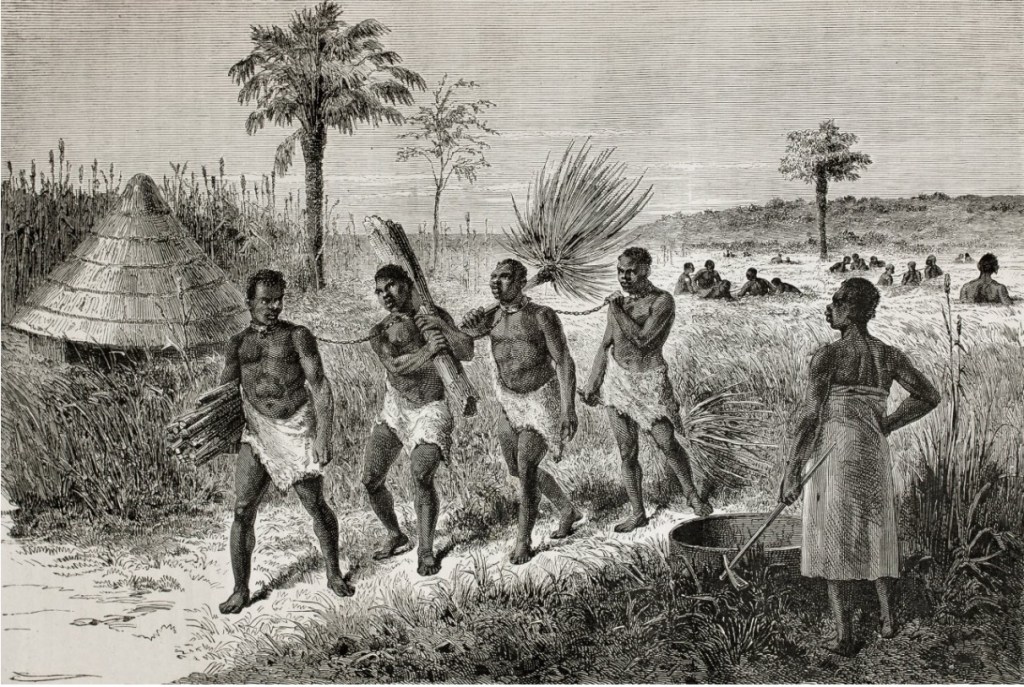
Under Mulambwa, the Lozi King, who preceded the Makololo conquest had refused to engage in the slave trade with the Mambari, African and mixed race people, trading on behalf of the Portuguese on the west coast.
However, both Livingstone and Oswell, who traveled with him, noticed that many Makololo were wearing western cloths made from western cloth and Oswell met traders who were probably were Mambari with whom the Makololo were obtaining guns and western clothing by trading young enslaved men. These hapless individuals would eventually be sold to the Portuguese on the coast.
However, Sebetwane still preferred to use the majority of captives, enslaved people, as labourers to support his strong agriculturally based economy but after failing to obtain firearms by bartering ivory and cattle he probably had no choice other than to trade some enslaved people to protect his kingdom from the Ndebele. Flint suggests that it only involved small numbers as:
“Barotseland’s economic diversity and consequent need for a variety of skills mitigated against exporting large numbers of men. In fact, both the Kololo and the Lozi were more concerned with importing labour. Captives taken on raids by the Kololo seem to have been distributed among the population rather than sold to slave traders.” 24
After 1853 Sekeletu capitalised on the route to Luanda on the west coast that had been opened by Livingstone and his Makololo guides and porters. At the same time he outlawed the export of slaves and made clear that he would intercept slavers’ caravans and free any enslaved people. Kalusa 25 argues that this decree and the change in custom regarding the ownership of ivory as discussed below effectively prevented the Makolo elders from importing western goods to use as what to support or increase their social standing and left the king with a monopoly in not just ivory trading but gift giving of sought-after western goods.
When Livingstone revisited the Makololo in 1860 he was surprised to discover that the king had kept very little of the many western and luxury items he had imported. Sekeletu saw these commodities as a way of accumulating influence through gift giving not as a route to increasing his own wealth.
Engaging in the Ivory Trade
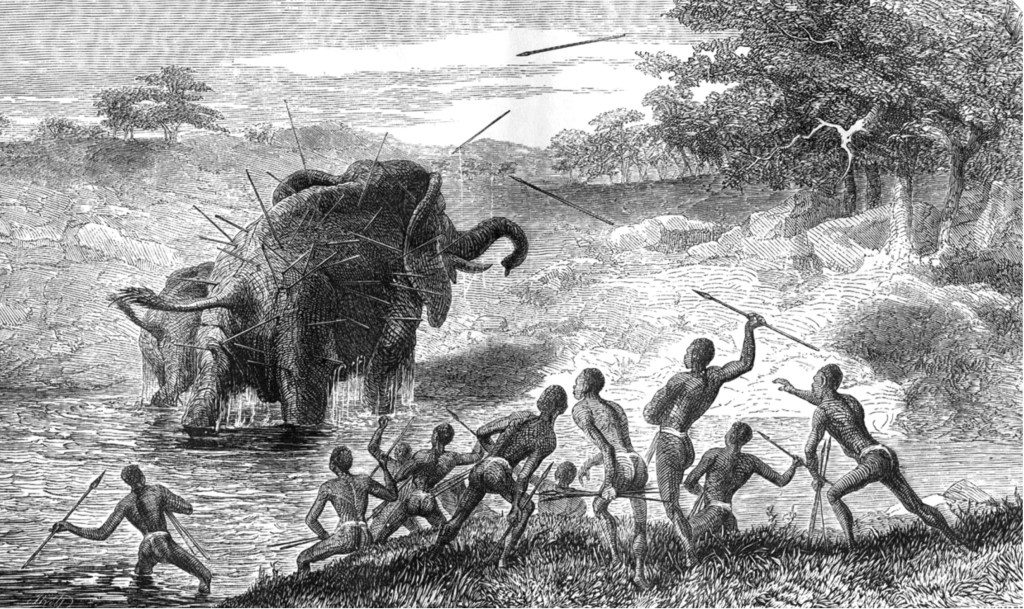
However, around the time of Livingstone’s visit markets outside of African were changing and by 1853 Ivory was becoming a far more important commodity partly due to rapidly increasing demand in the USA to support factories manufacturing piano keys, billiard balls, combs and knife handles on an industrial scale. Brazil was now independent of Portugal and Angola’s onward trading was with Portugal rather than Bazil. In 1834 Portugal abolished the Royal monopoly on trading ivory and this stimulated a boom for Portuguese traders.
The Mambari were probably coming to the Makololo Lozi kingdom from Benguella, modern day Benguela on the Atlantic coast on Angola. After Livingstone’s visit in 1851 Griqua and European traders from the south began to reach the Makololo and some Swahili traders, presumably from Tete or the east coast, had arrived in the early 1850s but the majority of Makololo trade continued to be with the west coast. 27
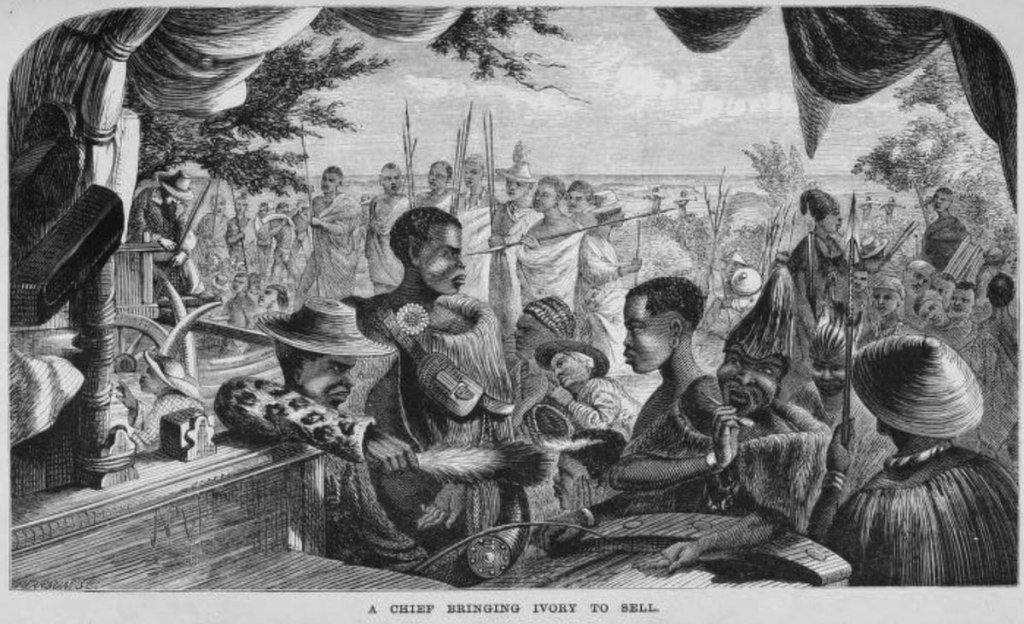
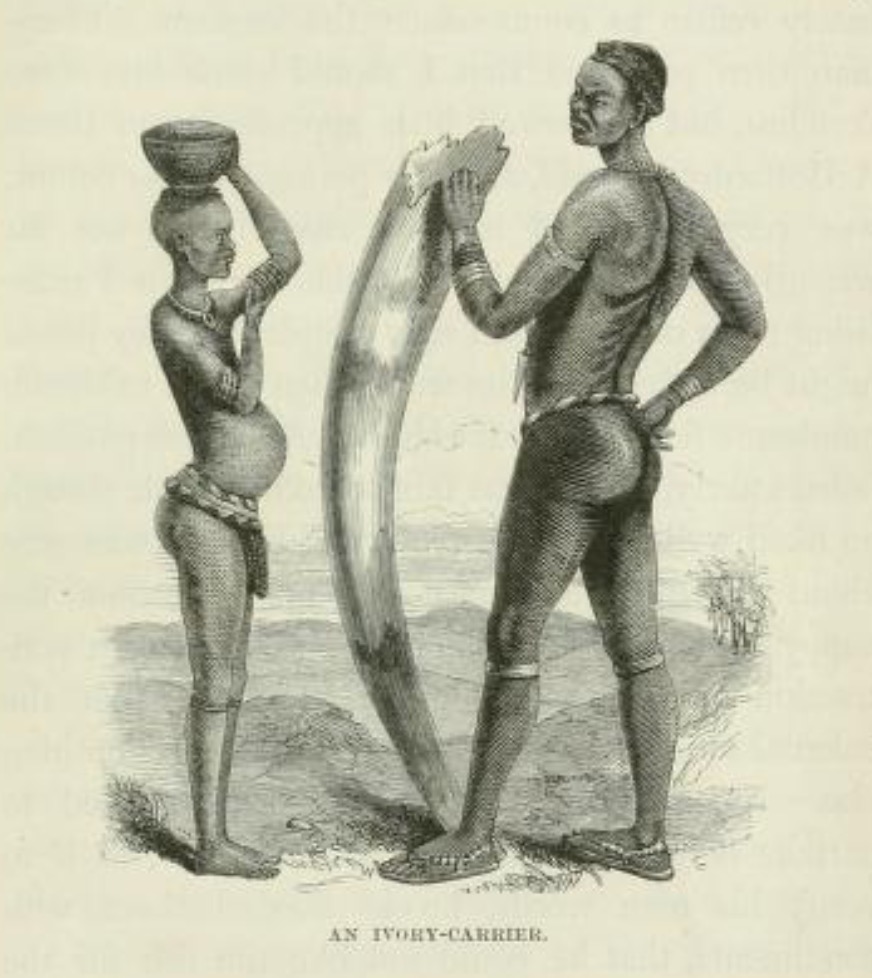
Livingstone unintentionally oiled the wheels of the Makololo trade in ivory by arriving in Luanda on May 31st 1854 with twenty-seven Makololo porters carrying a few tusks that belonged to King Sekeletu, Sebetwane’s successor. Livingstone was a strong believer in the idea that the best way to suppress the slave trade was to replace it with morally and legally acceptable commercial enterprise. Unfortunately for the twenty million elephants that paid the price ivory was always his favoured alternative.
Livingstone helped the Makololo open the Upper Zambezi trade route partly by acting as a mediator with potentially hostile clans that straddled the route and partly because, as a white missionary, he could get the attention of the Portuguese in Luanda.
In time the Makololo could have achieved the same result but Livingstone provided a short cut.
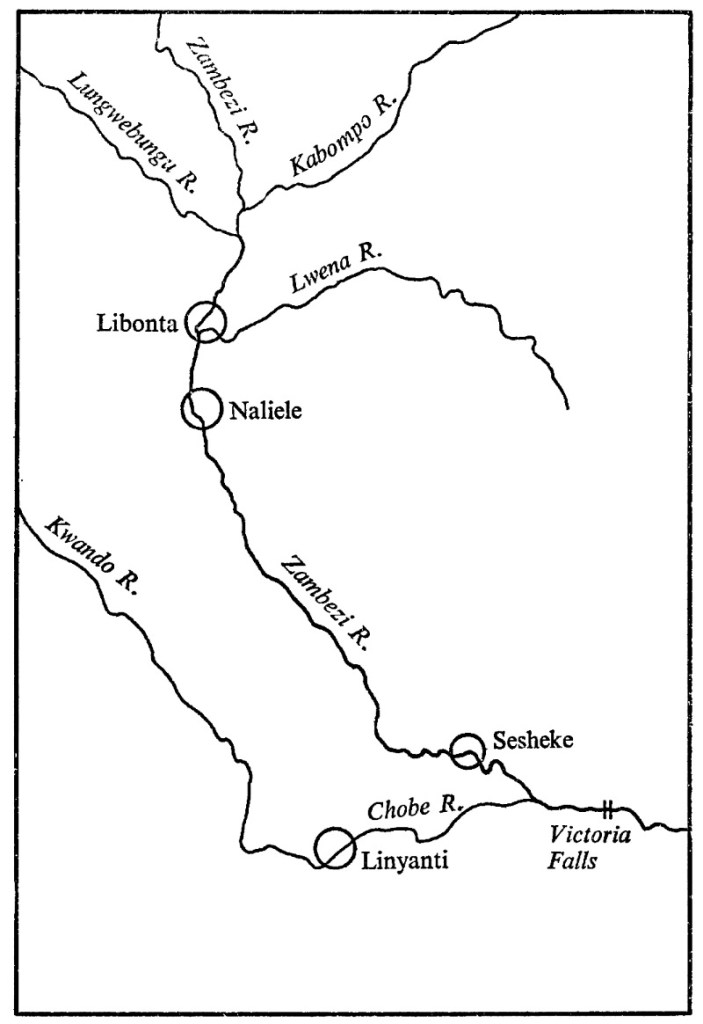
See left for settlements on the Chobe and Zambezi Rivers 29
Flint believes that the haste with which the main Lunda clans on the Zambezi River to the north of the Makololo kingdom that were led by Chiefs Shinte and Katema accepted Livingstone’s offer of peace with the Makololo suggests they were keen to engage in trade. Soon after Livingstone had passed through their lands the Lunda people began trading canoes for cattle with the Makololo. Sebetwane had recognised that the Makololo were disadvantaged by their inability to use canoes and he had ensured that his people, including his sons, learnt how to navigate the huge African rivers. 30 The relationship with Chief Shinte developed into an arrangement whereby he could send goods to Luanda with the Makololo traders as they passed through his lands. 31
The Makololo and by association the Lunda benefitted from this new trade route. The merchants in Luanda, having no transport costs, were willing to pay a much higher price for ivory than either the Mambari or the occasional European trader from the Cape who made it as far north as Barotseland. Livingstone wrote that the Portuguese in Luanda were willing to pay ten times the price offered by the traders from the Cape.
The Makololo began to prepare for a second trading expedition to Luanda but Sekeletu made the fateful decision to send ninety-five men and forty elephant tusks to the coast with Ben Habib, a Zanzibari trader. Sekoletu’s logic was good, he wanted his people to watch how an experienced merchant negotiated with the Portuguese and how the whole trading system worked. However, Ben Habib turned out to be a villain; the ninety-five men were never heard of again and as Ben Habib was later known to be in Zanzibar the obvious conclusion was that he sold the Makololo porters and apprentice traders as slaves when he reached the coast as well as pocketing the price he achieved for the ivory. 33
Sekeletu decreed that all the ivory from an elephant hunt belonged to the king unlike their previous custom whereby one tusk went to the chief and the other to the hunters. 34 However, the Makololo king was expected to be generous and both Sekeletu distributed the goods acquired by trading ivory amongst their senior, Makololo men. Rather than being altruistic these gifts emphasised the hierarchical relationship between Sekeletu and the Makololo elders The subjected clans received the meat from the elephant but non of the profits of the ivory trade. The porters were allowed to keep some of the goods they had carried back from the trade but technically this was still only at the King’s discretion.
The Makololo appear to have increased their ability to trade with the west coast and by 1860 had circumvented the Mambari and were running caravans to Benguela. Seroke, a Makololo trader told Livingstone:
“The merchants of Benguela had treated them kindly ; and, to encourage trade with the Makololo, had given to each one a liberal present of clothing.” 35
Queen Mamochisane
Livingstone stayed in the country of the Kololo for around two months before Mamochisane (or Mma-Motsiasane), Sebetwane’s daughter and chosen successor, gave them permission to leave.
During his and Oswell’s travels they came to realise that the Kololo were trading captives for guns and clothes; he was told they had recently swapped eight teenage boys for the same number of old Portuguese guns.

The traders had also incited the Makololo to raid some villages to the east on the basis that they would add their firepower to the raid with an agreement that the Makololo kept any cattle and the traders kept the captured villages; the traders eventually left with 200 slaves whilst the Makololo traded a further 30 captives for three English muskets when they met some Arab traders out of Zanzibar.
In 1853 Livingstone returned to visit the Makololo a second time. He was now equipped for his expedition to find a navigable route into the African interior. He arrived in Linyanti with his ox draw wagons to the acclaim of its six or seven thousand residents.
Mamochisane had stepped down from the throne proclaiming her half-brother Sekeletu as the King. This had been a complicated and rather unsatisfactory transfer of power; it is possible that Sebetwane had named Motsiasane as queen to respect the matrilineal customs of the Lozi and he probably recognised his son was not the ideal candidate. However, southern Sotho custom dictated that, if a queen married, she would become subservient to their husband thus making him the de facto king. Sebetwane had suggested that she avoided this problem by taking lovers but once she became queen the other women made fun of her situation.
Sekeletu wanted her to remain the queen and for him to take the position of her war leader but she called a great pitso, a traditional Sotho tribal council when chiefs and elders could have their say. After three days of discussion Motsiasane stood up in tears and told Sekeletu that he must be the king saying that she only wished for a normal married life. 38 Sekeletu may have been as young as 16 when he ascended the throne.
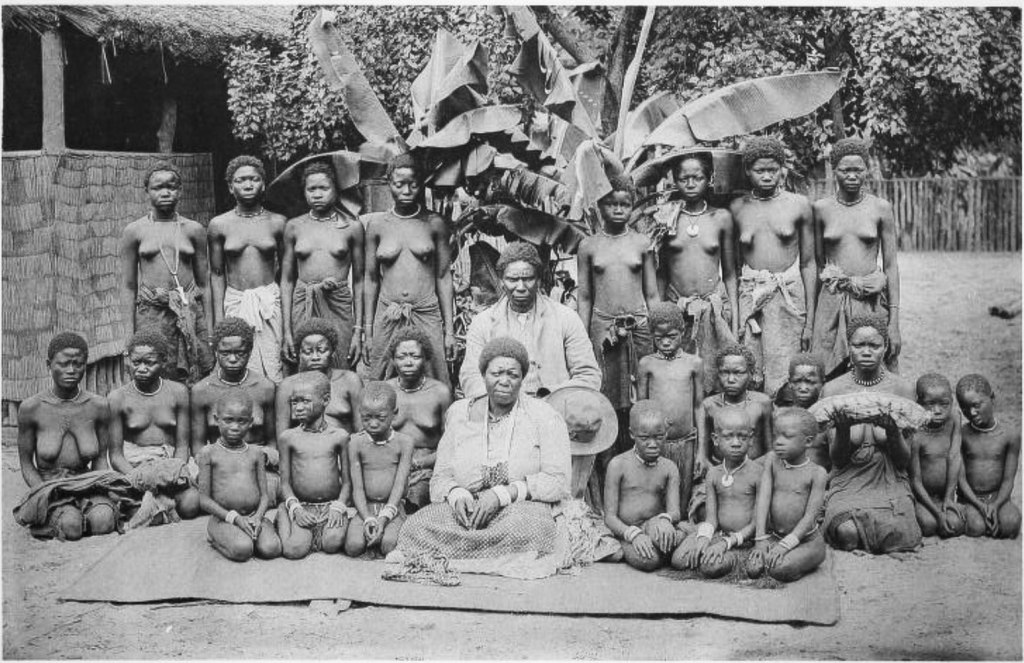
Mamochisane remained a power in the land. She based herself at Sesheke where Livingstone saw her in 1860. She returns to our story after the overthrow of the Makololo in 1864.
Livingstone described her
“(She) wore eighteen solid brass rings, as thick as one’s finger, on each leg, and three of copper under each knee ; nineteen brass rings on her left arm, and eight of brass and copper on her right, also a large ivory ring above each elbow.
She had a pretty bead necklace, and a bead sash encircled her waist. The weight of the bright brass rings round her legs impeded her walking, and chafed her ankles; but, as it was the fashion, she did not mind the inconvenience, and guarded against the pain, by putting soft rag round the lower rings.” 40
King Sekeleteu
Livingstone wrote:
“I found Sekeletu a young man of eighteen years of age, of that dark-yellow or coffee-and-milk colour, of which the Makololo are so proud, because it distinguishes them considerably from the black tribes on the rivers. He is about five feet seven in height, and neither so good looking, nor of so much ability, as his father was, but is equally friendly to the English.” 41
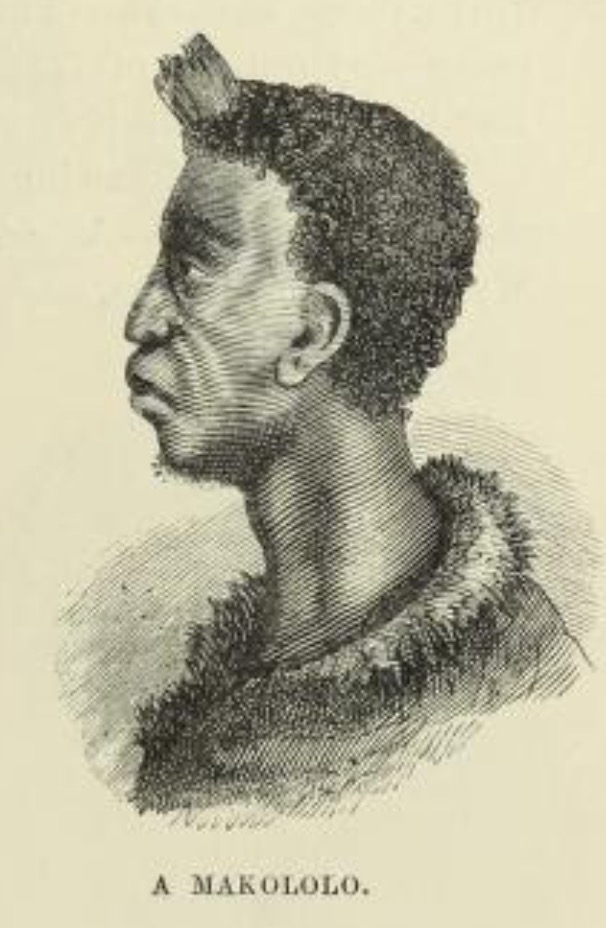
Right: A Makololo man 42
Livingstone discovered that slavers were now regularly visiting the Makololo and had recently carried off an entire village from within their territory. Traders also appeared to have supported Sekeletu’s half brother Mpepe in a bid to take the throne but after a failed assassination attempt that Livingstone witnessed Sekeletu had Mpepe speared to death. However, ivory traders are also now visiting the Makololo and the going rate was one bull and one cow elephant tusk, about 70 pounds of ivory for a gun. As, at that time ivory was selling at the Cape for 5 shillings (£0.25p) a pound and a gun cost 10 shillings (£0.50p) the traders appeared to be making good profits despite the 6,000 kilometre round trip.
Sekeletu has no wish to learn about, or convert to, Christianity as he said he required at least five wives, he had already adopted two of his father’s former wives with the others having been distributed amongst the clan’s under chiefs. Sebetwane’s former head-wife was passed to his younger brother and Sekeletu’s uncle.
The Makololo women around the royal kraal in Linyanti outnumbered the men whose lineage could be traced back to the Transorangia region that the clan had left with Sebetwane around thirty years previously. Livingstone attributes that to the less heathy climate writing:
“The majority of the real Makololo have been cut off by fever. Those who remain are a mere fragment of the people who came to the north with Sebituane. Migrating from a very healthy climate in the south, they were more subject to the febrile diseases of the valley in which we found them, than the black tribes they conquered.“
In the absence of sketches or early photographs of individuals Livingstone’s lengthy description of Makololo women provides a rare glimpse of a clan whose bloodline has now in all probability disappeared.
“The Makololo ladies are liberal in their presents of milk and other food, and seldom require to labour, except in the way of beautifying their own huts and courtyards. They drink large quantities of boyaloa, or o-alo, the birza of the Arabs, which, being made of the grain called holcus sorghum, or dura Sa is very nutritious, and gives that plumpness of form which is considered beautiful.
They dislike being seen at their potations by persons of the opposite sex. They cut their woolly hair quite short, and delight in having the whole person Shining with butter. Their dress is a kilt reaching to the knees; its material is ox -hide, made as soft as cloth. It is not ungraceful. A soft skin mantle is thrown across the shoulders when the lady is unemployed, but when engaged any sort of labour she throws this aside and works in the kilt alone.
The ornaments most coveted are large brass anklets as thick as the little finger, and armlets of both brass and ivory, the latter often an inch broad. The rings are so heavy that the ankles are often blistered by the weight pressing down; but it is the fashion, and is borne as magnanimously as tight lacing and tight shoes among ourselves. Strings of beads are hung around the neck, and the fashionable colours being light green and pink, a trader could get almost anything he chose for beads of these colours.” 43
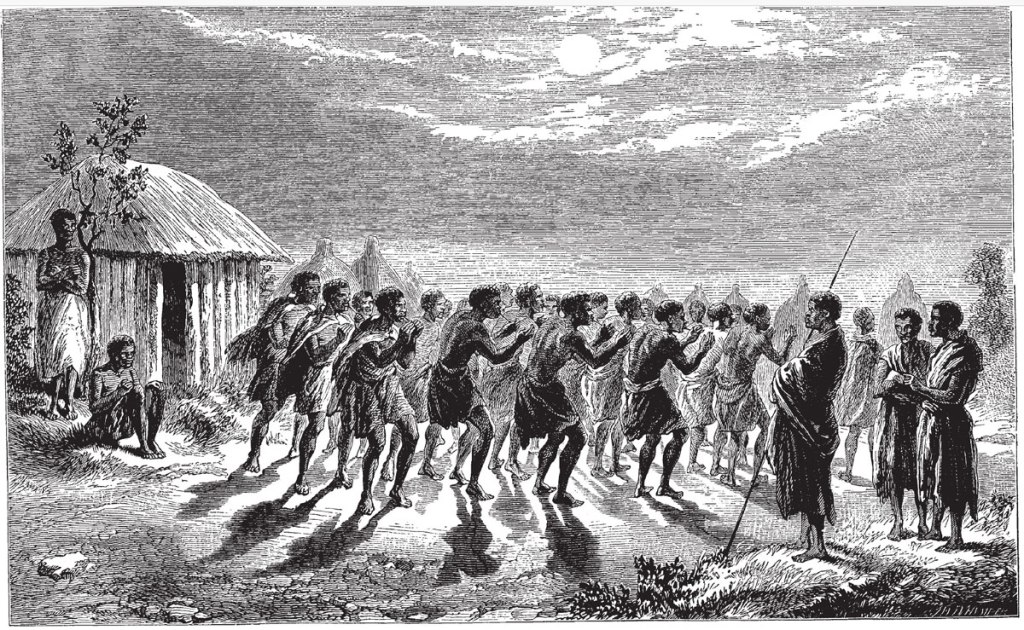
Eventually, after touring part of the kingdom with Sekeletu for nine weeks Livingstone was forced to send the fever stricken men he had brought with him from Kuruman back south. Sekeletu gave him 27 men who were to accompany him west to Luanda. These men are important to the story of the Kololo of Malawi as it is partly from them that the modern chiefs are descended. However, in line with the diverse nature of the Makololo Lozi Empire only two of the 27 were true Makololo, the others according to Livingstone were “Barotse (Lozi), Batik, Bashubia and Ambonda but, as Omer-Cooper points out they all proudly saw themselves as Kololo. 44
This little expedition set off westwards on 11th November 1853 armed with three muskets, a rifle and a double-barrelled smooth bore along with a supply of ammunition. Their provisions consisted of a few biscuits, a few pounds of tea and sugar and twenty pounds of coffee. In a tin canister he packed a clean shirt, trousers and a pair of shoes to change into when they reached civilisation and in two similar canisters some medicines and books. A magic lantern, sextant, artificial horizon, compasses and a thermometer were the only pieces of scientific equipment and these were packed along with 20 pounds of beads to use as currency. For the long African night he had a small tent, a sheepskin and a horse blanket.
The Demise of the Makololo Lozi Empire
Sekeletu, the reluctant King, struggled with his role and suffered the paranoia that seems common among weak leaders. He executed a number of his senior chiefs and withdrew to Caprivi which was poor land compared with Bulozi and surrounded himself with loyal Sotho men. The people who had marched with his father and given the average age of that generation presumably mostly their descendants
The Lozi princes who had thrived under Sebetwane’s inclusive rule left the south of the Kingdom and joined disaffected Lozi exiles in the north.
Sekeletu died in August of 1863 probably of leprosy or eczema. Thomas Baines who was exploring in the area wrote:
“This morning some people had heard from others from Mebabe, that Sekeletu was dead of cancer in his lower limbs, or, as others say, of leprosy. Many of his people have dispersed, and the rest have received a message from Moselekatse, desiring them to put the kraals in order; for the country is his, and he is coming to it.” 45
Sekeletu was succeeded by his uncle Mamile and then a second uncle Mbololo who was overthrown in August 1864 by the Lozi. The Lozi prince Sipopa became King. Sipopa and his nephew Lubosi, who became known as Lewanika, had grown up in Sebetwane’s court where they had been treated with great respect. Sipopa was known to have been friends with Sekeletu’s son Litali and had only left the court around 1859.
Many Makololo fled; some to Letsholathebe’s Tawana Kingdom in the Okavango Delta where, far from being welcomed, they were killed.
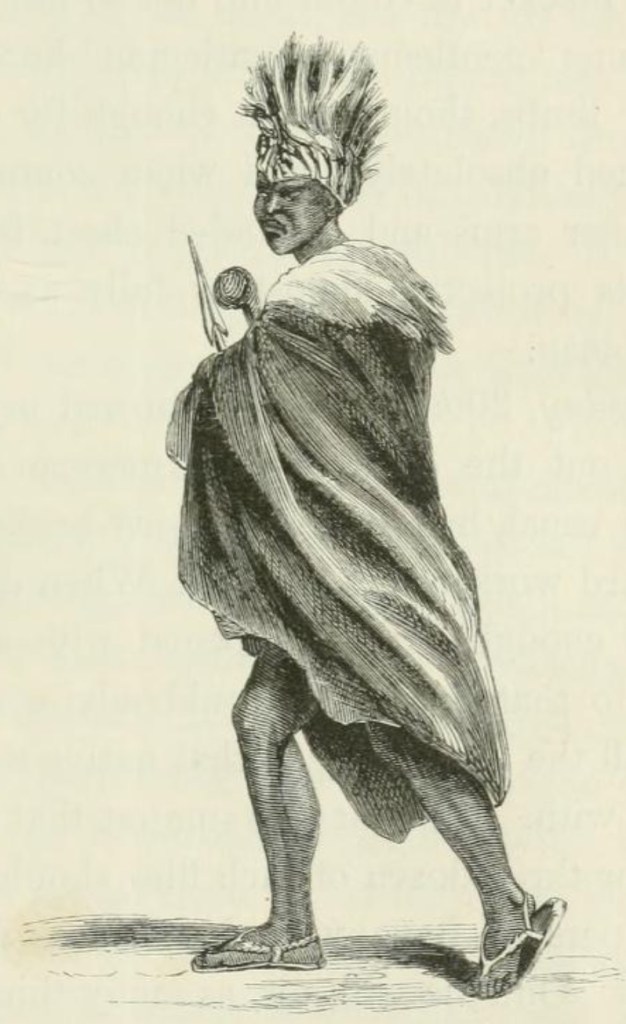
See right an attendant to Chief Letsholathebe in a drawing by Thomas Baines c. 1861 46
A second group followed the Zambezi River to what is now southwest Zambia and northern Zimbabwe to join the Tonga people who maintained a peaceful agricultural society that had long survived being in close proximity with the Makololo and Lozi kingdoms to their west and the Ndelele to the south. The Makololo may have initially become the dominant force on the Tonga plateau but over time they were absorbed into the Tonga and Toka populations.
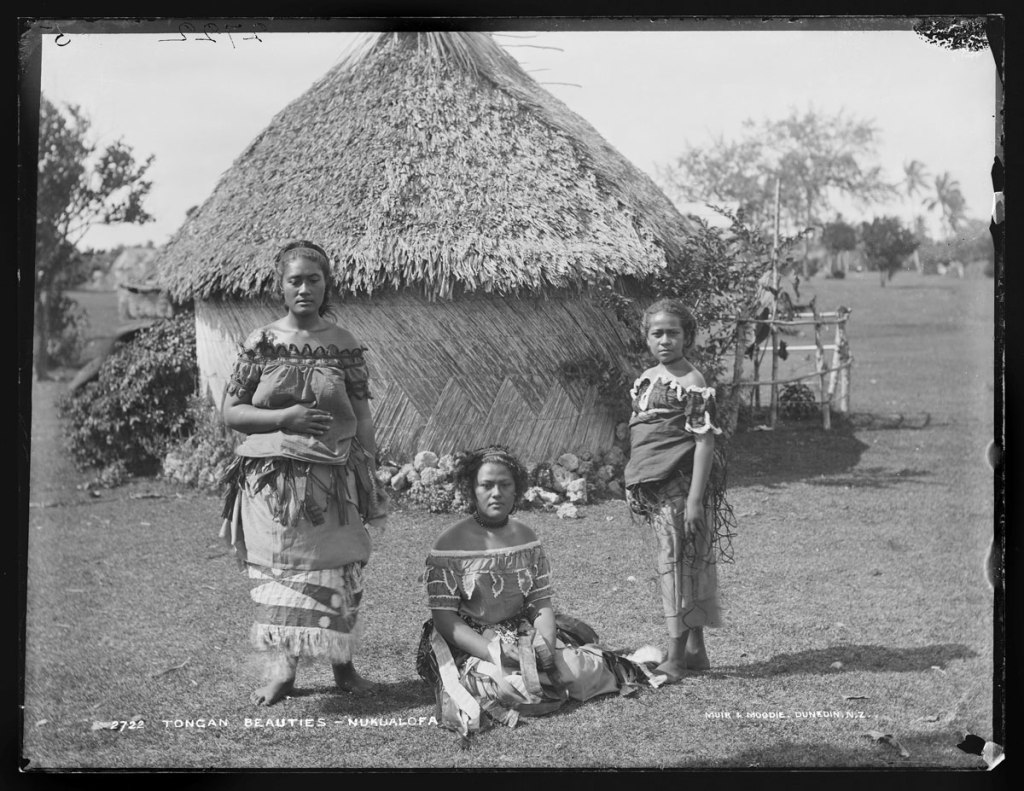
Others journeyed to King Mzilikazi’s Ndebele Kingdom in Matabeleland, modern day Zimbabwe, where they were given sanctuary. This is intriguing given the decades of conflict between Mzilikazi and Sebetwane and later Sekeletu. Mzilikazi had successfully led his people away from the Zulu Kingdom and built a strong independent state north of the Limpopo River.
Like Sebetwane he had achieved this by recognising the need to assimilate the people he had conquered along the way.
By 1864 when the Makololo arrived he had already formed a coherent society from Nguni, Sotho and Tswana clans as well as remnants of Griqua people and the Shona speaking chiefdoms he found on the western Zimbabwe plateau.
The Makololo gave him a further population boost and enabled him to strengthen his regiments with experienced Makololo warriors.
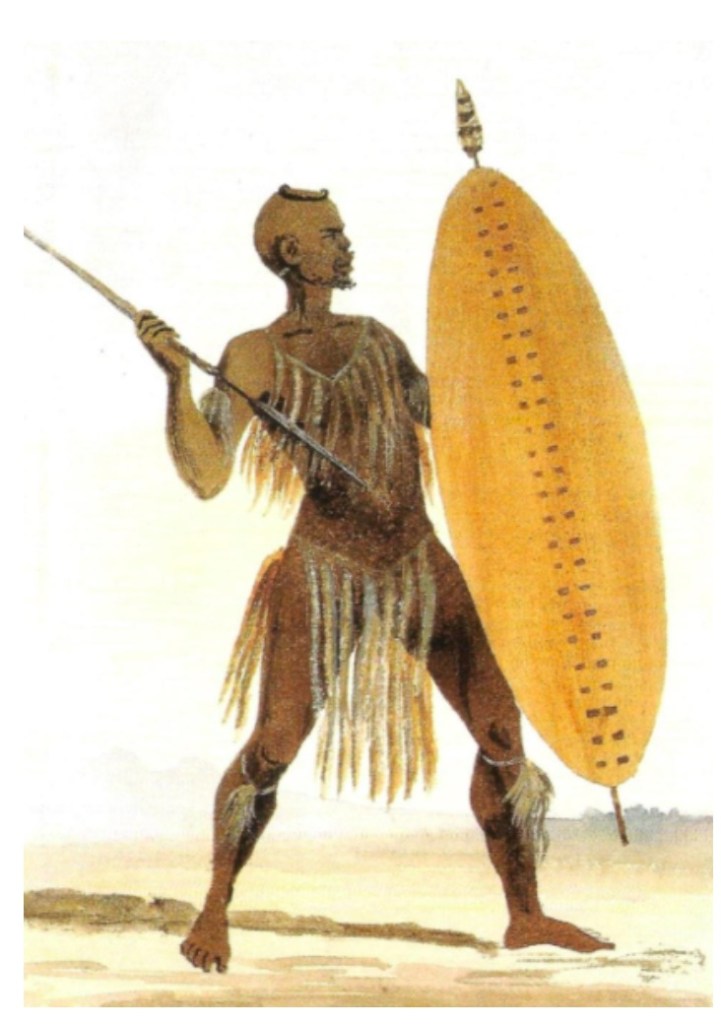
Left: Ndebele warrior 1835 48
Barotseland, The Lozi Kingdom Restored
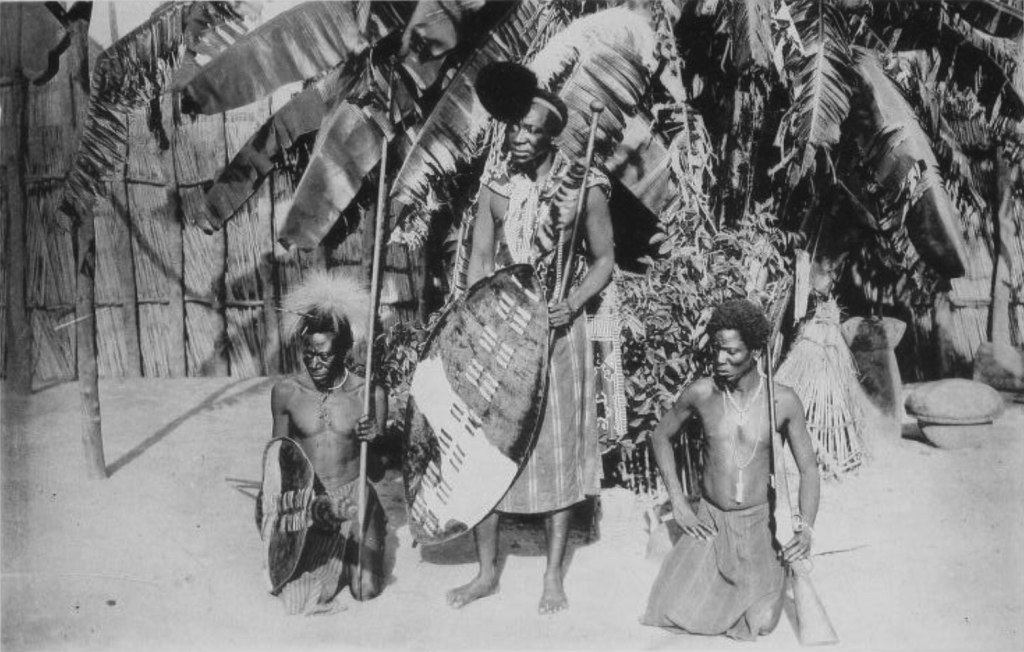
The Barotse people were originally called the Luyi or Aluyi, the people defeated by the Makololo when Sebetwane took control of the original Lozi Kingdom in the 1830s and 40s. Ayuli became Barotse in the language of the Makololo 50
After ascending to the throne in 1864 Sipopa married Mamochisane, Sebetwane’s daughter and ironically his chosen successor.
This may have been to help pacify the Makololo or to follow a tradition of adopting the wives of predecessors.
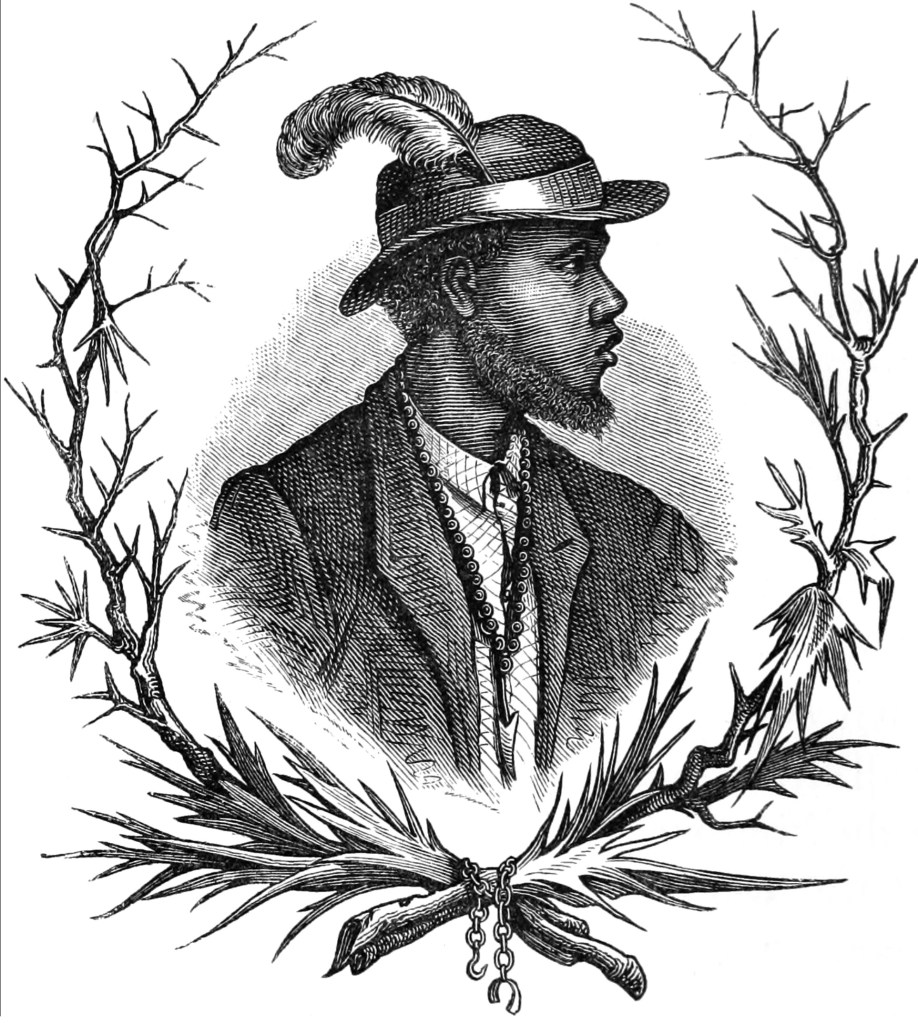
Left: King Sipopa 51
There are varying stories regarding the treatment of the remaining Makololo by Sipopa; there are suggestions of mass executions but on the other hand Sipopa’s daughter married a Makololo and as previously discussed the original Makololo had intermarried with Lozi women and had been siring children for thirty-odd years. The two cultures, families and communities were so intertwined it is hard to see how Makololo men could have been taken and killed without destabilising the new state. Flint reminds us that by the time Sebetwane entered what became Barotseland he was leading:
“….. a mongrel horde much as a result of the aforementioned deliberate policy of assimilation undertaken by Sibituane …….. and by 1864 there would have been precious few of purely Sotho blood.” 52
It is interesting that Sebetwane’s language southern Sotho was not only the lingua franca of the Makololo Lozi kingdom but survived the return of the Lozi chiefs in 1864; the modern-day language of the Western Province of Zambia is Silozi which retains a southern Sotho vocabulary, grammatical structure and phonetics.
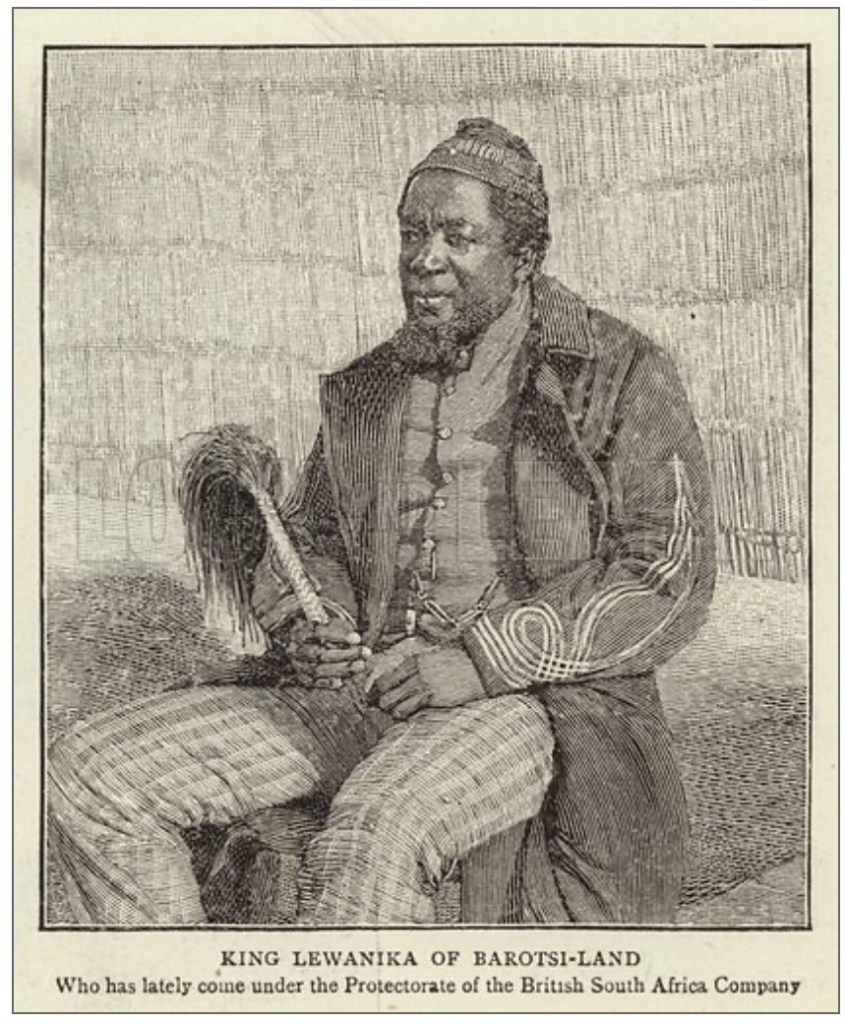
Sipopa ruled until his death in 1876 and was suceeded by King Lewanika.
(Right: King Lewanika of Barotseland in 1891 54)
Appendix 1 – Magomero and the UCMA
Bishop Mackenzie’s replacement, Bishop William Tozer, had arrived but couldn’t get out of the region quickly enough because when he arrived at Chibisa’s, the village that the remains of the mission had evacuated to, he found four of the original missionaries were dead and two were needing to be invalided out of the country. The area near modern day Zomba, 60 miles to the north, where the mission had been based was now a landscape of burnt and burning villages. The Shire Valley was in turmoil with the Yao chiefs now in possession of the Shire Highlands. The situation was made far worse by a famine along the Shire that one of the missionaries believed had already killed 90% of the population.
Tozer made the decision to withdraw but after furious arguments with the surviving white missionaries he agreed to build a new mission on Morumbala Mountain near where the Shire meets the Zambezi but he was only willing to take twenty-five orphaned boys whom he believed could be educated. Horace Waller, the most outspoken missionary, resigned and stayed with the liberated slave women and other survivors from the mission.
After five months Tozer gave up and decided to head for Zanzibar. Livingstone had by now arrived on the scene and demanded that Tozer handed over the boys. He then loaded forty-two survivors including the boys into his little river steamer, The Pioneer, and along with Waller sailed down the Zambezi to the coast.
Two of the boys, Chuma and Wekatani, accompanied Livingstone to Bombay on his other steamer the Lady Nyassa. Their incredible stories can be found in Magomero and the Nasik Boys.
Horace Waller took the rest of the party to Cape Town where he hoped to find places for them in Christian schools and missions but, in this he failed, and most drifted into Cape Towns growing black underclass.
Footnotes
- Unless a white mercenary or explorer recorded an event in their journal the specific date when an events occurred in non-colonised Africa are often much disputed. I have seen many possible and contradictory dates for the Makololo’s entry to Caprivi and modern day Zambia and given the story of their passage through Botswana they probably entered and left again several times before finally settling. As a result I have settled for the widest range of possibilities as used by Lawrence Flint (2021) Makololo interregnum and the legacy of David Livingstone Flint-2021-Makololo ↩︎
- James Johnstone M.D. (1893) Reality versus Romance in Central Africa. New York: Fleming H. Revell Company. James-Johnstone-1893 ↩︎
- To the Victoria Falls. People of the Victoria Falls: the Toka-Leya. Mubitana-1990 ↩︎
- James Johnstone M.D. (1893) ↩︎
- Wikimedia-Mzilikazi ↩︎
- Wikipedia-Bulozi-Plain ↩︎
- Walima Kalusa (2023) The Kololo Kingdom in the Upper Zambezi. Kalusa-Kololo-Kingdom ↩︎
- Janet Wagner Parsons (1997) the Livingstone’s at Kolobeng 1847 -1852. Gaborone: The Botswana Society and Pula Press ↩︎
- W. Edward Oswell (1900) William Cotton Oswell, Hunter and Explorer. London: William Heinemann. Oswell-1900 ↩︎
- David Livingstone (1857) Missionary Travels and Researches in South Africa. London: John Murray ↩︎
- W. Edward Oswell (1900) ↩︎
- Lawrence Flint (2021) Makololo interregnum and the legacy of David Livingstone Flint-2021-Makololo ↩︎
- There is a much repeated story that MaKoloko, which means the followers of Kololo was so called after the name of his senior wife but try as I might I cannot find a reliable source for this story. ↩︎
- Emil Holub (1881) Seven years in South Africa : travels, researches, and hunting adventures, between the diamond-fields and the Zambesi (1872-79) London : Sampson Low, Marston, Searle & Rivington Holub-1881 ↩︎
- David Livingstone (1857) ↩︎
- Lawrence Flint (2021) ↩︎
- Thomas Baines (1865) The Boatmen of the Rapids Baines-1865 ↩︎
- J. D. Omer-Cooper (1966) The Zulu Aftermath: A Nineteenth Century Revolution in Bantu Africa. Evanston: Northwestern University Press Omer-Cooper-Zulu-Aftermath ↩︎
- J. G. Wood (1870) The natural history of man: being an account of the manners and customs of the uncivilized races of men. London: G. Routledge. Wood-Makololo-House ↩︎
- Thomas Baines (1864) ↩︎
- J. G. Wood (1870) ↩︎
- African, as opposed to Indian Bhang is generally made from the tops and buds of the female marijuana plant which, when mature hold, the highest concentrate of THC. ↩︎
- David Livingstone (1865) Expedition to the Zambesi and its Tributaries. London: John Murray. Livingstone-1865 ↩︎
- Eric Flint (1970) Trade and Politics in Barotseland During the Kololo Period. Flint-Kololo-Trade ↩︎
- Walima T. Kalusa (2014) Strange bedfellows: David Livingstone, Sekeletu, imported goods, and the 1853-1856 trans-African expedition Kalusa-2014 ↩︎
- David Livingstone (1857) ↩︎
- Eric Flint (1970) ↩︎
- Thomas Baines (1864) Explorations in South-west Africa. Being an account of a journey in the years 1861 and 1862 from Walvisch bay, on the western coast, to lake Ngami and the Victoria falls. London : Longman, Green, Longman, Roberts, & Green. Baines-1864 ↩︎
- Eric Flint (1970) ↩︎
- David Livingstone (1865) Expedition to the Zambesi and its Tributaries. London: John Murray. Livingstone-1865 ↩︎
- Eric Flint (1970) ↩︎
- Thomas Baines (1864) ↩︎
- David Livingstone (1861) Letter to William Sunley. Livingstone-Sunley-1861 ↩︎
- Walima T. Kalusa (2014) Strange bedfellows: David Livingstone, Sekeletu, imported goods, and the 1853-1856 trans-African expedition Kalusa-2014 ↩︎
- David Livingstone (1865) ↩︎
- Thomas Baines (1864) ↩︎
- Barry Lewis (2013) India Pattern Musket. Lewis-Musket ↩︎
- J. D. Omer-Cooper (1966) ↩︎
- James Johnstone M.D. (1893) ↩︎
- Livingstone (1857) ↩︎
- Livingstone (1857) ↩︎
- Emil Holub (1881) Seven years in South Africa : travels, researches, and hunting adventures, between the diamond-fields and the Zambesi (1872-79) London : Sampson Low, Marston, Searle & Rivington Holub-1881 ↩︎
- Livingstone (1857) ↩︎
- J. D. Omer-Cooper (1966) ↩︎
- Thomas Baines (1864) ↩︎
- Thomas Baines (1864) ↩︎
- Afred Burton (1884) Tongan Beauties Look-and-Learn-Tongan-Beauties ↩︎
- Ndebele Warrior painted by Charles Bell. Bell-1835 ↩︎
- James Johnstone M.D. (1893) ↩︎
- Lozi People – Britannica Britannica-Lozi ↩︎
- Emil Holub (1881) ↩︎
- Lawrence Flint (2021) ↩︎
- Emil Holub (1881) ↩︎
- King-Lewanika ↩︎
- James Johnstone M.D. (1893) ↩︎
Other Sources and Additional Reading
- David Livingstone (1857) Missionary Travels and Researches in South Africa. London: John Murray
- Donald R. Morris (1965) The Washing of the Spears: The Rise and Fall of the Zulu Nation. London: Jonathan Cape.
- Magma M. Fuze (1922) Abantu Abamnyama or The Black People and Whence They Came. Translated by H.C.Lugg and edited by A.T.Cope. Pietermaritzburg: University of Natal Press.
- Carolyn Hamilton [Editor] (2001) The Mfecane Aftermath: Reconstructive Debates in Southern African History. Johannesburg: Witwatersrand University Press & Pietermaritzburg: University of Natal Press.
- Elizabeth A Eldredge (2004) The creation of the Zulu kingdom, 1815-1828: War, Shaka, and the consolidation of power. Cambridge: Cambridge University Press
- Elizabeth A Eldredge (1991) Sources of Conflict in Southern Africa ca 1800-1830 – The Mfecane Reconsidered. University of Witwatersrand. Eldredge-1991
- E.K.Mashingaidze (1989) The Impact of the Mfecane on the Cape Colony. Mashingaidze-1989
- Elizabeth A Eldredge and Fred Morton (Editors) (2019) Slavery in South Africa: Captive Labour on the Dutch Frontier. London & New York: Routledge.
- Linell Chewins and Peter Delius (2020) The Northeastern Factor in South African History: Reevaluating the Volume of the Slave Trade out of Delagoa Bay and its Impact on its Hinterland in the Early Nineteenth Century. Chewins-Delius-Delegoa-Bay-Slave-Trade
- J. Ramsey, B. Morton & T. Mgadia (1996) Building a Nation: A History of Botswana from 1800 to 1910. Gaborone: Longman Botswana. Ramsey_and_co_Botswana
- Walima Kalusa (2023) The Kololo Kingdom in the Upper Zambezi. Kalusa-Kololo-Kingdom
- Janet Wagner Parsons (1997) the Livingstone’s at Kolobeng 1847 -1852. Gaborone: The Botswana Society and Pula Press
- George Martelli (1972) Livingstone’s River. Newton Abbot: Victorian and Modern History Book Club
- John McCracken (2012) A History of Malawi 1859-1966. Woodbridge, Suffolk: John Currey
- Thomas Pakenham (1991) The Scramble for Africa. London: Abacus
- Christopher Ehret (2023) Ancient Africa: A global History to 300 CE.Princetown: Princetown University Press.
- Frank Johnston & Sandy Ferrar (2006) Malawi, the Warm Heart of Africa. Cape Town: Struick Publishers
- Simon Beecroft & Laurie Sandsford (Editors) (2024) Africa: the Definitive Visual History of a Continent. London: DK Pengiun Random House
- Richard Gray & David Birmingham (editors) (1970) Pre-Colonial African Trade: Essays on Trade in Central and Eastern Africa before 1900. London: Oxford University Press. Gray-1970
- Shadreck Chirkure (2017) Documenting Precolonial Trade in Africa Shadreck-Chirkure-2017
- Henry W. Langworthy (1970) Understanding Malawi’s Pre-Colonial History. Henry-Langworthy-1970
- Kings M. Phiri (1982) Traditions of Power and Politics in Early Malawi: A Case Study of Kasungu District from about 1750 to 1933. Kings-Phiri-1982
- Brian Morris (2006) the Ivory Trade and Chiefdoms in Pre-Colonial Malawi Brian-Morris-2006
- Shadreck Chirikure (2014) Land and Sea Links: 1500 Years of Connectivity Between Southern Africa and the Indian Ocean Rim Regions, AD 700 to 1700 Shadreck-Chirikure-2014
- Attati Mpakati (1973) Malawi: The Birth of a Neo-Colonial State Attati- Mpakati- 1973
- B.A. Ogot (editor) (1992) General History of Africa V: Africa from the Sixteenth to the Eighteenth Century. Ogot-1992
- Edward Thomas James (2025) A World Enslaved: The Untold Story of Slavery 1200 – 1700. United Kingdom: Amazon.
- Oliver Ransford (1966) Livingstone’s Lake. London: John Murray
- Landeg White (1987) Magomera: Portrait of an African Village. Cambridge: Cambridge University Press.
- Donald Simpson (1975) Dark Companions: The African Contribution to the Eurpean Exploration of Africa. London: Paul Elek
- W.D.Gale (1958) Zambezi Sunrise. Cape Town: Howard B Timmins.
- L. Monteith Fotheringham (1891) Adventures in Nyasaland: A Two Years’ Struggle with Arab Slave Dealers in Centrasl Africa. London: Sampson Low. Republished as a British Library Historical Print Edition.
- Fred L.M. Moir (1923) After Livingstone: An African Trade Romance. London: Hodder and Stoughton Fred-Moir=1923
- Sir Harry H. Johnston (1898) British Central Africa: An Attempt to Give Some Account of a Portion of The Territories Under British Influence North of the Zambezi. London” Methuen & Co. Harry-Johnston-1898
- Sir Harry H. Johnston (1905) A History of the Colonisation of Africa by Alien Races. Cambridge: University Press. Harry-Johnston-1905
- Alfred J. Swann (1910) Fighting the Slave Hunters in Central Africa. Philadelphia: J.B.Lippincott Company Alfred-Swann-1910
- Bridglal Pachia (1973) Malawi: The History of the Nation Pachia-1973
- Alexander J. Hanna (1956) The beginnings of Nyasaland and North-eastern Rhodesia, 1859-95. Oxford: The Clarendon Press. Alexander-Hanna-1956
- Frederick D. Lugard (1893) The Rise of our East African Empire: Early Efforts in Nyasaland and Uganda. Frederick-Lugard-1893
- James William Jack (1900) Daybreak in Livingstonia: The Story of the Livingstonia Mission, British Central Africa. James-Jack-1900
- J. Frederic Elton (1879) Travels and Researches Among the Lakes and Mountains of Eastern & Central Africa. London: John Murray. Frederic-Elton-1879
- Stephen Samuel (1922) A Handbook of Nyasaland. Zomba: The Government of Nyasaland. Samuel-1922
- W. Henry Rankine (1896) A Hero of the Dark Continent: Memoir of Rev. W.M. Affleck Scott, Church of Scotland Missionary at Blantyre, British Central Africa. Henry-Rankine-1896
- A. St. H. Gibbons (1898) Exploration and Hunting in Central Africa 1895-96. London: Methuen. Gibbons-1898
- Kings M Phiri (1984) Yao Intrusion into Southern Malawi, Nyanja resistance and Colonial Conquest 1830 -1900. Kings-Phiri-1984
- Erin Rushning (2013) David Livingstone and the Other Slave Trade, Part II: The Arab Slave Trade Erin-Rushning-2013
- David Livingstone (1865) A Popular Account of Dr. Livingstone’s Expedition to the Zambesi and its Tributies: and the Discovery of Lakes Shirva and Nyassa 1858 – 1864. Accessed at Project Guttenberg’s 2001 edition. David-Livingstone-1865
- Henry Rowley (1866) The Story of the Universities Mission to Central Africa, from its commencement, under Bishop Mackenzie, to its withdrawal from the Zambezi. London: Saunders, Otley, and Co. Henry-Rowley-1866
- James Tengatenga (2013) The Legacy of Dr. David Livingstone. James-Tengatenga-2013
- I.C.Lamba (1978) British Commerce as an Anti-Slavery Device in Malawi in the 1870s amd 1880s: A Study in Miscalculated Strategy. Lamba-1978
- Owen J.M. Kalinga (1980) The Karonga War: Commercial Rivalry and Politics of Survival Owen-Kalinga-1980
- John G. Pike (1965) A Pre-Colonial History of Malawi John-Pike-1965
- R.B.Boeder (1979) Sir Alfred Sharpe and the Imposition of Colonial Rule on the Northern Ngoni Boeder-1979
- Timothy John Lovering (2002) Authority and Identity: Malawian Soldiers in Briain’s Colonial Army 1891-1964. Lovering-2002
- James Johnston (1893) Reality versus Romance in South Central Africa. New York: Fleming H. Revell Company. James-Johnston-1893
- Captain H. A. Fraser, Bishop Tozer & James Christie (1871) The East African Slave Trade and the Measures Proposed for its Extinction. London: Harrison. Fraser-1871
- Linell Chewins (2023) The Imperialist Dream of João Albasini, a Portuguese Trader in South-East Africa, 1847–1870 Chewins-2023
- Linell Chewins (2020) The Northeastern Factor in South African History: Reevaluation the Volume of the Slave Trade out of Delagoa Bay and its Impact on its Hinterland in the Early Nineteenth Century. Chewins-2020
- Anjuli Webster (2024) Inter-Imperial Entanglement: The British Claim to Portuguese Delagoa Bay in the Nineteenth Century Webster-2024
- Nosipho Majeke (2016) Triumph of disunity: The Griqua Nation Majeke-2016
- Eric Flint (1970) Trade and Politics in Barotseland during the Kololo Period Flint-1970
- Walima Kalusa (2009) Elders, Young Men, and David Livingstone’s “Civilizing Mission”: Revisiting the Disintegration of the Kololo Kingdom, 1851-1864 Kalusa-2009


I would appreciate hearing your thoughts on this subject.